
Lieferung heute & morgen

Qualitätsgarantie

Willkommens-Angebote freischalten: KOSTENLOSE Lieferung | Bis zu 80 % RABATT | Kostenlose 30-Tage-JoyPlus-Testphase
App herunterladen
The search for the right 4K action cam can quickly become overwhelming. The market is filled with models that promise impressive specifications. But not every camera advertised as "4K" delivers the expected quality. Many buyers only realise after their first use that their footage is unusable or that hidden costs are driving up the initial price.
As your Joybuy Product Recommendation Officer, I'll help you distinguish marketing promises from genuine performance features. This guide focuses on the critical pitfalls you should know to make an informed decision and find a camera that reliably captures your adventures.
Before we dive into the technical details, let's highlight the three most common issues that lead to disappointment. Understanding these points is the first step toward a successful purchase.
To avoid the pitfalls mentioned above, you should focus on three core technical features. These are the primary determinants of the quality and usability of your future action cam.
The term "4K" alone isn't meaningful. The crucial factor is the combination of resolution and frame rate.
Image stabilisation is perhaps the most important feature of an action cam. It ensures your videos remain steady and watchable even during intense vibrations.
An action cam must be able to withstand the elements. There are important distinctions here.
Instead of presenting an overwhelming list, we have selected models that cater to specific user profiles and meet the criteria mentioned above.
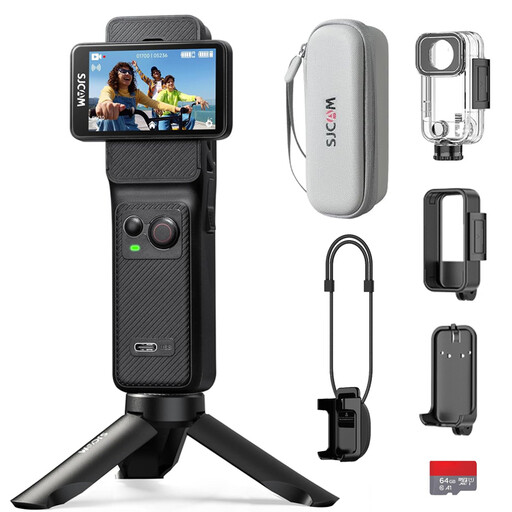
Why This Fits Their Persona: Ideal for users looking to take their first steps with an action camera without a large budget. It's well-suited for holiday travel, family outings, and occasional sports activities.
Offers true 4K at 30 fps and 6-axis gyro stabilisation, which isn't a given in this price range. The included accessory kit and memory card also prevent hidden follow-up costs.
Comprehensive accessory package including a 64GB card and waterproof case (up to 30 m). Long battery life of up to 7 hours with the additional battery.
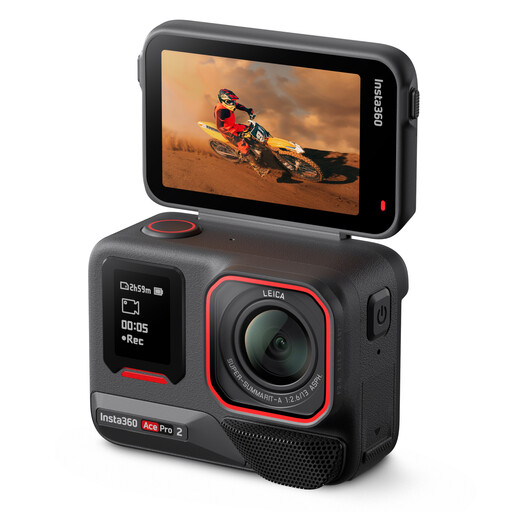
Why This Fits Their Persona: For vloggers and filmmakers who demand the highest image quality and flexibility. The collaboration with Leica and the large sensor make it a strong GoPro alternative for creative projects.
Sets new standards for image quality with a 1/1.3-inch sensor and a Leica lens, going far beyond standard 4K cameras. Its FlowState stabilisation is among the leading technologies on the market.
Excellent low-light performance thanks to the PureVideo mode. Offers 8K video recording and advanced AI features for video editing.
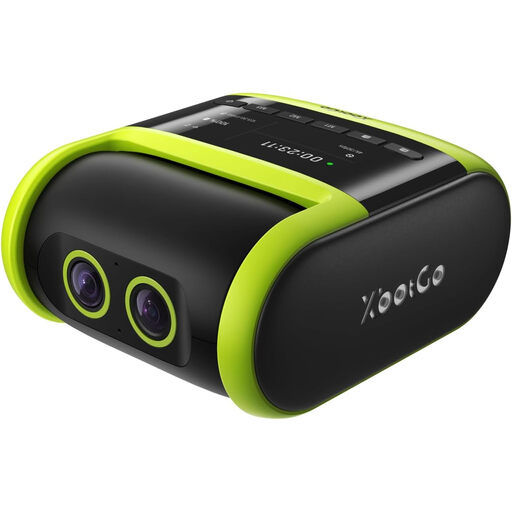
Why This Fits Their Persona: Specially developed for coaches, parents, and players in team sports (football, basketball, etc.). This AI sports camera automatically films the game action without needing a camera operator.
Solves a specific problem that conventional action cams don't address: automatically tracking players and the ball. Instead of just focusing on image quality, it offers a unique, useful function.
Integrated AI tracking for over 10 sports. Enables live streaming of games and does not require a subscription for its core functions.
We have compiled a complete, up-to-date list of products that fully meet these strict selection criteria and German safety regulations.
How long does a 4K action cam battery last on a continuous recording? Battery life varies greatly depending on the model, resolution, and outside temperature. For 4K recording, it typically ranges from 60 to 90 minutes. Models with larger or optimised batteries, like the GoPro with its Enduro battery or cameras with external battery grips, can extend recording time to over two hours.
Do I need a special memory card for a 4K action cam? Yes, this is a crucial point. A high-speed microSD card is essential for recording 4K video, especially at high frame rates. Look for the U3 (UHS Speed Class 3) or V30 (Video Speed Class 30) classification. A card that is too slow can lead to recording interruptions or corrupted files.
What is the difference between a normal action cam and a 360-degree camera? A normal action cam films a fixed field of view, similar to a conventional camera. A 360-degree camera, like the Insta360 X-series, uses two or more lenses to capture its entire surroundings simultaneously. This allows you to freely choose the frame in post-production ("reframing"), enabling creative perspectives and the "invisible selfie stick" effect.