
Lieferung heute & morgen

Qualitätsgarantie

Willkommens-Angebote freischalten: KOSTENLOSE Lieferung | Bis zu 80 % RABATT | Kostenlose 30-Tage-JoyPlus-Testphase
App herunterladen
A 4K camera promises detailed video, but resolution alone does not determine how well it performs in everyday use. Shoppers often come across high megapixel counts, digital zoom figures or very long battery life claims that only apply under certain conditions. If you don’t know how to assess the specifications, you could end up with a camera that shakes when you move, produces grainy footage in low light or isn’t suited to the way you plan to use it.
4K primarily describes video resolution. Sensor size, lens, light processing, bit rate and frame rate also affect the actual image quality. A compact digital camera may record in 4K, but that doesn’t mean it will perform at dusk like a camera with a larger sensor.
Figures such as “64 MP” or “80 MP” don’t necessarily refer to the sensor’s native resolution either. Check whether the manufacturer distinguishes between photo resolution, interpolated resolution and video resolution.
Optical zoom changes the framing through the lens. Digital zoom, on the other hand, enlarges or crops the image, which can result in a loss of detail. For travel photography and family photos, a compact camera with genuine optical zoom could be a good choice. For a vlogging camera, a wide angle is often more important, so you can fit both your face and the surroundings in the frame.
Manufacturers’ battery life claims depend on factors including resolution, frame rate, screen use, Wi-Fi and temperature. Treat the stated battery life as a guide rather than a guarantee. With an outdoor camera, it’s also important to check whether the water resistance applies to the camera body itself or only when it’s inside the supplied underwater housing.
A larger sensor can capture more light in the same conditions. This is particularly useful for indoor shots, evening scenes and travel videos. The aperture value, such as f/2.0 or f/3.5, describes the lens’s maximum aperture. A lower number generally means a wider aperture.
With a mirrorless camera such as the Sony Alpha 6100, you can change the lens. This gives you more flexibility than a compact camera with a fixed lens, but usually adds weight, takes up more space and increases the cost of accessories. According to the product specifications, the Sony Alpha 6100 features a 24.2 MP CMOS sensor, a 16–50 mm power zoom lens and 4K video recording. It isn’t listed as waterproof.
Image stabilisation is a key feature to consider for sports, walks and vlogs. Electronic stabilisation corrects movement in software and may crop the image, depending on the settings. Mechanical 3-axis stabilisation moves the camera head and is particularly useful for filming while walking.
According to its product description, the DJI Osmo Pocket 3 uses mechanical 3-axis stabilisation. Action cameras such as the SJCAM C300 and C400 use 6-axis gyro stabilisation. Both systems aim to reduce camera shake, but they differ in design, weight and limitations.
Before buying, check:
A camera for YouTube needs more than just 4K video: it also needs a reliable audio solution. A microphone input or compatibility with a suitable wireless system may be more important than an extra digital zoom.
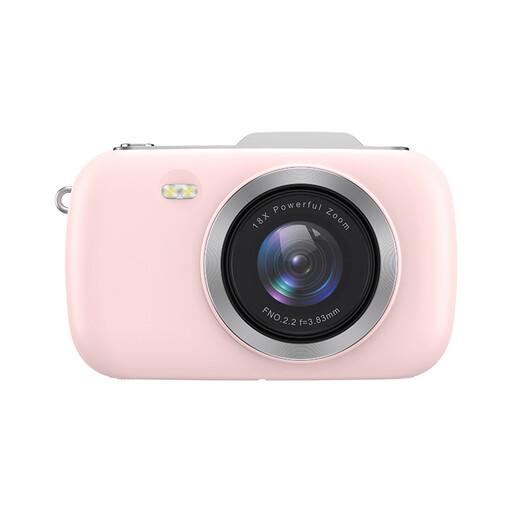
Why this product suits this type of user: This compact digital camera is aimed at beginners, teenagers and travellers who want simple controls and an integrated zoom.
The product specifications list the 18x zoom and 4K recording separately. This means you can check the type of zoom and the actual video resolution before buying.
Compact design, 4K UHD video according to the product specifications, and an integrated zoom for everyday photos and videos.
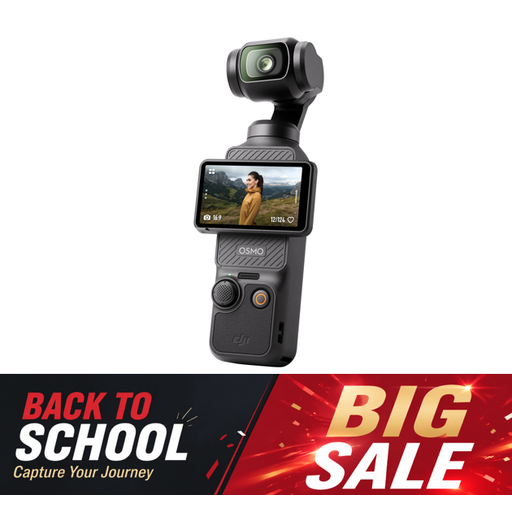
Why this product suits this type of user: This small vlogging camera is designed for content creators, travel and handheld filming.
Mechanical 3-axis stabilisation helps prevent shaky handheld footage. The 2-inch rotating screen supports both horizontal and vertical formats.
1-inch CMOS sensor, 4K recording at up to 120 fps according to the product specifications, and ActiveTrack 6.0 for subject tracking.
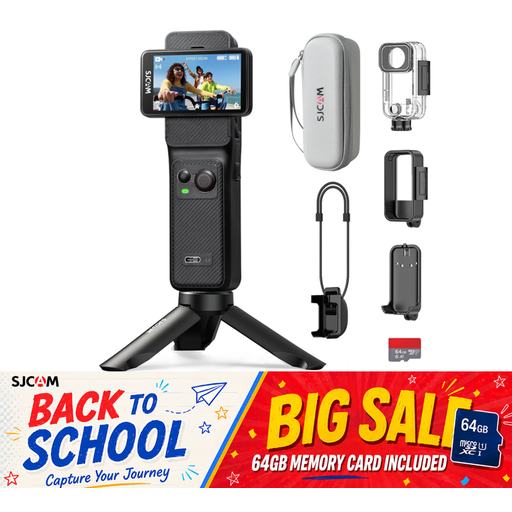
Why this product suits this type of user: This action camera is aimed at cyclists, hikers, watersports enthusiasts and vloggers who often film in changing conditions.
The stated operating limits are specific: up to 30 metres with the waterproof housing. The 6-axis stabilisation is designed for filming on the move.
4K at 30 fps, dual touchscreens, 5 GHz Wi-Fi, microSD support up to 512 GB and a stated recording time of up to 437 minutes with the additional battery.
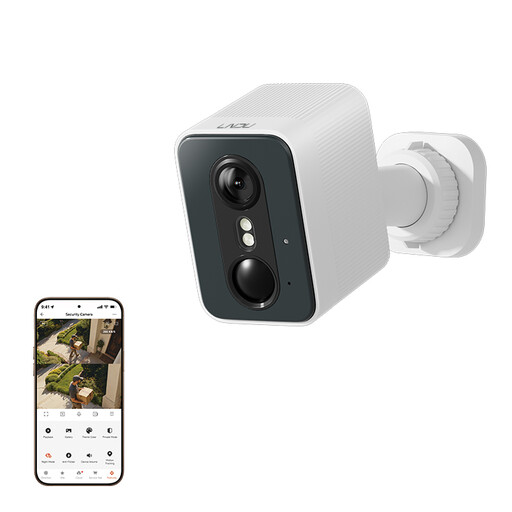
Why this product suits this type of user: For homeowners and families who want to monitor outdoor areas such as an entrance, garden or driveway.
The IP65 rating, 143-degree field of view, and PIR and radar detection are specific features for outdoor use. They don’t replace checking the installation location and Wi-Fi range.
4K recording according to the product description, colour and infrared night vision, local storage up to 128 GB, and 2.4 GHz Wi-Fi support.
When choosing a security camera, you should also check privacy, mounting height, access permissions and storage location. For a vehicle, a dashcam such as the Baseus PrimeTrip VD1 Pro, with 4K and 1080p recording, is a different type of product from a travel camera. Choosing a camera that matches its intended use helps you avoid buying the wrong one.
We’ve put together a complete, regularly updated list of products that meet these strict selection criteria and fully comply with the safety regulations in force in the EU.
Not necessarily. 4K gives you more flexibility to crop footage later and offers detailed images. For livestreams, limited storage or slower internet connections, 1080p may be more practical. Sound quality, autofocus and image stabilisation are also important.
It depends on the codec, bit rate, frame rate and recording length. 4K files need considerably more storage than Full HD files, so a fast microSD card with enough capacity is important. Check the maximum card capacity supported by the model you’re considering.
There’s no single answer. 4K resolution, a high frame rate, screen use, Wi-Fi, stabilisation and low temperatures all shorten battery life. For longer trips, spare batteries, a power bank or a model with an additional battery can be useful. Follow the manufacturer’s safety instructions for lithium-ion batteries, and don’t continue using damaged batteries.