
Lieferung heute & morgen

Qualitätsgarantie

Willkommens-Angebote freischalten: KOSTENLOSE Lieferung | Bis zu 80 % RABATT | Kostenlose 30-Tage-JoyPlus-Testphase
App herunterladen
Investing in a dash cam is a practical decision to enhance driving safety and secure evidence. A 4K front and rear dash cam, in particular, promises comprehensive documentation in high resolution. However, the market is filled with technical promises that often don't hold up in practice. Before making a purchase, it's crucial to understand the common pitfalls that can lead to unusable footage and unnecessary expenses.
As your Joybuy Product Recommendation Officer, I'm here to help you separate relevant facts from marketing hype. This guide focuses on the critical technical features and shows you what to look for.
Many buyers rely on marketing claims that later prove to be problematic. Here are three of the most common sources of error:
To avoid these problems, you should base your selection on objective technical criteria. The following three points are non-negotiable for a high-quality 4K car camera.
The foundation for detailed footage is the image sensor. A resolution of 3840 x 2160 pixels (true 4K) is only meaningful if the sensor can capture and process enough light. Look for models equipped with high-quality sensors like the Sony STARVIS 2. These sensors are known for their high light sensitivity and low image noise, resulting in sharper, more color-accurate recordings by day and night. A good sensor is more important than the pixel count listed on the box.
A dual dash cam with GPS captures events not just in front of, but also behind the vehicle. It's crucial that the rear camera also delivers high image quality and doesn't just serve as a low-resolution accessory. Ideally, the HDR function should be available for both channels. HDR balances extreme differences in brightness by combining multiple images with different exposures into a single, well-balanced picture. This ensures that details remain visible in both dark, shadowed areas and bright, headlight-illuminated spots.
A functional dash cam with parking surveillance offers protection against vandalism and hit-and-runs, even when the vehicle is parked. There are two common modes:
A stable power supply via a hardwire kit is required for both modes. A dash cam with an app and integrated GPS also simplifies configuration, video playback, and the tracking of routes and speed data, which can be important in an insurance claim.
Based on the criteria above, we have identified a few models that are well-suited for different user profiles.
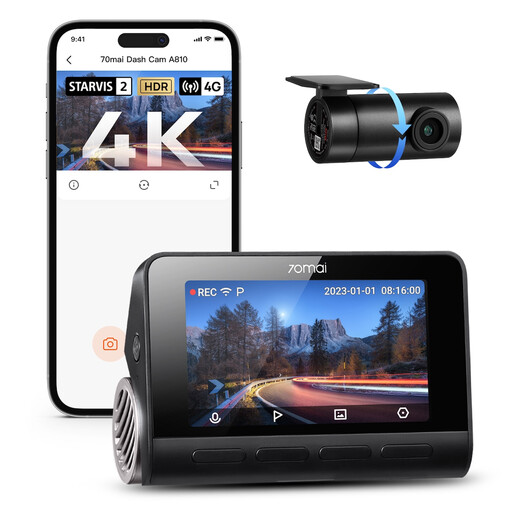
Why This Fits Their Persona: Ideal for drivers seeking a balanced combination of high image quality, reliable assistance systems, and a trusted brand. This model provides comprehensive documentation for daily commutes and long journeys.
Thanks to the Sony STARVIS 2 sensor and true 4K resolution, license plates are captured clearly even in poor lighting. The dual-channel recording with HDR night vision bypasses the problem of unusable night footage.
True 4K resolution with a modern image sensor; AI-powered parking surveillance (hardwire kit required); integrated GPS and ADAS driver-assistance system.
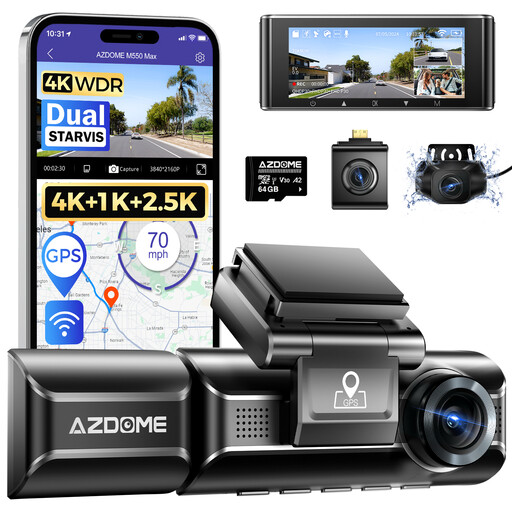
Why This Fits Their Persona: Perfect for users who want maximum coverage, including the vehicle's interior. Ideal for ride-sharing services, families, or anyone who needs high-resolution, 3-channel surveillance.
This model uses two STARVIS sensors and WDR technology to ensure high image quality even with complex 3-channel recording. The included 64GB SD card also avoids immediate follow-up costs.
3-channel recording (front/rear/interior); 4K resolution front camera; infrared night vision for the interior; integrated Wi-Fi and GPS.
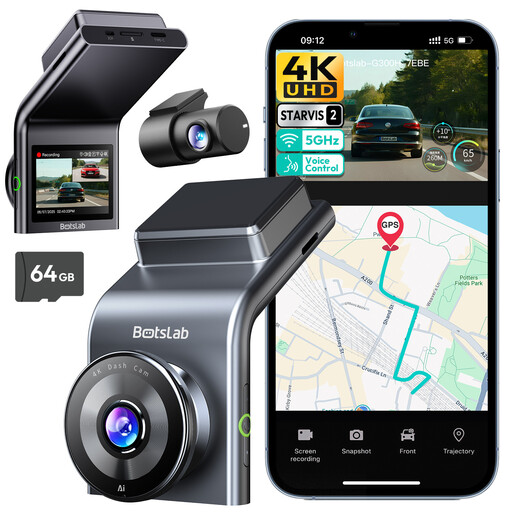
Why This Fits Their Persona: A solid choice for anyone looking to enter the 4K class without breaking the bank. It offers the essential core features, like a 4K front camera, rear camera, and modern sensor technology, in an accessible package.
This model also uses a STARVIS 2 sensor and WDR to avoid the "Fake 4K" trap. The included 64GB SD card makes the package ready to use out of the box and prevents hidden initial costs.
4K front and Full HD rear camera; 5GHz Wi-Fi for fast data transfer; voice control for safe operation while driving.
A dash cam is a key component of vehicle safety. We have compiled a comprehensive list of products that meet our strict selection criteria.
1. Is it legal to use a dash cam? Yes, using a dash cam is generally legal in most regions, but it is often subject to strict data privacy laws (like GDPR in Europe). Recording must be event-triggered, which is technically handled by the loop-recording feature (automatically overwriting old data) on most cameras. Continuous, non-event-based storage of public spaces is typically not permitted. In the event of an accident, the footage may be admissible as evidence in court, but the court ultimately decides on its admissibility on a case-by-case basis.
2. What is the difference between G-sensor parking surveillance and time-lapse recording? G-sensor parking surveillance is reactive: the camera is in standby mode and only starts recording when the sensor detects a jolt or impact. This saves energy and storage space. Time-lapse recording is proactive: the camera records continuously at a very low frame rate (e.g., one frame per second). This allows for a complete, gapless record of the entire parking period but uses more storage and power than the G-sensor-only mode.
3. Do I always need a hardwire kit for parking surveillance? Yes, a hardwire kit is essential for reliable and continuous parking surveillance. It connects the dash cam directly to the vehicle's fuse box, ensuring a constant power supply without draining the car's main battery. The kit includes a voltage monitor that cuts power to the camera if the car battery's voltage drops below a critical level, ensuring you can still start your vehicle. Powering the dash cam via the cigarette lighter socket only works when the engine is running.