
Lieferung heute & morgen

Qualitätsgarantie

Willkommens-Angebote freischalten: KOSTENLOSE Lieferung | Bis zu 80 % RABATT | Kostenlose 30-Tage-JoyPlus-Testphase
App herunterladen
Buying a 4K dash cam might seem straightforward at first. The reality, however, is that many drivers are left disappointed by exaggerated marketing promises and hidden flaws. A high resolution alone is no guarantee of usable footage. This guide will show you what to look for to make an informed decision and effectively protect your vehicle.
Before we dive into the key technical features, it's important to understand the most common issues that can lead to a bad purchase.
To avoid the pitfalls mentioned above, you should check the following technical parameters. They form the basis for reliable evidentiary recording.
Video quality is primarily determined by the image sensor, not just the advertised resolution. A 4K dash cam should have a sensor that natively supports this resolution.
A functional parking mode is crucial for protection against vandalism or parking damage. However, the implementation is technically demanding.
Modern features simplify operation and enrich recordings with valuable data.
Based on the objective criteria above, we have identified several models suitable for different needs and budgets.

Why this model fits: Ideal for drivers seeking reliable, basic protection without complex extra features. Its compact, discreet design doesn't obstruct the field of view.
This model avoids the "Fake 4K" trap by offering an honest and excellent 2K resolution, which delivers sharper images in most traffic situations than a poorly interpolated 4K camera.
Solid Night Vision: Uses a high-sensitivity sensor for clear recordings in low light. Reliable Emergency Recording: The G-sensor automatically locks footage in the event of a collision.
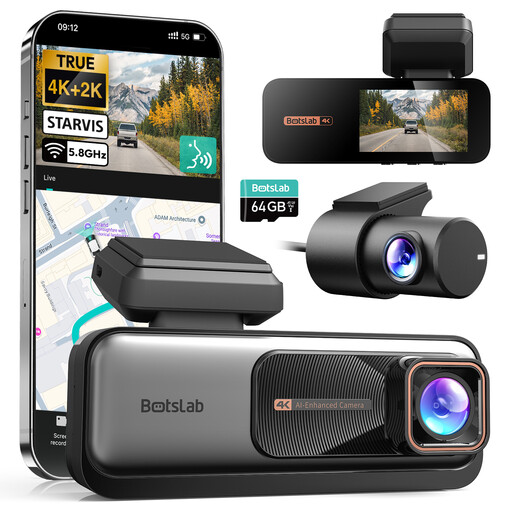
Why this model fits: For drivers who prioritise maximum image quality and a comprehensive feature set to be prepared for any eventuality.
This model uses a true Sony IMX415 STARVIS sensor for native 4K and a high-quality 2K rear camera. It delivers proven high image quality, thereby avoiding the "Fake 4K" and "poor night vision" pitfalls.
Fully-Featured: Integrated GPS, 5.8GHz Wi-Fi for fast data transfer, and a supercapacitor for high reliability. Intelligent Parking Mode: Offers 24/7 surveillance (hardwire kit required).
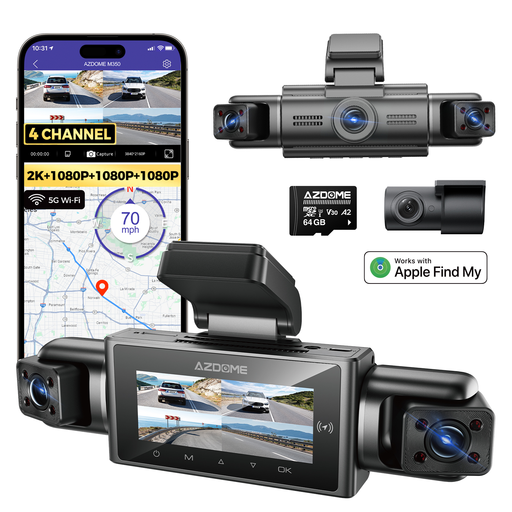
Why this model fits: For vehicle owners who want complete 360° surveillance and advanced security features like vehicle tracking.
This system goes far beyond a standard dash cam. With four cameras (front, rear, left, right), it provides a complete all-around view and eliminates blind spots, a common shortcoming of simple front-facing cameras.
4-Channel Recording: Captures the vehicle's entire surroundings with a 2K front camera and three 1080p cameras. Apple Find My Integration: Allows you to locate the vehicle via the Apple Find My network.
We have compiled a complete, up-to-date list of products that fully meet these strict selection criteria and local regulations.
Yes, using a dash cam is generally permitted in many countries, but it is often subject to strict data protection regulations (like GDPR in Europe). Permanent, non-event recording of public spaces is typically not allowed. Therefore, dash cams must operate with a loop recording function that automatically overwrites old footage. Recordings should only be permanently saved on an event-triggered basis, such as an accident detected by the G-sensor. If you publish any footage, the privacy rights of third parties must be respected (e.g., by pixelating faces and license plates).
For a reliable parking mode that doesn't drain your car battery, installation with a special hardwire kit is necessary. This kit connects directly to the vehicle's fuse box and includes a low-voltage cutoff protector. This measures the car battery's voltage and shuts off the dash cam before the battery is drained to a point where the vehicle won't start. If you lack experience, the installation should be carried out by a professional workshop to avoid damage to the vehicle's electronics.
A supercapacitor is a crucial quality feature for a long-lasting dash cam. Unlike lithium-ion batteries, which can quickly lose capacity or even be damaged by the high temperatures behind a windscreen in summer, supercapacitors are extremely resistant to heat and cold (-20°C to 70°C). They have a significantly higher number of charge cycles, ensuring reliable operation for many years.