
Lieferung heute & morgen

Qualitätsgarantie

Willkommens-Angebote freischalten: KOSTENLOSE Lieferung | Bis zu 80 % RABATT | Kostenlose 30-Tage-JoyPlus-Testphase
App herunterladen
Choosing a new TV that excels at both demanding gaming and a premium home cinema experience can be a challenge. Product spec sheets are filled with terms like 144Hz TV, VRR, Mini LED TV, or Dolby Vision, but their practical significance isn't always immediately clear. This article serves as your guide. It breaks down the crucial technologies and presents a selection of models designed for next-gen consoles like the PS5 and for enjoying 4K movies. Our goal is to provide you with an informed basis for your decision.
To find the right model, it's helpful to understand the core technologies and their impact on picture and sound quality. The following three points are especially relevant when making your choice.
The panel technology is the foundation of a TV's picture quality. Each has specific characteristics:
For a smooth and responsive gaming experience with consoles like the PlayStation 5 or Xbox Series X, certain technical features are essential.
A home cinema TV benefits immensely from advanced picture and sound formats.
Based on the criteria mentioned, we have compiled a selection of models that stand out for their technical specifications for gaming and home cinema.
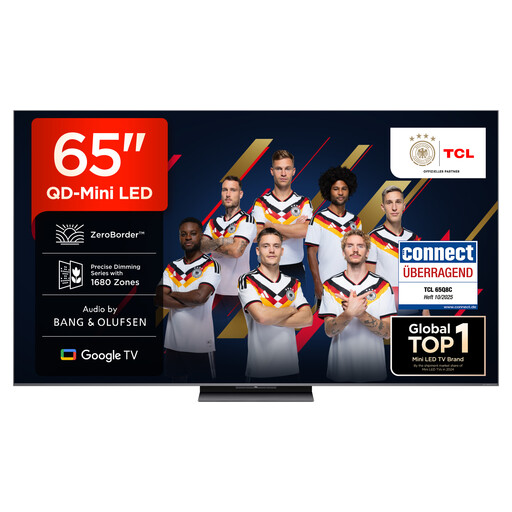
Why It Stands Out: The TCL 65Q8C combines QD-Mini LED technology with a 144Hz refresh rate. The Mini LED backlight ensures precise light control, resulting in high contrast and impressive brightness. The Bang & Olufsen audio system supports Dolby Atmos and delivers room-filling sound. The frameless ZeroBorder design and the CrystGlow HVA panel with an anti-reflection film complete the package.
Pros:
Who Is It For?: For users who want the benefits of Mini LED technology, such as high brightness and precise dimming, while also valuing a high refresh rate for PC and console gaming.
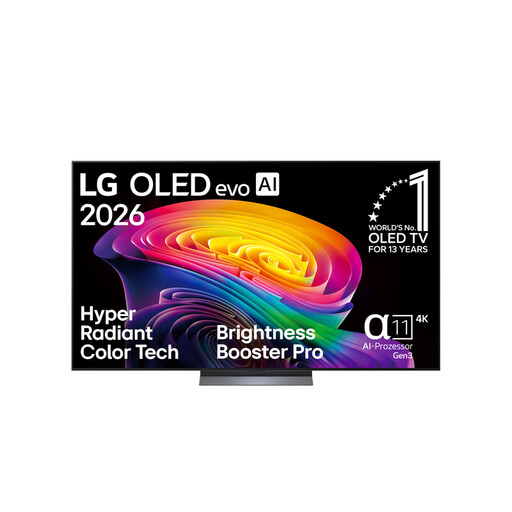
Why It Stands Out: As a large-screen TV with a 77-inch diagonal and an OLED evo panel, the LG OLED77C67LA delivers outstanding picture quality with perfect blacks and infinite contrast. Its gaming features are comprehensive, with VRR up to 165Hz, NVIDIA G-Sync, and AMD FreeSync Premium. The α11 AI Processor optimises picture and sound in real-time, while Dolby Vision and Dolby Atmos create a cinematic atmosphere.
Pros:
Who Is It For?: For picture quality enthusiasts and gamers who appreciate the best possible contrast ratio and the ultra-fast response times of an OLED TV, especially for use in darkened rooms.
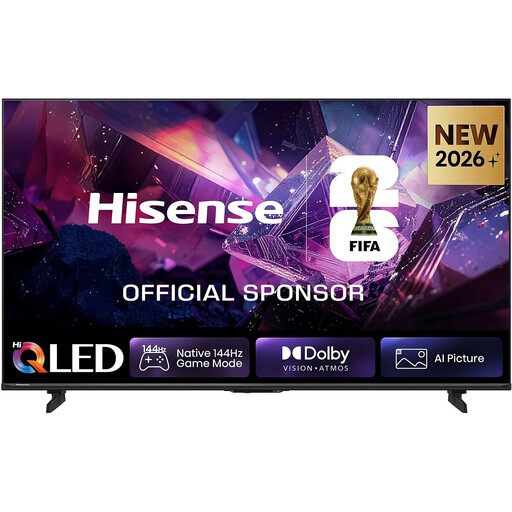
Why It Stands Out: With its massive 85-inch screen, the Hisense 85E7S PRO focuses on maximum immersion. As a QLED TV, it delivers brilliant colours and high brightness. With a native 144Hz refresh rate and AMD FreeSync Premium Pro, it is perfectly equipped for fast-paced games. Formats like Dolby Vision IQ and HDR10+ ensure that content is always displayed optimally.
Pros:
Who Is It For?: For anyone looking for the largest possible TV for their living room and who prefers a bright, colour-rich picture for gaming and movies in various lighting conditions.
Haven't found the right model for your needs yet? In our Premium TVs category, you'll find a wider selection of devices in different sizes and technologies, all designed for the highest standards of picture quality and performance.
Both technologies have specific advantages. An OLED TV offers an edge in displaying contrast and motion thanks to its perfect blacks and extremely fast response times, which particularly shines in dark game environments. A QLED TV excels with higher peak brightness and greater colour volume, making it advantageous in bright rooms. The choice depends on personal preference and the lighting conditions in your room.
The PlayStation 5 and Xbox Series X currently support a maximum output of 120Hz. A 120Hz TV is therefore perfectly sufficient for current-gen console gaming. However, a 144Hz TV offers even smoother motion, which can be primarily utilised by PC gamers, and represents a future-proof feature in case future consoles or games support higher frame rates.
An HDMI 2.1 port is crucial. Only this standard provides the full bandwidth for 4K gaming at 120Hz. It also supports key features like VRR (Variable Refresh Rate) to prevent screen tearing and ALLM (Auto Low Latency Mode), which automatically switches the TV to its lowest latency mode as soon as a console is detected. For a TV for PS5 or Xbox Series X, at least one such port is indispensable.