Checking UV seams
When comparing UV islands with the 3D model, it helps to keep the 2D and 3D views in sight separately. Adobe describes these two views for Substance 3D Painter.


A 4K monitor makes a useful reference display for checking fine texture and UV seams, provided its native resolution, readable scaling and desk space alongside the second screen all suit your setup. For colour-critical approval, you’ll also need appropriate colour modes and a consistent calibration and profiling workflow. If you’re using a laptop, make sure its ports and power delivery meet the needs of your specific setup.
When comparing UV islands with the 3D model, it helps to keep the 2D and 3D views in sight separately. Adobe describes these two views for Substance 3D Painter.
If you’re assessing base colours for a defined output workflow, controlled colour modes, suitable profiles and calibration all matter. Adobe describes colour management as part of the workflow.
If you’re spreading previews, tools and references across two displays, you’ll need to plan the connection, scaling and desk space together. Microsoft explains how to arrange multiple displays in Windows.
For a dual-screen workspace, consider image detail, your colour workflow, a reliable connection and enough room for both displays.
| Priority | What to look for when buying | Who is it important to? |
|---|---|---|
| Spotting fine seams | Check the computer’s native resolution and scaling; test the 2D and 3D views with typical project files. | If I want to check fine transitions without constantly switching between views, a clear, detailed image matters. Around 29% of consumers put spotting fine seams first. |
| Assessing colour | Match the target colour space, colour modes, and calibration and profiling options to your output workflow. | For reliable colour matching, I want to know whether both screens suit the intended workflow. Around 23% of consumers prioritise a controlled colour workflow. |
| Connecting two displays | Check the video outputs on your computer or dock, the cables and the supported display modes; then arrange the screens appropriately in your operating system. | If previews and tools are to run on separate displays, the entire connection must work. Around 18% of consumers put connecting both screens first. |
| Weighing up features | Compare the features you need, and check the energy label or product data sheet for each specific model. | If I don’t want to pay for features my workflow won’t use, I compare the specifications I need. Around 18% of consumers prioritise weighing up features and running costs. |
| Room for two devices | Measure the width and depth of both devices, including their stands; check the height adjustment and the type of mount they’re designed for. | With limited desk space, I want to be able to position both screens side by side. Around 12% of consumers put the physical arrangement first. |
A monitor feature alone won’t tell you whether your computer can run two external displays in the modes you want through its available ports.
Check the entire signal path from your computer to both screens, along with the supported display modes.
The ProArt PA279CRV is a documented 27-inch 4K option for detail and colour work in a dual-screen workspace.
The Creative Pro PD2732U is a 27-inch 4K option if colour modes and Thunderbolt connectivity are important to you.
The ColorEdge CG2700X is a specialist 27-inch 4K option for workspaces where colour is regularly calibrated under controlled conditions.
The Pro Plus P3225QE is a 31.5-inch 4K option with a USB-C hub, offering a larger workspace alongside a second screen.
This selection includes 27-inch 4K monitors to use as a reference display alongside a second screen, as well as larger 31.5- to 32-inch models.
 No image available
As a 27-inch UHD model, it could work as a reference display alongside a separate second monitor.
 No image available
At 27 inches, this model could suit a more compact reference setup alongside a second screen.
 No image available
Its 27-inch size makes it a relevant option as a separate reference display in a dual-screen setup.
The product name lists an IPS panel with a 3840 × 2160 resolution, 120 Hz and USB-C with 90 W Power Delivery. Check that your laptop supports this connection.
 No image available
At 32 inches, this model is a larger option for a workspace with enough room alongside a second screen.
The product name lists USB-C with 98 W Power Delivery. Check that it’s compatible with your computer and the connections you need.
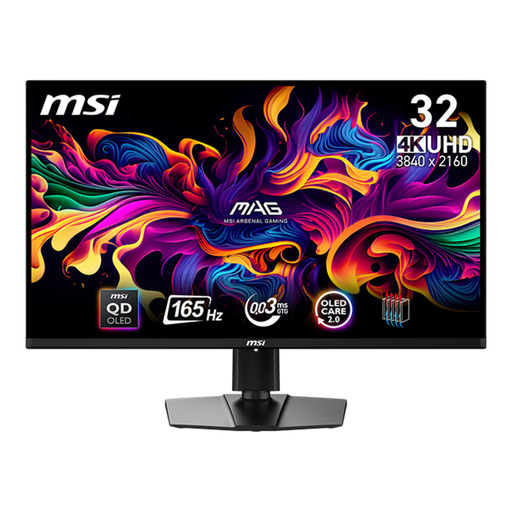 No image available
Its 31.5-inch size is worth considering if your desk has room for a larger workspace alongside a second screen.
The product name lists a 3840 × 2160 resolution. Measure the space needed for both devices, including their stands, before choosing.
No. Adobe describes separate 2D and 3D views, along with their zoom functions. Check seams in the view you usually use for your project, and distinguish visible display issues from problems with the texture file itself.
Make sure Windows detects both displays in the display settings, then arrange them to match their actual positions. You can check the resolution and scaling for each selected screen. Whether your computer supports two external 4K displays depends on the specific device and connection.
Not just to check seams. If you need to assess colours reliably across applications, displays or outputs, a consistent colour management and calibration workflow is important. An integrated sensor is a feature on certain models, such as the EIZO CG2700X.
Your statutory rights against the seller if a product is faulty are separate from a voluntary manufacturer’s guarantee. The steps available in a particular case depend on the circumstances of the fault; the Verbraucherzentrale explains the requirements and your right to a repair or replacement.
Compare the specific EU energy label and model specifications rather than trying to infer efficiency from one feature. The European Commission includes electronic displays in energy labelling; the Umweltbundesamt explains how to dispose of old electrical equipment separately.