
Lieferung heute & morgen

Qualitätsgarantie

Willkommens-Angebote freischalten: KOSTENLOSE Lieferung | Bis zu 80 % RABATT | Kostenlose 30-Tage-JoyPlus-Testphase
App herunterladen
Choosing a new television can be daunting given the multitude of technologies and technical jargon. Terms like QLED, Mini LED, HDR, and various smart TV systems complicate the decision. This guide is designed to bring clarity and provide you with an objective basis for selecting a 4K Smart TV that meets your requirements for picture quality, features, and budget. We focus on verifiable technical specifications to help you make an informed decision.
Before you decide on a model, a few key considerations are helpful. The following points summarize the most important criteria that play a role in selecting a modern television in 2026.
The panel technology is crucial for picture quality. Two dominant technologies in the LED segment are QLED and Mini LED.
The size of the TV should match the viewing distance and the size of the room. A 55-inch TV is a popular choice for medium-sized living rooms, while a 65-inch TV offers a more immersive experience. For large rooms and a true home cinema feel, models like an 85-inch TV are worth considering.
Also, pay attention to support for modern HDR and audio formats:
Modern televisions are media hubs. The choice of operating system, such as Fire TV or Google TV, determines the user interface and app availability.
For gamers, other features are crucial. A 144Hz gaming TV offers extremely smooth motion handling, which is advantageous in fast-paced games. Key technologies for consoles like the PS5 or Xbox Series X include:
A TV with these features is a great choice for demanding console gamers seeking a responsive and fluid gaming experience.
Here we present three models that cover different needs and budgets. The selection is based on the technical specifications and feature sets of the devices.
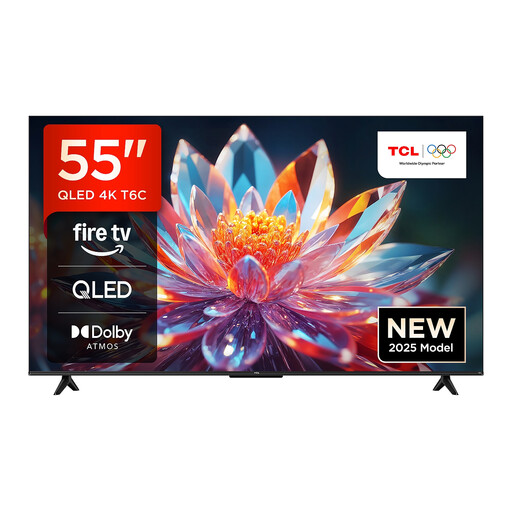
Why this model stands out The TCL 55T6C offers an affordable entry into QLED technology. With built-in Fire TV, comprehensive HDR support including Dolby Vision, and solid picture quality, it's a compelling option for streaming users.
Advantages
Who is this model for? This model is ideal for budget-conscious buyers looking for a 55-inch TV with good picture quality and modern smart features for daily streaming of movies and series.
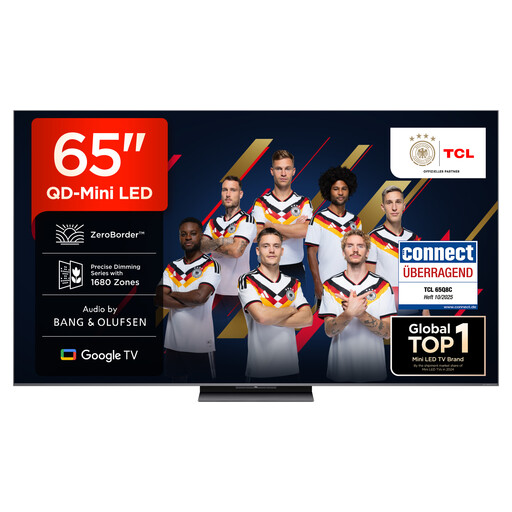
Why this model stands out The TCL TV 65Q8C combines QD-Mini LED technology with a high 144Hz refresh rate and an audio system by Bang & Olufsen. The frameless ZeroBorder design and CrystGlow HVA panel make it an option for users with high standards for picture and sound.
Advantages
Who is this model for? This 65-inch TV is aimed at home cinema enthusiasts and gamers who want premium picture and sound quality, as well as fluid performance for fast-paced content.
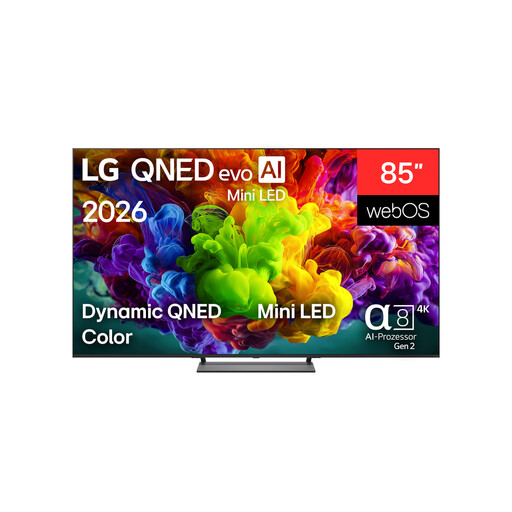
Why this model stands out The LG QNED 85QNED93B6A is a device for the ultimate large-screen experience. With a massive 85-inch screen, advanced Mini LED technology (QNED), and a powerful AI processor, it delivers impressive picture and sound performance.
Advantages
Who is this model for? This model is designed for users who want an uncompromising home cinema and gaming experience on a very large screen and value state-of-the-art image processing technology.
This selection represents just a snapshot of the available models. If you are looking for other sizes, technologies, or price ranges, you may find the right device in our wider product range.
Discover our full selection of Smart 4K TVs and find the model that perfectly fits your needs.
QLED (Quantum Dot Light Emitting Diode) uses an additional layer of nanocrystals (Quantum Dots) to improve the color accuracy and brightness of a conventional LED TV. Mini LED is a backlight technology that uses thousands of very small LEDs. This allows for much more precise control of brightness in different areas of the picture (Local Dimming), resulting in higher contrast and better black levels. Many high-end devices combine both technologies.
For most console gamers, including those with a PS5 and Xbox Series X, a 120Hz TV is sufficient, as this is the maximum refresh rate these consoles support at 4K resolution. However, a 144Hz gaming TV offers an additional advantage for PC gamers whose graphics cards can deliver higher frame rates, providing even smoother motion. For console gamers, the difference between 120Hz and 144Hz is often negligible in practice.
Dolby Vision is an advanced HDR format that dynamically adjusts picture information. Unlike static HDR10, which uses a fixed brightness and contrast setting for the entire film, Dolby Vision can optimize these values for each individual scene. The result is a more detailed and nuanced picture. Dolby Atmos is an object-based audio format that creates three-dimensional sound. It precisely places sound effects in the room, including above the viewer, creating a significantly more immersive soundscape than conventional surround sound systems.