A 4K Smart TV is a cornerstone of the modern digital home. Choosing the right model depends on a range of technical specifications that should be tailored to individual use cases like streaming, gaming, or home cinema. This guide analyses the crucial parameters to help you make an informed purchasing decision.
Buying Guide: What to Look for in a 4K UHD TV
The decision for a new television should be based on an objective evaluation of its picture technology, connectivity, and software. The following criteria are decisive for a device's performance and future-proofing.
1. Picture Technology: LED, QLED, and OLED Compared
The panel technology is the primary determinant of display quality.
- Direct LED (DLED): In this technology, light-emitting diodes are distributed behind the entire screen. This allows for more uniform illumination compared to Edge-LED models. Panels like HVA (High-Performance Vertical Alignment) also offer high contrast ratios and deep black levels.
- QLED (Quantum Dot Light Emitting Diode): QLED TVs use a layer of nanoparticles (Quantum Dots) in front of an LED backlight. This technology enables the display of wider colour gamuts (e.g., over 95% of the DCI-P3 standard) and higher peak brightness, which is particularly beneficial for HDR content playback.
- OLED (Organic Light Emitting Diode): OLED panels do not require a backlight, as each pixel is self-emissive. This results in perfect black levels and a theoretically infinite contrast ratio. Response times are extremely short, under 1 ms, making them ideal for fast-paced content.
2. HDR Formats: Dolby Vision and HDR10+
High Dynamic Range (HDR) expands a picture's contrast range and colour space. The most important dynamic HDR formats are:
- Dolby Vision: This format optimises brightness and colour for every single scene, or even every single frame. It requires licensing from Dolby and is supported by many streaming services like Netflix.
- HDR10+: As an open standard, HDR10+ also offers dynamic metadata processing for scene-by-scene picture optimisation.
A TV that supports both formats offers maximum compatibility with available content.
3. Gaming Features: HDMI 2.1 and Refresh Rate
For users of current-gen consoles (PlayStation 5, Xbox Series X), specific gaming features are crucial.
- TVs with HDMI 2.1: This connection standard is a prerequisite for transmitting 4K signals at 120 frames per second (fps). It also supports key gaming technologies.
- Variable Refresh Rate (VRR): VRR synchronises the TV's refresh rate with the output rate of the console or PC. This prevents screen tearing and ensures a smooth gaming experience. AMD FreeSync and NVIDIA G-Sync are common VRR implementations.
- Auto Low Latency Mode (ALLM): ALLM automatically switches the TV to the mode with the lowest input lag as soon as a console launches a game.
- 120Hz TV / 144Hz TV: A high native refresh rate provides sharper and smoother motion handling, which is advantageous not only for gaming but also for watching sports.
4. Audio and Smart Features
Modern TVs integrate advanced audio and software solutions.
- Dolby Atmos: This object-based audio format creates a three-dimensional soundscape by precisely placing audio in the room. For an immersive effect, either a high-quality integrated speaker system or an external soundbar is required.
- Smart Platform: Operating systems like Google TV or webOS provide access to a multitude of apps such as Netflix, YouTube, Prime Video, and Disney+. An intuitive user interface and regular software updates are important here.
- Smart TV with Voice Control: Integrated assistants like Google Assistant or Amazon Alexa allow you to control the TV and connected smart home devices via voice command.
Our Selection of 4K Smart TVs for 2026
Based on the technical criteria above, we have compiled a selection of models that cater to different requirements.
TCL 75V6C 75-Inch 4K Ultra HD Smart TV
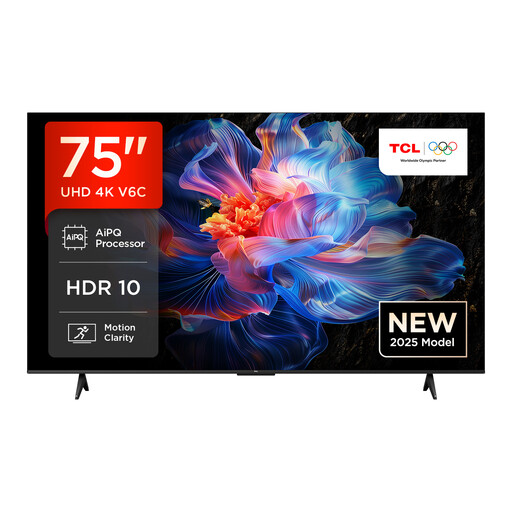
Why we recommend this product: The TCL 75V6C offers an impressive 75-inch screen size combined with comprehensive HDR support. Its HVA panel ensures good contrast levels, while Google TV provides a versatile and user-friendly smart platform. With HDMI 2.1 and ALLM, the device is also equipped for casual gaming.
Pros:
- Picture Quality: Supports Dolby Vision and HDR10+ for dynamic picture optimisation.
- Smart Features: Google TV with built-in Chromecast and access to all major streaming services.
- Connectivity: Equipped with HDMI 2.1, Bluetooth 5.2, and a Triple Tuner (DVB-T2/C/S2).
- Control: Integrated voice control via Google Assistant and Amazon Alexa.
Who it's for: Users looking for a large-screen home cinema experience for films and series who value a comprehensive smart TV platform without needing to budget for high-end gaming features.
View Product: TCL 75V6C for €499 incl. free installation & delivery
TCL 55T8C 55-Inch QLED 4K UHD TV
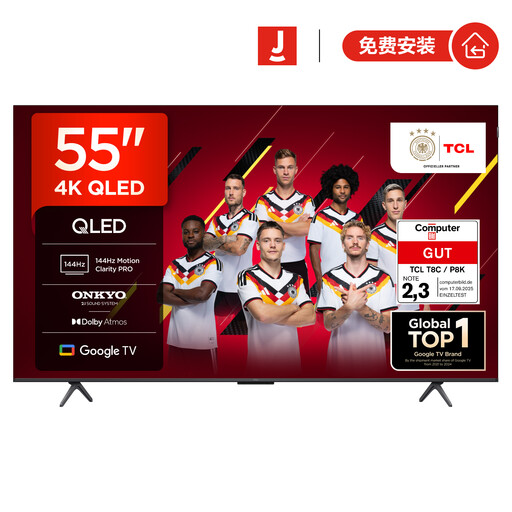
Why we recommend this product: This model is designed as a high-performance gaming TV. Its QLED panel, with a 144Hz native refresh rate and support for VRR (AMD FreeSync), delivers an extremely fluid and responsive display. The integrated Onkyo 2.1 sound system with a subwoofer also provides a solid audio foundation without external devices.
Pros:
- Gaming Performance: 144Hz Motion Clarity Pro, HDMI 2.1, ALLM, and VRR for competitive gaming.
- Display: QLED technology with 97% DCI-P3 colour gamut coverage for vibrant colours.
- Audio: Integrated Onkyo 2.1 sound system with Dolby Atmos for room-filling sound.
- HDR Support: Comprehensive compatibility with HDR10+, Dolby Vision, and HLG.
Who it's for: Demanding console and PC gamers looking for a TV with minimal latency and a maximum refresh rate. Also suitable for sports fans who will benefit from the sharp motion handling.
View Product: TCL 55T8C 55-Inch QLED TV
LG OLED Evo AI C4 42-Inch 4K Ultra HD Smart TV
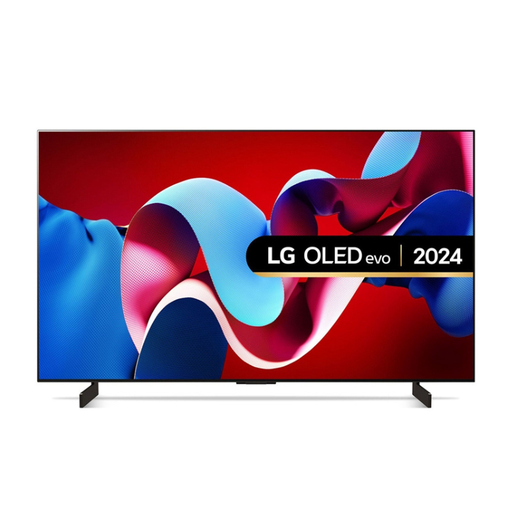
Why we recommend this product: The LG OLED42C44LA combines the superior picture quality of OLED evo technology with a compact 42-inch form factor. Thanks to its self-lit pixels, it delivers perfect contrast and an extremely fast 0.1 ms response time. The α9 Gen 7 AI Processor optimises picture and sound in real-time, while support for 144Hz VRR, G-Sync, and FreeSync Premium ensures an uncompromising gaming experience.
Pros:
- Picture Quality: OLED evo panel with perfect blacks, infinite contrast, and Brightness Booster.
- Processor: α9 Gen 7 AI Processor for advanced upscaling and HDR Tone Mapping.
- Gaming Specs: 144Hz VRR, NVIDIA G-Sync, AMD FreeSync Premium, and four HDMI 2.1 ports.
- Software: webOS 24 with guaranteed updates and built-in Chromecast.
Who it's for: Users who demand the highest picture quality and are looking for a device for a smaller living room, an office, or as a high-end gaming monitor. Ideal for cinephiles and hardcore gamers.
View Product: LG OLED Evo AI C4 42-Inch
Discover More Models
If none of the featured models exactly meet your requirements, you can find a wider selection of devices with different sizes and specifications in our main category.
Discover more Smart 4K Ultra HD TVs in our range.
Frequently Asked Questions (FAQ)
1. What is the difference between QLED and OLED? The fundamental difference lies in how light is produced. QLED TVs use an LED backlight, where the light is filtered through a quantum dot layer to create colours. In contrast, OLED TVs use organic, self-emissive pixels that can be turned on and off individually. This allows OLED devices to achieve perfect black levels and higher contrast, while QLED models often reach higher peak brightness.
2. Do I need HDMI 2.1 for gaming? For using current-gen consoles like the PlayStation 5 or Xbox Series X, HDMI 2.1 is highly recommended. Only this standard allows for the transmission of 4K signals at 120Hz. Furthermore, it is the technical foundation for features like VRR (Variable Refresh Rate) and ALLM (Auto Low Latency Mode), which are crucial for a smooth and responsive gaming experience.
3. How important is the refresh rate (Hz) on a TV? The refresh rate, measured in Hertz (Hz), indicates how many frames per second a TV can display. A standard TV operates at 60Hz. A 120Hz TV or a 144Hz model can display motion much more smoothly and sharply. This is particularly noticeable in fast-paced video games, sports broadcasts, and action films, and it reduces motion blur.

