Choosing a new television can be a challenge given the multitude of technologies and technical terms. Jargon like OLED, QLED Mini LED, 120Hz, and Dolby Atmos dominates the market, but what do they really mean for your home viewing experience? This guide aims to provide clarity. It explains the crucial features of modern 4K TVs and presents a selection of models for different use cases and budgets, enabling you to make an informed purchasing decision.
Key Criteria for Choosing a 4K TV
Before you decide on a model, some technical basics should be considered. These three points will help you tailor the specifications to your personal needs.
Display Technology: OLED, QLED Mini LED, or LED?
The panel technology is the heart of any television and is the primary determinant of picture quality.
- LED/LCD: This is the established standard technology. It uses a backlight to illuminate the panel's liquid crystals (LCD). Models of this type offer a good price-to-performance ratio and high brightness, which is advantageous in bright rooms.
- QLED Mini LED: This is an evolution of LED technology. Thousands of tiny Mini LEDs allow for more precise control of the backlight across hundreds or thousands of zones (Local Dimming). Combined with a Quantum Dot layer (QLED) for purer colours, this results in higher contrast, deeper black levels, and brilliant colour reproduction that approaches that of OLED TVs.
- OLED TV: With an OLED TV, each individual pixel illuminates itself and can be completely turned off when needed. The result is perfect black without any residual light (blooming). This creates infinite contrast and exceptional colour accuracy, especially in dark scenes.
Refresh Rate and Ports for Gaming and Sports
The refresh rate, measured in Hertz (Hz), indicates how many frames per second a TV can display.
- 60 Hz: This is the standard for most movies and TV series. For everyday use, this frequency is sufficient.
- 120 Hz or more: A TV with 120Hz or even 144Hz can display motion much more smoothly and sharply. This primarily benefits video gamers with current consoles (PlayStation 5, Xbox Series X) and PC gamers. Motion blur is also reduced during fast-paced sports broadcasts. For a future-proof gaming TV, HDMI 2.1 ports are also important, as they support features like VRR (Variable Refresh Rate) and ALLM (Auto Low Latency Mode) for a smooth and responsive gaming experience.
Sound and Smart Features
A modern TV is more than just a screen.
- Sound: Integrated speaker systems have improved significantly. A Dolby Atmos TV can simulate three-dimensional sound that places the viewer right in the middle of the action. However, for a true home cinema experience, an external soundbar or surround system often remains the sonically superior solution.
- Smart TV: The operating system determines the user experience and app selection. Platforms like Google TV, Tizen (Samsung), or webOS (LG) offer access to all major streaming services. Look for intuitive operation and features like voice control or compatibility with your smartphone ecosystem (e.g., AirPlay 2 for Apple devices).
Our Top 4K TV Picks
Based on the criteria mentioned, we have compiled three models from different categories that cover various requirements.
TCL 65Q6C QLED Mini LED TV, 65-Inch
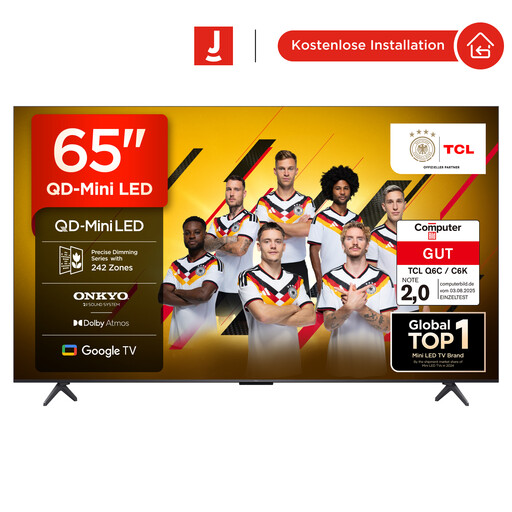
[Limited €529, CODE: T70] TCL 65Q6C QLED Mini LED TV, 65-Inch, 4K HDR Premium, Dolby Vision IQ & Atmos, Onkyo 2.1 Sound, Smart TV with Google TV, Game Master, 144Hz Motion Clarity Pro, AMD FreeSync Premium Pro, HDMI 2.1, AirPlay 2, Google Assistant & Alexa
Why this model stands out: The TCL 65Q6C combines advanced picture technologies like QLED Mini LED with a very high refresh rate of 144Hz. This package is complemented by comprehensive gaming features and an integrated Onkyo sound system, making it a versatile device for all kinds of entertainment.
Advantages:
- Picture Quality: QD-Mini LED with local dimming for high contrast and a peak brightness of 1000 nits (manufacturer's specification).
- Gaming Features: 144Hz VRR, AMD FreeSync Premium Pro, Game Master mode, and HDMI 2.1 for fluid gameplay.
- Sound: Integrated 2.1-channel sound system by Onkyo with support for Dolby Atmos.
- Smart Features: Google TV as the operating system with a built-in Google Assistant, Alexa compatibility, and AirPlay 2.
Who is this model for? This model is a great choice for demanding users, especially gamers and movie fans, who are looking for high picture quality and modern features without wanting to spend the budget for a high-end OLED device. The 65-inch TV offers an immersive size for most living rooms.
Samsung U7099F 55-Inch Crystal UHD 4K LED TV
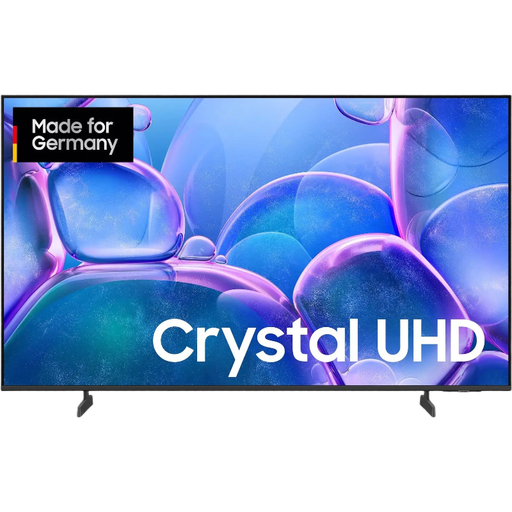
Samsung U7099F 55-Inch (138cm) Crystal UHD 4K LED TV, Crystal Processor 4K, MetalStream Design, SmartThings, Knox Security, Gaming Hub, AI Upscaling, Smart AI TV [Energy Class G]
Why this model stands out: The Samsung U7099F is a solid everyday TV that offers reliable 4K picture quality and a mature Smart TV experience. The Crystal Processor 4K ensures good colour reproduction and effective upscaling of lower-resolution content.
Advantages:
- Processor: The Crystal Processor 4K optimises colours and contrast.
- Smart Home Integration: Seamless integration into Samsung's SmartThings ecosystem.
- Design: Slim MetalStream design with thin bezels.
- Content: Access to the Samsung Gaming Hub and Samsung TV Plus with a variety of free channels.
Who is this model for? Ideal for budget-conscious buyers and families looking for a straightforward and reliable 4K TV for daily streaming and television viewing. It offers all the necessary smart features in an attractive chassis.
LG 83” OLED evo 4K Smart TV (OLED83G67LW)
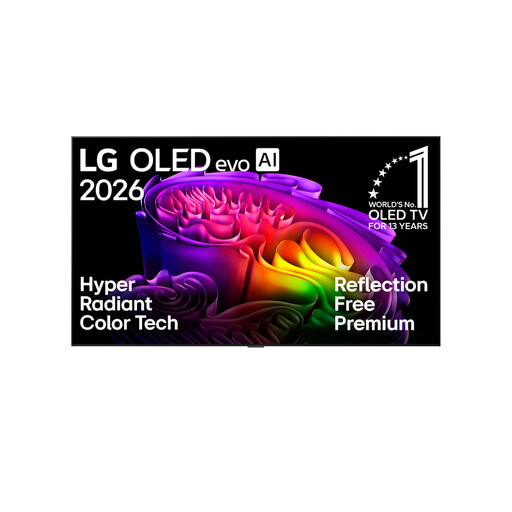
LG 83” OLED evo 4K Smart TV (OLED83G67LW) – α AI Processor, OLED evo Panel with Perfect Blacks & Ultra Vivid Colours, 165Hz Refresh Rate, Dolby Vision & Dolby Atmos, 4K Cinema Experience, NVIDIA G-Sync & AMD FreeSync Premium, Next-Gen Gaming TV, LG Smart Hub, Apple AirPlay 2 & Google Assistant, Slim Near-Bezel Design, Wall-Mountable Home Theater OLED TV
Why this model stands out: This model from LG represents the pinnacle of home entertainment. The OLED evo panel delivers perfect black levels and extremely high contrast thanks to its self-lit pixels. Combined with the huge 83-inch screen and a 165Hz refresh rate, it creates a breathtaking viewing experience.
Advantages:
- Picture Quality: OLED evo technology for perfect blacks, intense colours, and infinite contrast.
- Performance: α AI Processor for optimised picture and sound reproduction, plus a refresh rate of up to 165Hz.
- Cinema Experience: Support for Dolby Vision and Dolby Atmos on a large screen.
- Gaming: Fully equipped with NVIDIA G-Sync, AMD FreeSync Premium, and 4 HDMI 2.1 ports for next-gen consoles and PCs.
Who is this model for? This TV is aimed at home cinema enthusiasts and demanding gamers who refuse to compromise on picture quality and have the budget for a premium device. It is designed for wall mounting and transforms the living room into a cinema.
Looking for More Options?
The models presented here cover a broad spectrum, but the market offers many more alternatives. For users specifically looking for models with optimised gaming features, our Gaming TVs category offers a wider selection of devices with high refresh rates and low latency.
Frequently Asked Questions (FAQ)
What is the difference between OLED, QLED, and Mini LED?
In short: OLED pixels are self-emissive, enabling perfect black. QLED is an LCD technology with an additional colour layer (Quantum Dots) for more vibrant colours and high brightness. Mini LED is an advanced backlighting technology for LCD TVs that uses thousands of small LEDs to significantly improve contrast, bridging the gap between conventional LED TVs and OLEDs.
Do I need a 120Hz TV?
For watching movies and series, 60Hz is generally sufficient. However, if you own a current-gen gaming console, play on a PC, or enjoy watching fast-paced sports like football or Formula 1, a TV with 120Hz or more offers a visibly smoother and sharper picture by minimising motion blur.
Which TV size is right for me?
A common recommendation for 4K TVs is a viewing distance of about 1.5 times the screen diagonal. For a 65-inch TV (approx. 165 cm diagonal), an ideal distance would be around 2.5 meters (about 8.2 feet). Ultimately, however, the choice is also a matter of personal taste and the size of your room.


