
Lieferung heute & morgen

Qualitätsgarantie

Willkommens-Angebote freischalten: KOSTENLOSE Lieferung | Bis zu 80 % RABATT | Kostenlose 30-Tage-JoyPlus-Testphase
App herunterladen
A 4WD remote-control RC car should be able to do more than drive in a straight line on smooth ground. Most buyers are looking for grip on grass and sand, controlled manoeuvres, decent battery life and a body that can cope with the occasional splash. At the same time, some product descriptions can create unrealistic expectations.
A high top-speed claim can sound impressive at first. But for uneven terrain, four-wheel drive, torque, tyre tread and ground clearance are often more important. Even a fast RC off-road truck can lose traction on loose ground if its tyres don’t offer enough grip or only some of its wheels are driven.
So look for genuine 4WD, differentials and grippy rubber tyres. These features help transfer the motor’s power to the ground more evenly.
If an RC car is described as waterproof, check exactly what the claim refers to. Splash resistance, damp grass and short drives over wet ground are not the same as deep water, pressure washing or full submersion. After driving through mud, check, clean and dry the vehicle, drivetrain and battery compartment.
Battery capacity alone tells you little about actual running time. Driving style, terrain, outdoor temperature and frequent stunts all affect how quickly the battery runs down. A removable battery, a compatible charging cable and a clearly stated voltage are useful features. The reference model uses a 7.4 V, 1,500 mAh lithium-ion battery; the remote control also needs three AA batteries, which are listed as not included.
An all-wheel-drive RC car sends power to all four wheels. This can help when starting on slopes and driving over loose ground, but it doesn’t replace good driving technique. For sand, mud, grass and snow, large, grippy tyres with a durable tread pattern are a good choice.
An aluminium or metal chassis can help protect the frame from impacts. Independent suspension and shock absorbers also reduce the strain of driving over uneven ground. Buyers should consider the vehicle’s size, too: a 1:18 model is more compact and easier to transport than a large RC off-road truck, but it may struggle sooner with very high obstacles.
The reference model’s product description lists a brushless motor with a 2S-25A speed controller, while the product title mentions a carbon-brush motor. When product details conflict like this, check the current product page or contact the seller before buying.
A 2.4 GHz remote control is useful for everyday driving, as it can provide a reliable connection and make it easier to use several vehicles in the same area. For children, a simple pistol-grip or handheld controller is usually easier to understand than a complex multi-function controller.
An RC car with LED lights is easier to see in poor light. However, lights don’t make the surroundings safer or make it legal to drive on public roads. According to the warning, the reference model isn’t suitable for children under three. Younger children must use it under the direct supervision of an adult.
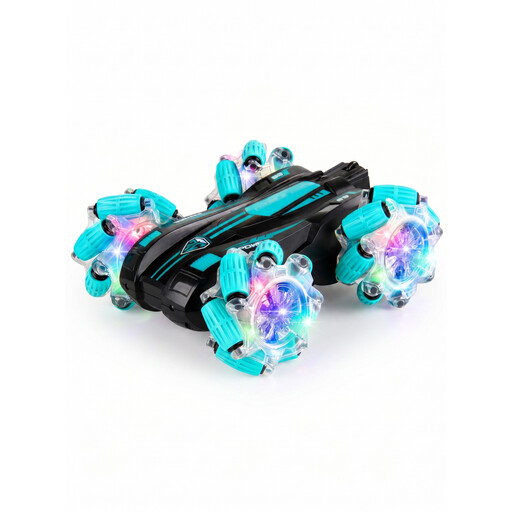
Why it suits this user: This compact 4WD stunt car is for buyers who want to try short, varied manoeuvres indoors or outdoors.
The product description specifies 9 cm Mecanum wheels, double-sided driving and 360-degree turns. This gives you a clearer idea of what it’s designed for than vague speed claims.
4WD, LED-lit wheels and a rechargeable lithium battery, according to the product description.
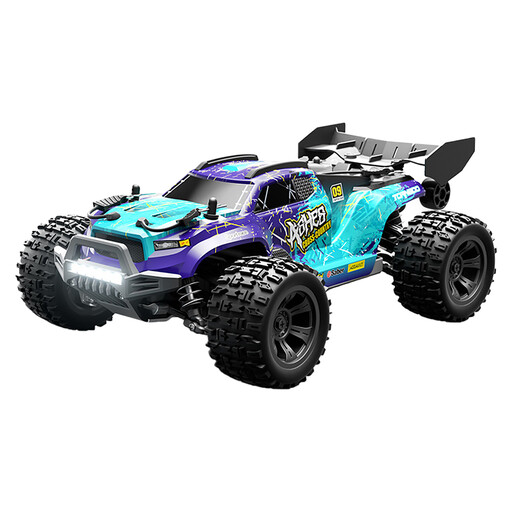
Why it suits this user: This model combines a metal chassis, shock absorbers, four-wheel drive and a 2.4 GHz remote control for regular outdoor use.
The product details specify 7.4 V, 1,500 mAh, an aluminium chassis, a differential, metal drive shafts and independent shock absorbers. This makes it easier to check the key buying criteria.
Chunky tyres, LED headlights and a water-resistant design for different surfaces, according to the product description.
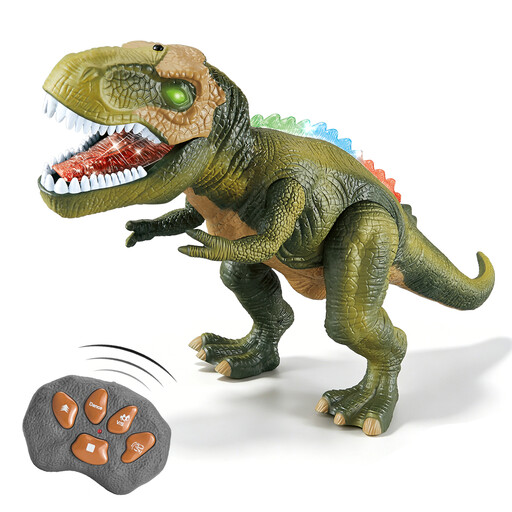
Why it suits this user: An alternative to a 4WD RC buggy, this remote-control dinosaur is a good choice for families looking for a mainly indoor gift with lights and movement features.
It’s clearly designed for flat surfaces and simple remote control. It isn’t marketed as an off-road vehicle with four-wheel drive.
A 2.4 GHz remote control, light and sound effects, and a built-in battery, according to the product description. Batteries for the dinosaur and remote control are not included.
We’ve put together a complete, regularly updated list of products that meet these strict selection criteria and fully comply with the safety regulations in force in the EU.
After driving on sand or through mud, clear any heavy dirt from the tyres and underside. Don’t leave water sitting in the battery compartment or on electrical connections. Charge lithium batteries with the charger provided, and don’t use damaged batteries or leave them charging unattended for long periods.
Ongoing costs include replacement batteries, AA batteries for the remote control, tyres and, where needed, gears or drive shafts. A set with a standard battery and easy-to-access wear parts can be more practical in the long run than a model with specialist components that are hard to find.
There’s no reliable one-size-fits-all answer. Battery capacity, motor, terrain, temperature and driving style all affect running time. A spare battery can cut down the wait between drives. The 4WD off-road model mentioned above is listed as having a 7.4 V, 1,500 mAh battery.
A product claim of this kind may refer to splash or moisture resistance. It doesn’t automatically mean the vehicle can be fully submerged. After driving through snow or mud, clean and dry the vehicle, and check the battery compartment.
That depends on the user’s age, the controls and the warnings for the particular model. The off-road model mentioned above isn’t intended for children under three. Younger users and anyone trying more challenging manoeuvres should always be directly supervised by an adult.