
Lieferung heute & morgen

Qualitätsgarantie

Willkommens-Angebote freischalten: KOSTENLOSE Lieferung | Bis zu 80 % RABATT | Kostenlose 30-Tage-JoyPlus-Testphase
App herunterladen
The thrill of a perfectly controlled drift is undeniable. Steering a remote-controlled car sideways through a corner demands both precision and the right equipment. However, entering the RC drift hobby can quickly lead to frustration if your purchase is based on marketing promises rather than technical facts. Many beginners invest in models that are unsuitable for genuine drifting. As your Joybuy Product Recommendation Officer, I'll help you identify the common pitfalls and find a model that truly meets your needs.
Before we look at the essential features, let's highlight the three most common reasons why buyers are dissatisfied with their first RC drift car.
To avoid the problems mentioned above, you should check three technical specifications before buying. These features distinguish a simple toy from a capable RC car for beginners and advanced users.
This is the most critical feature for a genuine driving experience. Proportional control means you can finely adjust the speed and steering angle. Press the throttle lightly, and the car moves slowly. Steer just a little, and the wheels turn only slightly. This is the only way to maintain the balance needed for a long, clean drift. Look for terms like "proportional control" or "fully proportional" in the product description.
A 4WD drift car distributes the motor's power to all four wheels. This ensures stable and predictable handling during a drift. The front wheels pull the vehicle through the corner, while the rear wheels provide the controlled slip.
An integrated gyro system is a huge help, especially for beginners. This small sensor detects when the rear of the car is about to break loose and automatically counter-steers in a fraction of a second. This stabilises the vehicle and prevents unwanted spin-outs. On many hobby-grade models, you can even adjust the gyro's sensitivity to match your skill level.
A good entry-level model should offer more than just one function. The ability to change the tires is crucial here. A set typically consists of:
An RC car with interchangeable tires is therefore two vehicles in one: a drift artist and an agile remote-controlled race car. A simple suspension system also ensures that all four wheels maintain contact with the ground, even on slightly uneven surfaces.
Here are some models selected based on the objective criteria above, suitable for different user profiles.
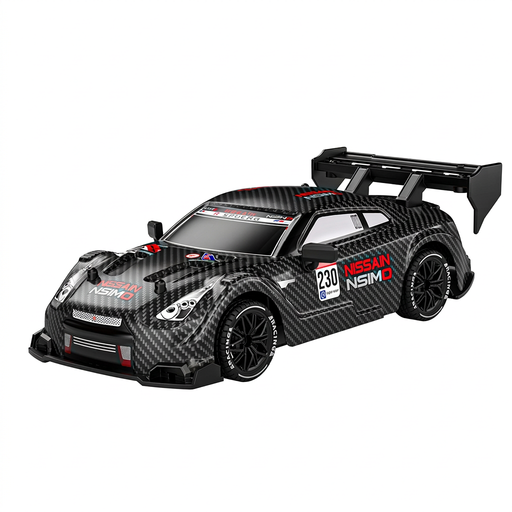
Why This Fits Their Persona: Ideal for anyone wanting to try the hobby without a large initial investment. This 1:24 GTR RC car provides the necessary fundamentals like all-wheel drive and two sets of tires in an attractive design.
It bypasses the trap of limited customisation by coming with one set of drift tires and one set of racing tires right out of the box. The 4WD system provides a controllable foundation.
A complete package for getting started immediately. Switching between drift and race modes is possible without any additional purchases.
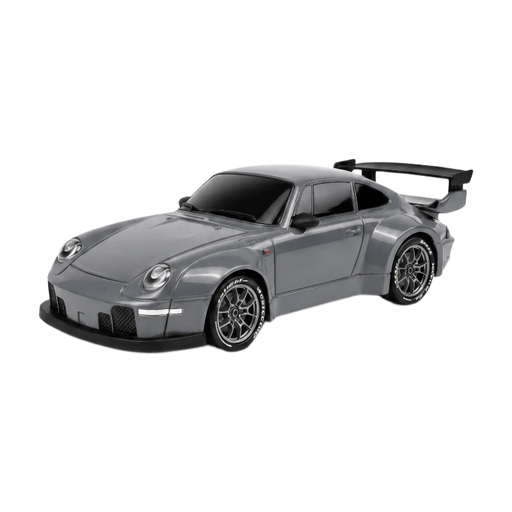
Why This Fits Their Persona: Perfect for users who value technical details and adjustability. The explicitly mentioned adjustable gyro system and steering servo allow for more precise tuning of the car's handling.
This model directly addresses the stability trap. The adjustable gyro system provides active driving assistance that can be reduced as your skills improve. The fully proportional control is a hobby-grade standard.
The adjustable gyro system and precise steering servo offer a high degree of control and tuning potential that goes beyond basic entry-level models.
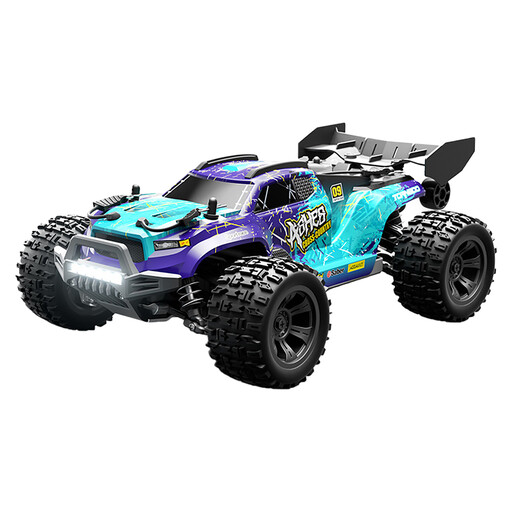
Why This Fits Their Persona: For drivers who don't want to be confined to smooth indoor floors. This more robust 1:18 scale model with a reinforced chassis and powerful motor is also suitable for drifting on asphalt or slightly uneven terrain.
It solves the problem of being limited to indoor use. While delicate 1:24 models quickly reach their limits on rough surfaces, this vehicle is more resilient thanks to its aluminium chassis and larger tires.
Increased ground clearance and a robust build expand its use beyond smooth indoor spaces. The powerful motor provides ample power for more demanding surfaces.
We have compiled a complete, real-time list of products that fully satisfy these strict selection criteria and UK safety regulations.
1. What is the difference between a toy-grade and a hobby-grade RC car? The main difference lies in the controls and maintainability. Hobby-grade RC cars almost always feature proportional controls for precise manoeuvres. Furthermore, spare parts like motors, tires, or chassis components are typically available for them, allowing for repairs and upgrades. Toy-grade RC cars often have digital controls and are designed as a closed system where no parts can be replaced.
2. Is a gyro system really necessary for an RC drift car? It's not strictly necessary for experienced drivers, but it is a highly recommended feature for beginners and intermediate users. A gyro makes learning drift control much easier by stabilising the vehicle and preventing frustrating "spin-outs." It acts as a training aid that can be adjusted or turned off on many models once you've gained more experience.
3. Can I drive a 1:24 RC drift car outdoors? Yes, it's possible on suitable surfaces. Smooth concrete, clean asphalt, or tartan tracks work well. However, due to their low ground clearance and small tires, these models are unsuitable for grass, gravel, sand, or uneven paving stones. For such conditions, a more robust model in a 1:18 scale or larger, like the featured off-road truck, is a better choice.