
Lieferung heute & morgen

Qualitätsgarantie

Willkommens-Angebote freischalten: KOSTENLOSE Lieferung | Bis zu 80 % RABATT | Kostenlose 30-Tage-JoyPlus-Testphase
App herunterladen
A 4WD RC drift car combines four-wheel drive, precise remote control and controlled drifting. For teenagers aged 8 and over, adults and RC enthusiasts, it might seem like an obvious choice. In practice, however, models vary considerably in their tyres, drive system, battery, stability features and intended use.
As a Joybuy Product Recommendation Officer, I assess the details against clear criteria. This can help you avoid common buying mistakes, such as choosing a remote-controlled drift car that’s difficult to control on your intended surface, or one with accessories that don’t suit your driving style.
LED lights, music, stunt buttons and eye-catching bodies are easy to spot. But for controlled drifting, other features matter more: four-wheel drive, proportional throttle and steering, suitable tyres and a well-tuned suspension.
A 1:24 RC drift car is compact and works well indoors, on tiles or on other smooth floors. A small model will reach its limits more quickly on rough tarmac, grass or sand. So always check that the product description specifies the surfaces it’s designed for.
When choosing an RC car with a lithium battery, check the battery type, voltage, capacity and charging method, as well as the stated running time. Any quoted play time is usually based on specific conditions and may vary with high speeds, frequent drifting or cold temperatures.
For example, the 1:24 GTR model is listed as running for approximately 20 to 40 minutes per charge. This figure applies to that specific product; it isn’t a general estimate for every 4WD model. It’s also worth checking whether a USB charging cable is included and how the remote control is powered.
Drift tyres generally offer less grip, making controlled slides easier. Racing tyres are designed for more grip and straighter driving. Models with interchangeable drift and racing tyres let you match the set-up to the surface and your driving style.
If you focus only on top speed, you might overlook how differently a car handles on smooth indoor floors compared with flat outdoor tarmac. That’s why tyre choice is an important factor when selecting a remote-controlled racing toy.
A 4WD drive system sends power to all four wheels. This can be useful when drifting, cornering and driving on surfaces with varying levels of grip. The balance between the motor, gearbox, tyres and suspension still matters, though.
Proportional controls allow finer throttle and steering movements than simple on-off buttons. For beginners, a second speed setting is useful: the lower setting reduces speed while you practise, while the higher one is intended for more experienced drivers.
An RC car with a gyroscope can help with steering during drifts. An adjustable gyroscope can be set to suit your skill level and the surface you’re driving on. It won’t replace practice, though, or automatically prevent every loss of control.
If the sensitivity is too high, the car may feel twitchy. If it’s too low, the stabilising effect may be less noticeable. A model with adjustable assistance offers more flexibility than one with a system you can’t configure.
ABS plastic is used for the bodies of many small RC models. You should also check for bumpers, wheel suspension and shock absorption. These components affect how the car handles minor collisions and uneven surfaces.
Charge and store a lithium battery in accordance with the instructions. During charging, choose a dry, non-flammable area out of reach of young children. Before each drive, check the body, wheels, cables and battery holder for visible damage.
The models below cater to different needs. Details are based on the relevant product descriptions, so check the contents, age recommendation and latest product information before buying.
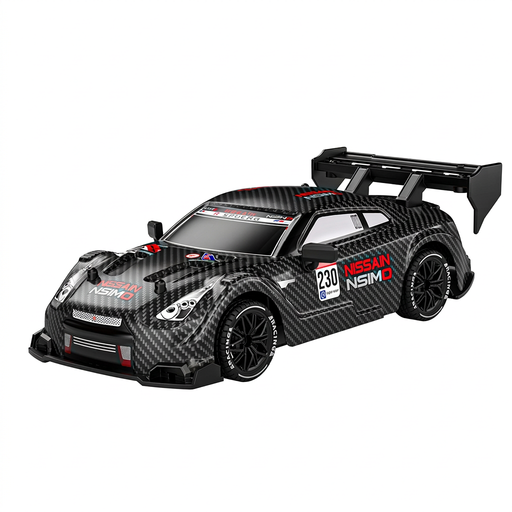
Why this product suits this profile: This compact model combines 4WD, proportional 2.4 GHz control and two sets of tyres. It’s a good choice for anyone who wants to try drifting and racing without opting for a larger vehicle.
The product description specifies interchangeable drift and racing tyres, as well as a running time of approximately 20 to 40 minutes. This makes it easier to assess key details than with vague promises.
1:24 scale, 4WD, lithium battery, USB charging and LED lights, according to the product details.
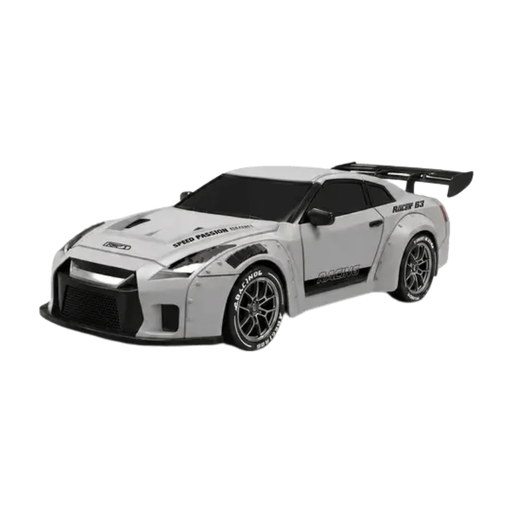
Why this product suits this profile: This RC hobby car for teenagers and adults features an adjustable gyroscope, servo steering system, 7.4-volt lithium-polymer battery, independent suspension and an accessories set.
There’s more to the specification than LED effects: a gyro servo, proportional 2.4 GHz control, suspension and two types of tyre are all listed.
7.4 V LiPo battery, adjustable stabilisation, LED lights, shock absorption and accessories such as traffic cones, a screwdriver and USB charger, according to the product description.
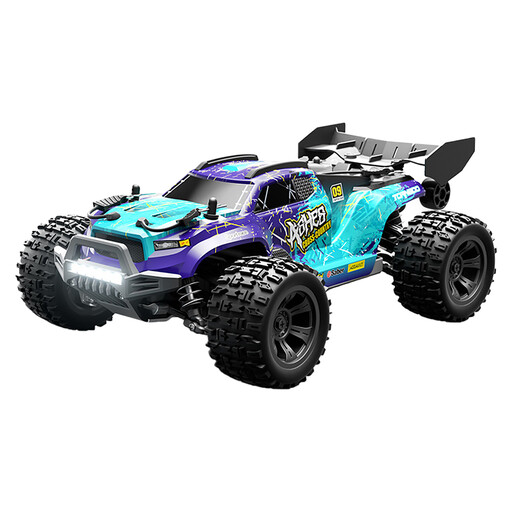
Why this product suits this profile: The larger 1:18 model is for drivers who want to venture beyond smooth indoor surfaces. Its chunky tyres, metal chassis, suspension and LED headlights are designed for flat outdoor areas and varied terrain.
The product details specify the battery ratings, a 2S speed controller, an aluminium chassis and shock absorbers. This gives you a clearer idea of its durability and power supply than a general claim about off-road performance.
7.4 V 1500 mAh lithium battery, 4WD metal chassis, independent shock absorbers, non-slip tyres and bright front LEDs, according to the product description.
We’ve put together a complete, regularly updated list of products that meet these strict selection criteria and the safety regulations in force in the EU.
It depends on the specific model. When choosing a remote-controlled car for children aged 8 and over, check the age recommendation, small-parts warnings, speed and ease of use. A lower speed setting can make it easier to get started. Adult supervision is recommended during charging and when younger drivers are using the car.
Compact 1:24 models are generally suited to flat, smooth surfaces such as tiles, wooden floors or concrete. Larger off-road models with treaded tyres are better for grass, sand and rough outdoor surfaces. Drift tyres usually offer less grip, while racing tyres can provide more traction on smooth tracks.
Ongoing costs include charging time, replacement tyres, spare batteries and batteries for the remote control. A rechargeable lithium battery reduces the need for disposable batteries in the car. Before buying, check whether a charger, spare tyres and tools are included, and whether spare parts are available separately.