
Lieferung heute & morgen

Qualitätsgarantie

Willkommens-Angebote freischalten: KOSTENLOSE Lieferung | Bis zu 80 % RABATT | Kostenlose 30-Tage-JoyPlus-Testphase
App herunterladen
A 1:24 4WD RC drift car combines compact dimensions with all-wheel drive, remote-controlled steering and different driving modes. For adults and teenagers, a model of this kind can be interesting both as an indoor RC drift car and for smooth outdoor surfaces. However, the available vehicles differ considerably in terms of battery, tyres, controls and spare parts.
Anyone who focuses only on speed or an eye-catching body may overlook important details. Three common buying misconceptions are particularly relevant:
A 4WD drive system is useful for drifting because power is transferred to both the front and rear axles. This can help when accelerating out of corners and performing circular drifts. For beginners, an RC racing car with a gyroscope is also a practical option. The gyroscope detects rotational movement and can assist with steering corrections.
It is important to distinguish between an adjustable gyroscope and stabilisation that is not described in detail. Adjustable sensitivity can be better adapted to your driving style and the surface. Two speed settings can make it easier to get started: a low setting gives you more time to make steering movements, while the higher setting can be used for racing.
A 2.4 GHz remote control is useful in multiplayer situations, as several vehicles can be operated at the same time without manually selecting traditional fixed frequency channels. Nevertheless, the product specifications should still be checked for details such as range, proportional control and steering response.
Interchangeable drift and racing tyres are among the most important features of a versatile RC drift car. Drift tyres with lower rolling resistance or less grip are typically suitable for smooth tiles, laminate flooring or specially prepared indoor surfaces. Racing tyres are more suited to straight-line driving and corners where greater traction is required.
Before buying, check the following:
A 1:24 model requires little space and can be used indoors. Carpets, coarse paving stones, damp floors and uneven paths can, however, significantly restrict its driving performance.
An RC car with a lithium battery is more convenient for everyday use than a model that requires disposable batteries to be replaced regularly. The product information should include details of the charging method, what is included and how the battery is installed or removed. The reference model specifies USB charging as well as overcharge and deep-discharge protection.
A stated running time of around 20 to 40 minutes, as quoted for certain models, depends on the driving mode and how the vehicle is used. An additional compatible battery may be useful for longer sessions. Lithium batteries should only be used with the supplied charging accessories, kept away from heat and never left charging unattended after play.
The body also deserves attention. An ABS plastic body can offer advantages in everyday minor collisions. However, it does not make the vehicle immune to heavy impacts. After every use, it is advisable to check the tyres, body, steering and battery connector.
The following models suit different requirements. The information is based on the product descriptions available for each model. Before buying, check the contents, age recommendation and current technical specifications on the product page.

Why this product suits the profile: This model combines 4WD, two sets of tyres and a rechargeable lithium battery. This gives beginners several driving options without requiring them to buy a second vehicle for racing.
The description explicitly mentions drift and racing tyres as well as USB charging. This makes it easier to assess the main ongoing accessory costs before buying.
4WD system, two interchangeable tyre types and an integrated lithium battery; according to the product information, designed for smooth indoor surfaces and level outdoor roads.
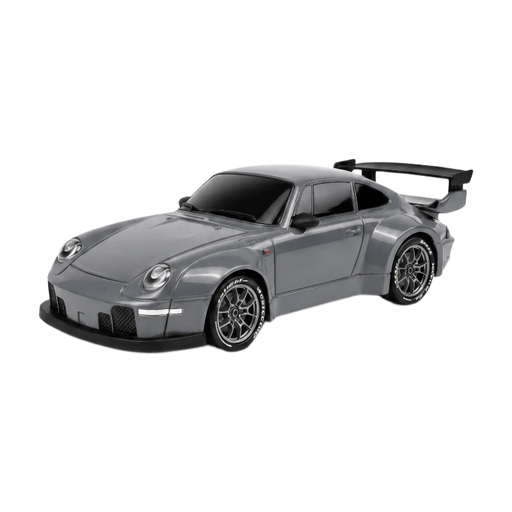
Why this product suits the profile: The features include an adjustable gyroscope, proportional 2.4 GHz control, LED lighting, two sets of tyres and suspension. This will appeal to buyers looking for more adjustment options than those offered by a basic remote-controlled drift car.
The product name states that the gyroscope is adjustable. Rather than making a vague claim about stability, it identifies a specific adjustment function.
Proportional throttle and steering control, adjustable gyro assistance, ABS body and suspension according to the product description.
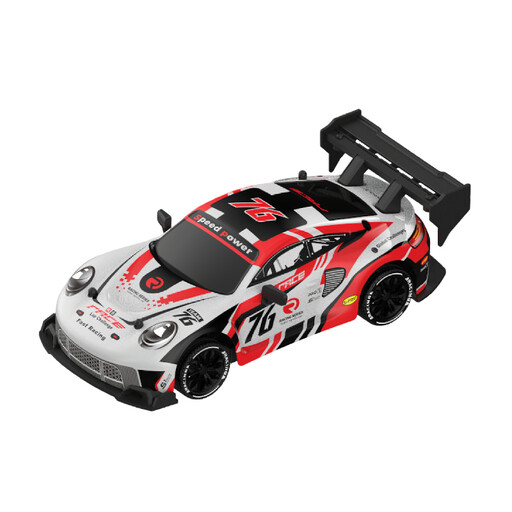
Why this product suits the profile: This model is aimed at users who want to combine indoor racing, drift practice and driving in low light. The product information also specifies a motor running at 25,000 rpm and a range of 50 m.
The description specifies suitable surfaces, USB charging, two sets of tyres and a stated range. This makes it easier to check whether the vehicle is suitable for the intended indoor or outdoor area.
4WD, LED lighting, 2.4 GHz control, interchangeable drift and racing tyres, plus a stated 25,000 rpm.
We have put together a complete, regularly updated list of products that fully meet these strict selection criteria and the safety regulations applicable in the EU.
Yes, provided the model offers a low-speed setting and easy-to-control handling. An adjustable gyroscope can help during your first drift attempts. During the learning phase, a clear, level indoor surface without hard obstacles is recommended.
This depends on the battery, motor, driving mode and surface. Some of the listed models are specified as offering around 20 to 40 minutes per charge. These are manufacturer specifications and may vary in real-world use. A suitable spare battery can be useful for longer driving sessions.
Depending on the product, it may be possible to use one on dry, level and smooth outdoor surfaces. However, a 1:24 scale model is not designed for rough terrain. Before your first drive, check the range, tyre selection, battery condition and local safety requirements.