
Lieferung heute & morgen

Qualitätsgarantie

Willkommens-Angebote freischalten: KOSTENLOSE Lieferung | Bis zu 80 % RABATT | Kostenlose 30-Tage-JoyPlus-Testphase
App herunterladen
Buying a child's first vehicle is a special moment. A 5-in-1 convertible tricycle promises to be a reliable companion for several years—from a push trike to their first independent ride. However, the market is flooded with models whose promises often fall short in practice. Many parents quickly discover that the supposedly versatile product is impractical, unstable, or unsuitable for certain age groups.
This guide highlights the three most common pitfalls and explains which objective criteria you should focus on to make an informed and durable choice.
The disappointment is immense when an expensive children's vehicle sits unused in a corner after just a few months. These problems are often due to design and material weaknesses that were overlooked at the time of purchase.
To avoid these pitfalls, you should focus your attention on three core technical features. These determine the tricycle's durability, safety, and actual utility.
The frame is the tricycle's skeleton. Models made of steel or high-quality aluminum offer significantly greater stability and longevity than all-plastic constructions. Pay close attention to the connection points and welds. The push handle should be firmly connected to the frame and be height-adjustable without wobbling. A direct steering function via the push handle gives parents full control.
A good convertible system is characterized by a simple, tool-free conversion process. Check how the pedals are removed, the rear wheels are folded, or the seat is adjusted. Ideally, all components can be adapted via a click-in system or with a few simple steps. This ensures you can flexibly adapt the vehicle to your child's development and actually use all the stages.
Safety equipment is non-negotiable. A 3-point or 5-point harness system is essential for toddlers as it stabilizes the upper body. A removable safety bar provides additional protection. On models with a rotating seat, it must lock securely in every position.
The type of tire has a major impact on ride comfort and noise level:
Based on the criteria mentioned, we have identified products that are suitable for different user profiles. This is not a ranking, but a guide based on objective product features.
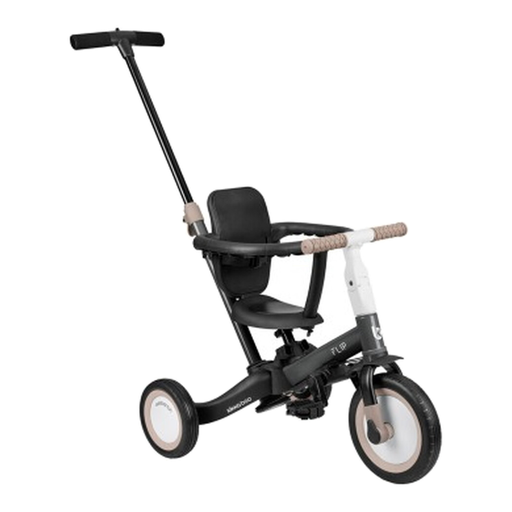
Why it's a good fit: This model is designed for families looking for a single purchase to cover the age range from 1 to 5 years. It covers all developmental stages from a pushed trike to independent riding, making it an economical long-term investment.
The robust carbon steel frame avoids the instability of many plastic models. The 5 conversion stages are clearly defined and practical, delivering on the promise of versatility.
The combination of 5-in-1 functionality, a steel frame, and a 2-point harness system provides a solid foundation for several years. The PU rear wheels ensure a quieter ride than basic EVA wheels.
In addition to the main vehicle, there are other sensible purchases that promote a child's development and are ideal as a gift for toddlers.

Why it's a good fit: Perfect for car rides, restaurant visits, or waiting rooms. It's lightweight, durable, and offers a clean alternative to pens and paper to keep kids creatively engaged.
Unlike toys that quickly become boring, this drawing tablet offers unlimited reusability. It's mess-free and stain-free, fostering creativity without the use of screens that emit blue light.
The tablet is extremely lightweight at 0.105 kg and features rounded edges. The one-touch erase button allows for instant new drawing fun without any waste.
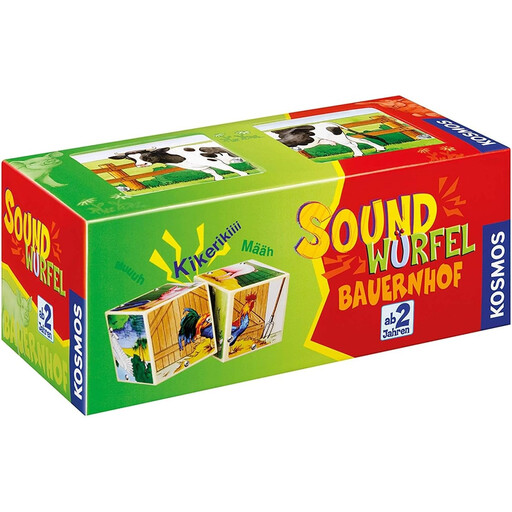
Why it's a good fit: This toy is suitable for toddlers aged 2 and up, playfully combining puzzle-solving with learning animal sounds. It promotes fine motor skills and cognitive association.
Unlike short-lived trendy toys, this sound cube offers clear educational value and high replayability. The durable design is built for use by toddlers.
The toy trains matching skills and auditory perception with realistic animal sounds. The sound activation upon correct placement of the cubes provides a direct learning effect.
We have compiled a complete, up-to-date list of products that fully meet these strict selection criteria and German safety regulations.
A convertible tricycle is generally useful from the age of 12 to 18 months. In this phase, it is used as a push trike with a push handle and safety bar. The ability for the child to rest their feet on footrests is important here. The subsequent conversion stages then accompany the child up to the age of about 4 to 5 years.
Safety depends on the construction. A stable push handle that is firmly connected to the frame and allows for direct steering control is a key safety feature. Additionally, you should look for a reliable harness system (3- or 5-point) and a safety bar for the youngest children. Before every ride, check that all locking mechanisms are securely engaged.
EVA tires are made from a lightweight foam, which makes them puncture-proof. However, they are harder, leading to a louder and less comfortable ride on uneven surfaces. PU (Polyurethane) tires are also puncture-proof but are denser and more flexible. They offer better cushioning, are quieter, and more wear-resistant, making them a great choice for mixed outdoor use.