
Lieferung heute & morgen

Qualitätsgarantie

Willkommens-Angebote freischalten: KOSTENLOSE Lieferung | Bis zu 80 % RABATT | Kostenlose 30-Tage-JoyPlus-Testphase
App herunterladen
A single vehicle that accompanies your child from their first year to their first day of school—that's the promise of a 5-in-1 tricycle. The concept is compelling: one product that transforms from a push trike to an independent tricycle and finally to a balance bike. In practice, however, many models fail to deliver on this promise. Before you make a decision, it's crucial to understand the common weaknesses that can quickly turn a smart investment into a bad purchase.
As your Joybuy Product Recommendation Officer, I'll help you identify the critical features and distinguish genuine functionality from marketing hype.
Many products advertise versatility, but not all live up to their claims. Pay close attention to these three points to avoid disappointment:
To avoid the pitfalls mentioned above, you should base your choice on objective criteria. These three parameters are decisive for the safety, longevity, and practical use of a 5-in-1 model.
The heart of any convertible vehicle is its frame. It must safely support the child's weight over several years and withstand the rigours of daily use.
The true quality of a 5-in-1 concept is revealed in the simplicity of its conversion. A good system allows for an intuitive, tool-free switch between the different stages—from a push trike with a push handle to a classic tricycle and a balance bike and tricycle in one. Look for models with click-in systems or quick-release clamps that allow for adjustments in just a few minutes.
For a kids' vehicle for ages 1-5, the following safety features are essential:
Based on the criteria above, we have selected a few products from our range that are well-suited for different user profiles.
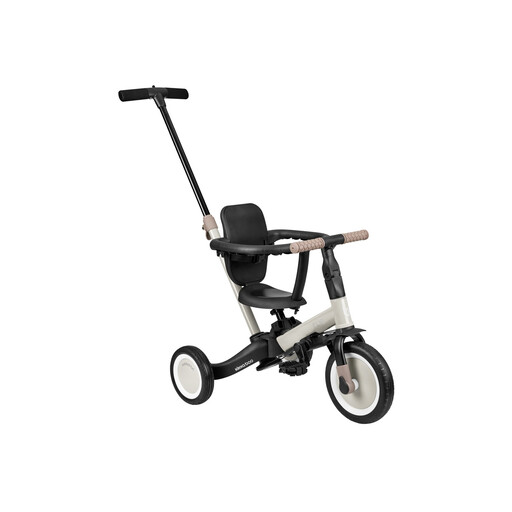
Why This Fits Their Persona: This model offers full 5-in-1 functionality and a solid set of basic features at an accessible price point. It's an economical choice for parents seeking a long-term solution without compromising on core functions.
The high-carbon steel frame bypasses the durability trap common in many all-plastic models in this price category.
Five vehicles in one, grows with the child over several years; 2-point harness system for safety in the early stages.
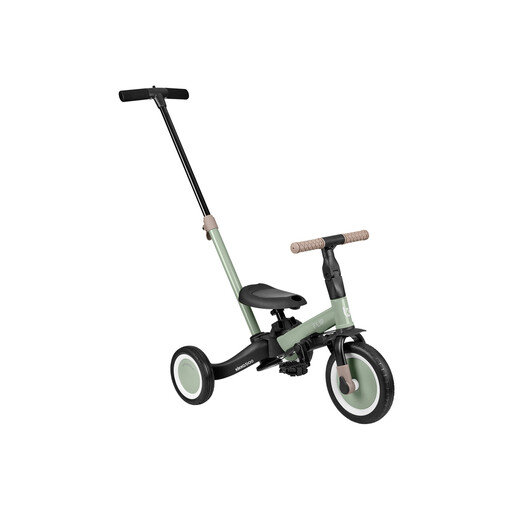
Why This Fits Their Persona: Ideal for parents looking for a robust and flexible solution for daily use, both indoors and out. The combination of a rubber front wheel and PU rear wheels offers a good compromise for various surfaces.
The simple conversion mechanism and 3-position adjustable push handle solve the problem of complicated daily handling.
Robust high-carbon steel construction; height-adjustable seat and handlebars for ergonomic growth.

Why This Fits Their Persona: This is a specialised alternative for parents whose main focus is on the early development of their child's sense of balance. It is not a 5-in-1 model, but a pure balance bike that excels at this one task thanks to its low weight and safety steering.
Instead of implementing many features mediocrely, it focuses on one core function and optimises it for safety and ease of use.
Extremely lightweight (2 kg according to manufacturer) thanks to its aluminium frame; puncture-proof EVA wheels and steering limiter for high safety.
A well-considered selection of vehicles that promote your child's motor skill development can be a great asset. We have compiled a list of products that meet our criteria for safety and durability.
A tricycle for 1-year-olds is useful when it offers a secure push function with a harness system and a stable push handle for parents. In this phase (approx. 12-18 months), it serves as an alternative to a buggy. The other functions become relevant as soon as the child begins to want to pedal and steer independently, usually from the age of 2 to 2.5 years.
On well-designed models, the conversion should be tool-free and take only a few minutes. Systems that rely on click-in mechanisms or easy-to-use clamps have a clear advantage here. If the conversion requires tools and loosening several screws, it indicates a less practical design for everyday use.
Both have their pros and cons. EVA wheels are lightweight, quiet, and puncture-proof, making them ideal for use indoors or on smooth paths. Rubber tyres (or PU tyres) offer more grip and better suspension on uneven terrain like pavements or park trails. Some models combine both to create a good all-around compromise. The choice, therefore, heavily depends on the primary intended place of use.