
Lieferung heute & morgen

Qualitätsgarantie

Willkommens-Angebote freischalten: KOSTENLOSE Lieferung | Bis zu 80 % RABATT | Kostenlose 30-Tage-JoyPlus-Testphase
App herunterladen
A 5 kWh battery for a balcony solar system is designed for households that want to use solar power beyond the middle of the day. The stored energy can be available when the household needs more electricity or the solar panels are producing less. However, for homeowners and eligible tenants in Germany, capacity is not the only thing that matters.
Many products seem especially flexible thanks to high wattage figures, modular systems or terms such as ‘plug-in’. In practice, though, missing cables, an unsuitable PV input rating or a battery that cannot be expanded can limit your options. This buying guide explains which details to check before ordering a solar battery for your balcony.
A rating of 5.12 kWh initially describes the battery’s integrated capacity. The amount of energy actually available may differ because of the state of charge, reserve capacity, conversion losses and the system’s control settings. That’s why you should always consider capacity alongside charging and discharging power.
A large battery is not automatically the right choice if your balcony solar system generates only a small amount of solar power. What matters is how much surplus electricity is actually produced over the course of the day.
PV input power describes how much solar power the battery can take in from connected panels. Output power indicates how much power the system can supply to appliances or a designated connection. A device with a 2,000 W PV input is therefore not automatically a home battery with a 2,000 W output.
If you want to power appliances with higher start-up or continuous power requirements, check that the output power and connection type are suitable for your intended use. Figures such as ‘2,400 W output power’ also apply only within the technical conditions specified for the particular system.
A plug-in solar battery can make choosing and planning a system easier, but it doesn’t replace checks on the installation location, cable routing, protection measures and grid connection. In Germany, you must take account of the applicable requirements set by the grid operator, the instruction manual and any relevant regulations.
It’s particularly important to check:
A battery for a balcony solar system should suit your daily surplus and your electricity use in the evening or at night. Check whether a fixed capacity of 5.12 kWh will be enough, or whether you might need to expand the system later. Some systems are modular, while others must not be connected to additional batteries, according to the product information.
A PV battery with a 2,000 W input can take in up to the stated maximum solar power. If your panels are installed across multiple roof areas, the number and operating range of the MPPT inputs may be relevant. A higher input rating is useful only if it suits the solar panels, their orientation and how they are connected.
A home battery with 2,400 W output power may be designed for higher household consumption than a smaller basic battery. However, this doesn’t automatically mean you can run all your household appliances at the same time. Check the continuous and peak power ratings, plug type and backup power function. Also check whether the output is grid-connected or intended solely for a separate appliance.
An all-in-one energy storage system has its main components integrated into a single unit. Even so, solar panels, mounting accessories, cables, additional batteries, a smart meter or special adaptors may not be included. Check each item in the box before you buy.
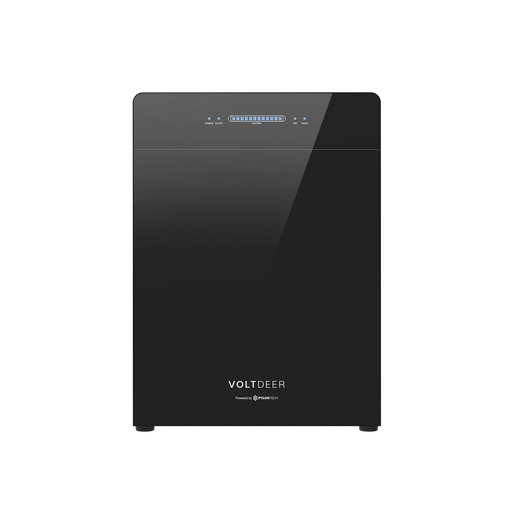
Why this product suits this profile: This integrated system is for households looking for a fixed 5.12 kWh balcony battery without a separate core battery. It offers up to 2,000 W PV input and up to 2,400 W output power.
The capacity, PV input power and output power are listed separately. Please note: according to the product description, solar panels, mounting accessories and additional batteries are not included.
5.12 kWh integrated battery; up to 2,000 W PV input and 2,400 W output power in one main unit.
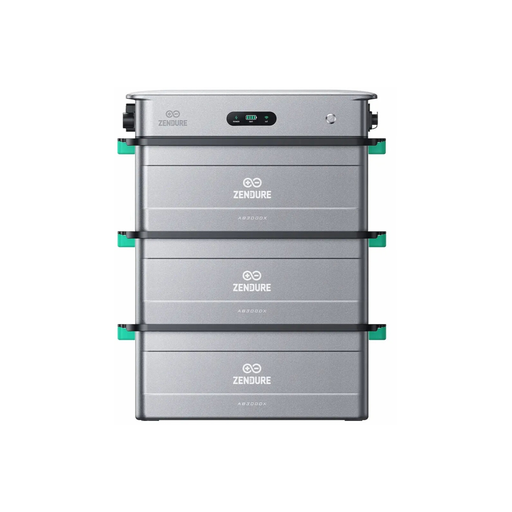
Why this product suits this profile: According to the product description, this combination offers 8.64 kWh of storage capacity and up to 2,400 W output power. It’s designed for users who want more capacity than a single 5 kWh system can provide.
The system lists the included battery modules separately. AB3000X compatibility applies to SolarFlow 2400 AC and should not be assumed to extend to any inverter.
8.64 kWh total capacity; LiFePO₄ batteries and an IP65 rating for the AB3000X units, according to the product description.
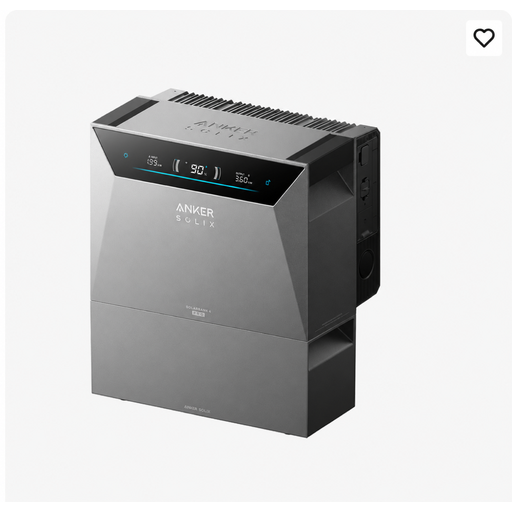
Why this product suits this profile: This system may suit users looking to combine a 5 kWh base capacity with the option to expand and a high PV input rating.
The product information distinguishes between PV input, output and storage capacity. A smart meter, certain expansion batteries and the Power Dock may be sold separately.
Up to 5,000 W solar input according to the product description; 5 kWh base capacity, expandable with compatible components.
We’ve put together a complete, regularly updated list of products that meet these strict selection criteria and fully comply with the safety regulations in force in the EU.
It depends on the system. Connections may run between the solar panels, battery, inverter and household electrical system, or there may be separate outputs for specific appliances. Before commissioning the system, check the instructions, grid connection conditions and any registration requirements that apply. A Wieland connection or work on the electrical installation may require a qualified electrician.
Its lifespan depends on factors including cell chemistry, charge cycles, temperature, state of charge and how it is used. Manufacturers may specify cycle numbers or warranty conditions; these figures apply only under the test and usage conditions described. Also check the operating temperature, protection rating and maintenance instructions.
In addition to the purchase price, you may need to pay for installation, extra cables, a smart meter, mounting accessories or additional batteries. The battery itself uses energy during charging and discharging. A realistic cost-benefit calculation should therefore take account of electricity use, solar generation, self-consumption, purchase costs and any installation costs.