
Lieferung heute & morgen

Qualitätsgarantie

Willkommens-Angebote freischalten: KOSTENLOSE Lieferung | Bis zu 80 % RABATT | Kostenlose 30-Tage-JoyPlus-Testphase
App herunterladen
A family tent for 5 people should offer more than simply the right number of sleeping places. Usable floor space, the material construction, ventilation and how often and under what conditions the tent will be used are all crucial. A large camping tent for a family holiday has different requirements from a compact festival tent or a garden gazebo with side panels.
Many purchasing decisions are based on specifications that sound convincing at first glance but say little about everyday use. The following points will help you assess marketing claims and choose a model that suits your needs.
A 5-person tent may provide five sleeping places without offering enough room for luggage, shoes or spending time indoors on rainy days. As well as the maximum occupancy, check the sleeping area, interior height and whether there is a separate living area. For families, a family tent with a living area is often more practical than one large interior space.
The hydrostatic head describes the water pressure that a fabric can withstand under defined conditions. However, it does not on its own show how a tent will perform in wind, driving rain or on permanently damp ground. Taped seams, a well-designed flysheet and a stable structure are also important.
Even a 4-season tent advertised as waterproof is not automatically suitable for every type of weather. Before buying, check whether the manufacturer provides information about the groundsheet, seams, guying points and ventilation.
A tunnel tent with a fully sewn-in groundsheet can provide better protection against draughts, splashing water and crawling insects. However, pitching it may require more space and at least two people. For gazebos, it is also important to check whether side panels are included and how the structure is secured in windy conditions.
For five people, you should consider more than just the number of sleeping places and look at the actual layout. A sleeping area with a separate living space makes it easier to organise clothing, cooking equipment and camping furniture. For longer stays, a camping tent with a porch can provide additional sheltered storage space.
Look out for:
The Portal 60514, for example, measures 430 × 320 × 200 cm. The stated sleeping area covers 7.05 m², while the separate living area measures 5.8 m². With a total weight of around 12.74 kg, the design is primarily suited to transport by car rather than carrying over longer distances.
A hydrostatic head of 3,000 mm is a specific technical detail that is easier to assess than the vague description “weatherproof outdoor tent”. Even so, buyers should also pay attention to the groundsheet. A fully sewn-in groundsheet reduces exposed gaps between the flysheet and the ground. A dry, level pitch and correctly tensioned guy lines are still essential.
For a family tent for 5 people, the following details are also useful:
Multiple doors, windows with mosquito nets and ventilation openings can improve air circulation. A mesh section between the living and sleeping areas can support airflow and reduce condensation. However, this is no guarantee against moisture: wet clothing, cooking and several people inside the tent all increase humidity.
Open flames have no place inside a tent. When using fuel-burning appliances, follow the relevant safety instructions and maintain sufficient clearance and ventilation.
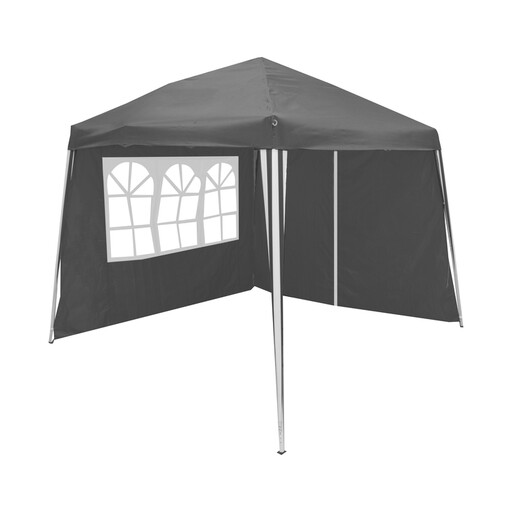
Why this product suits this profile: The folding design is intended for gardens, patios, parties and festivals. With a 300 × 300 cm floor area, it provides a covered alternative when no sleeping compartment is required.
The two included side panels reduce the exposed area compared with a completely open gazebo. The product details also state that it complies with EN 13561:2015.
140 g/m² polyester fabric, a weight of 10.8 kg and a UPF50+ rating. Not intended for use as a sleeping tent.
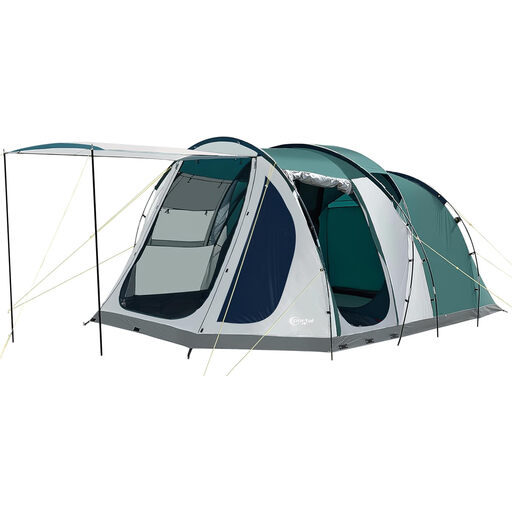
Why this product suits this profile: This tunnel tent combines a sleeping area for five people with a separate living area, making it well suited to family car camping and longer stays.
The fully sewn-in groundsheet and stated hydrostatic head of 3,000 mm address exposed ground gaps and unclear weather protection claims. Two people are recommended for pitching the tent.
7.05 m² sleeping area, 5.8 m² living area, 200 cm interior height, plus two doors, side windows and a rear ventilation opening.

Why this product suits this profile: This 6-person tipi tent is aimed at families and groups of friends who prefer generous headroom and an open interior when glamping.
The product description states a hydrostatic head of 3,000 mm, taped seams, ventilation openings and an integrated mosquito net. All ten guy lines must be properly secured.
External dimensions of 450 × 390 × 300 cm, a steel centre pole standing 3 m tall and 150D Oxford polyester with a stated UV30 rating.
We have put together a complete, regularly updated list of products that fully meet these strict selection criteria and the safety regulations applicable in the EU.
A family tent should be pitched on as level a surface as possible. Remove sharp stones and branches before laying out the groundsheet. Tension the flysheet evenly and secure all pegs and guy lines. Particularly tall tipi structures require careful securing in windy conditions.
After camping:
The lifespan depends on UV exposure, how often the tent is pitched, wind loads, storage and cleaning. It is therefore not possible to give a reliable general estimate of how long it will last.
For a tent with sleeping and living areas, you should allow for the external dimensions of the pitch, including the guy lines. A model with an interior height of around 2 m allows you to stand comfortably, while a separate living area provides additional room for luggage and shelter during rainy weather.
That depends on the layout, groundsheet, ventilation and materials. A fully sewn-in groundsheet, several ventilation openings and a clearly separated sleeping compartment can make everyday use easier. For longer stays, you should also consider the pack size, weight and pitching time.
Never pack the tent away while it is damp. Dry the fabric and groundsheet completely, remove dirt with water and regularly check the seams, zips, poles and guying points. If any part is damaged, repair or replace it before using the tent again.