
Lieferung heute & morgen

Qualitätsgarantie

Willkommens-Angebote freischalten: KOSTENLOSE Lieferung | Bis zu 80 % RABATT | Kostenlose 30-Tage-JoyPlus-Testphase
App herunterladen
Choosing LED recessed spotlights is often the first step towards a modern and energy-efficient interior design. They create a clean, uncluttered ceiling aesthetic and offer versatile lighting options. However, the market can be overwhelming, and without the right background knowledge, a purchase can quickly lead to disappointment. The wrong light colour, flickering lamps, or even failure due to moisture are frustrating and costly consequences.
This guide, created by your Joybuy Product Recommendation Officer, highlights the three most common pitfalls when buying LED recessed spotlights. We'll explain which technical features you need to look for to find a durable and suitable solution for your home.
Before we dive into the technical details, let's look at the problems that occur most frequently in practice.
To avoid these problems, it is crucial to understand and consider three technical specifications when making your selection.
The IP (Ingress Protection) rating indicates how well a luminaire is protected against the ingress of foreign objects (first digit) and water (second digit). For living areas without significant moisture, IP20 is often sufficient. However, in wet rooms like the bathroom or kitchen, a higher protection rating is essential.
The light colour, measured in Kelvin (K), has a significant impact on the room's atmosphere.
Modern recessed lights with selectable colour temperature (often referred to as 3CCT) solve the problem of choosing the wrong light. A small switch on the luminaire allows you to switch between the three colour temperatures before or after installation.
Combined with the dimmable LED recessed spotlights feature, you get maximum control. Ensure that the spots are compatible with common dimmer types (e.g., trailing-edge dimmers) to avoid flickering.
Space is often limited, especially during renovations in older buildings or with suspended ceilings.
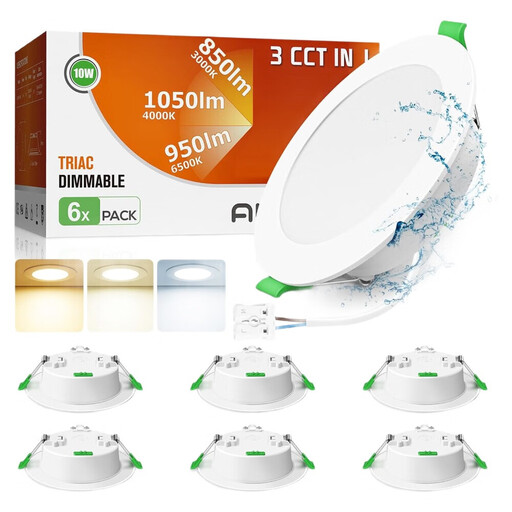
Why This Fits Their Persona: Ideal for renovators seeking a universal solution for various rooms like the kitchen, bathroom, and living room. This set provides high light output for excellent general illumination.
The 3CCT function prevents choosing the wrong light colour. The IP44 certification protects against moisture damage in standard bathrooms and kitchens.
Combines high brightness (1050 lm) with dimmability and a direct 230V connection, simplifying installation and providing bright, flexible lighting.

Why This Fits Their Persona: Perfect for bathroom renovations where lights need to be placed near the shower or tub, requiring maximum protection against water.
The IP65 protection rating goes beyond the standard, reliably protecting against water jets. This safely avoids the wet room miscalculation.
Offers the combination of high water protection (IP65), flexible light colour (3CCT), and dimmability in a low-profile housing (29 mm installation depth).
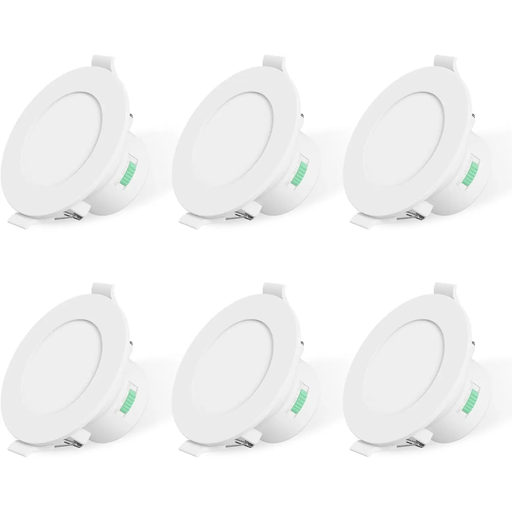
Why This Fits Their Persona: Specifically designed as a recessed wall light for LED stair lighting. Creates safety and atmosphere in hallways and on stairs without causing glare.
Solves the problem of using unsuitable ceiling spotlights for orientation lighting. The adjustable power levels (0.5W/1.5W/2.5W) prevent overly harsh illumination.
Combines adjustable brightness and colour temperature in a format optimised for wall installation. The 230V direct connection makes installation straightforward.
We have compiled a complete, up-to-date list of products that fully meet these strict selection criteria and UK safety regulations.
3CCT stands for "3 Correlated Color Temperatures." It means you can set the colour temperature of the light yourself, typically between Warm White (approx. 3000K), Neutral White (approx. 4000K), and Cool White (approx. 6500K). This is usually done via a small switch directly on the luminaire's housing and offers maximum flexibility in lighting design.
No. Many modern LED recessed spotlights are designed for direct connection to the 230V mains supply. These models have the necessary electronics already integrated. However, there are also low-voltage systems (e.g., 12V or 24V) that require a separate transformer. 230V models are generally easier to install, especially for retrofitting.
A one-size-fits-all answer is difficult, as it depends on the room height, the desired brightness (lumens per spot), the beam angle, and the intended use. As a rough rule of thumb for good general lighting in a room with a standard ceiling height (approx. 2.50 m), you can plan for one spot per 1.5 to 2.5 square metres. For work areas like a kitchen counter, the spots should be placed closer together. It is always advisable to tailor the plan to the specific lighting conditions and needs.