
Lieferung heute & morgen

Qualitätsgarantie

Willkommens-Angebote freischalten: KOSTENLOSE Lieferung | Bis zu 80 % RABATT | Kostenlose 30-Tage-JoyPlus-Testphase
App herunterladen
A reliable portable power supply is no longer a luxury. Whether for camping, in an RV, as home backup power, or for remote work, a 500W power station offers the flexibility to run essential devices anywhere. But the market is crowded and full of marketing promises that often obscure more than they clarify. Before you make a decision, it's crucial to know the most common pitfalls to avoid investing in a device that doesn't meet your needs.
Many buyers focus on superficial features and overlook critical technical details. This often leads to disappointment and unnecessary expenses. Here are the three most critical points to watch out for:
To make the right choice, you need to understand the technical fundamentals. These three parameters are crucial for the performance and longevity of your power station.
These two values are often confused but define different functions.
The choice of battery is the most important decision for safety and longevity. A LiFePO4 battery is the clear recommendation here. Compared to older lithium-ion cells, LiFePO4 batteries offer:
A good power station is versatile. Look for a practical selection of ports:
Based on the criteria above, we have identified a few models that are well-suited for different user groups.
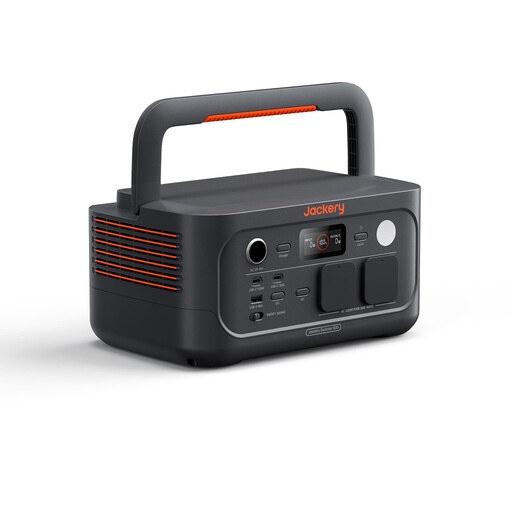
Why This Fits Their Persona: Ideal for campers and RV owners looking for a balanced mix of portability (5.7 kg), power (500W), and capacity (512Wh). It reliably powers a cooler, laptop, and cameras without taking up too much space.
It uses a long-lasting LiFePO4 battery with a clearly defined lifespan of 6000 cycles to over 70% capacity. This prevents you from buying outdated technology with a short service life.
Very quiet power station during AC charging (up to 36 dB). The integrated UPS for power outages switches over in under 10 ms, protecting connected devices.
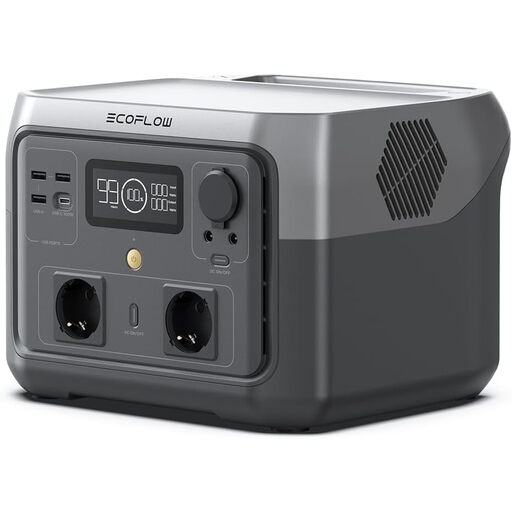
Why This Fits Their Persona: Perfect for users who need maximum flexibility and speed. With X-Boost technology, it can even power devices up to 1000W for short periods, significantly expanding its range of use.
The 512Wh capacity and the LiFePO4 battery's lifespan (3000+ cycles to 80%) are clearly and verifiably specified. The extremely fast charging time isn't an empty claim but a core feature.
According to the manufacturer, it fully recharges from a wall outlet in just 1 hour thanks to X-Stream technology. The X-Boost mode expands compatibility with more powerful devices.
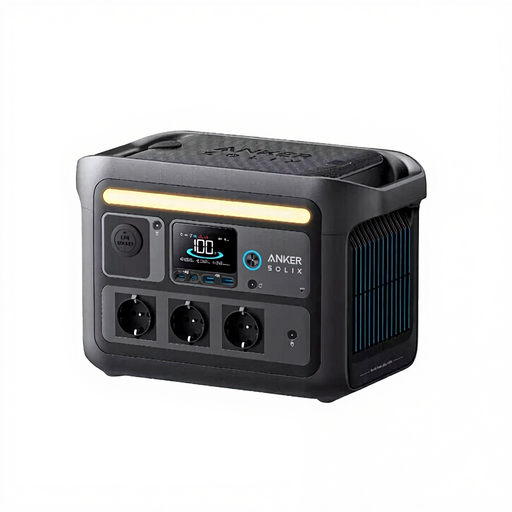
Why This Fits Their Persona: A step up from the 500Wh class. With 768Wh of capacity and 1200W of power, it's a strong home backup power supply that can keep a home office running during an outage, yet it's still portable enough for trips.
Anker specifies the LiFePO4 battery with 3000 cycles and backs up its longevity with a 5-year manufacturer's warranty. This builds trust and protects against the risk of premature failure.
The SurgePad technology allows it to run devices up to 1600W. The integrated, retractable camping light is a practical detail for outdoor use.
We've compiled a complete, up-to-date list of products that fully meet these strict selection criteria and safety regulations.
1. How long can a 500W power station run my laptop? This depends on the capacity (in Wh) of the power station and your laptop's power consumption. A typical laptop uses between 40 and 60 watts. A power station with 512Wh can theoretically power a 50-watt laptop for about 10 hours (512Wh / 50W). The actual value may vary slightly due to charging inefficiencies and other factors.
2. Is a LiFePO4 battery really the better choice for a portable power supply? Yes, for most use cases, a LiFePO4 battery is the superior technology. The higher number of charge cycles (often 3000+) means a significantly longer lifespan compared to conventional Li-ion batteries (often only 500-800 cycles). They are also safer, as they are more thermally stable and have a lower fire risk.
3. Can I charge any power station with a solar panel? Most modern power stations are designed as solar generators and have an integrated MPPT (Maximum Power Point Tracking) charge controller for efficient solar charging. However, you should check compatibility before purchasing. Pay attention to the permissible voltage range (V) and the maximum input power (W) of your power station's solar input and ensure they match your solar panel's specifications.