
Lieferung heute & morgen

Qualitätsgarantie

Willkommens-Angebote freischalten: KOSTENLOSE Lieferung | Bis zu 80 % RABATT | Kostenlose 30-Tage-JoyPlus-Testphase
App herunterladen
A reliable portable power supply has become essential for campers, RV owners, and emergency preparedness. But the market for portable power stations is crowded and confusing. Anyone looking for a 500Wh power station is faced with a flood of technical specs and marketing promises. Too often, these lead to costly mistakes. Before you invest, you should know the most common pitfalls that many buyers only notice after a few months of use.
You don't need to be an engineer to make an informed decision. Focus on three core aspects that determine the true value of a portable power station.
These two values are often confused, but they are fundamentally different.
Before buying, check the power requirements of your most important devices (listed in watts on the nameplate) and compare this with the power station's continuous output, not its peak power.
The most important component is the battery. In recent years, one technology has proven to be particularly durable and safe: the LiFePO4 battery (Lithium Iron Phosphate).
Compared to older lithium-ion batteries (NCM/NCA), LiFePO4 cells offer key advantages:
Investing in a model with a LiFePO4 battery is an investment in longevity and safety.
A good power station is only as useful as its connectivity options. Look for a practical set of features:
Instead of presenting an overwhelming list, we have selected models that meet specific needs and avoid the pitfalls mentioned above.
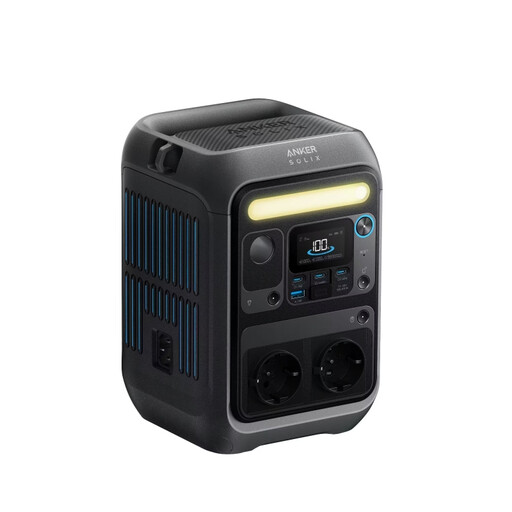
Why This Fits Their Persona: Ideal for anyone needing a lightweight and compact solution for weekend trips or remote work. With 288Wh of capacity, it reliably powers laptops, cameras, and smartphones without adding unnecessary weight.
It uses a long-lasting LiFePO4 battery with over 3,000 cycles, thus bypassing the rapid capacity degradation of cheaper models. The charging time is short, and the power ratings are transparent.
Very compact and lightweight (4 kg). Offers a fast-charging function via AC power and a powerful 140W USB-C output.
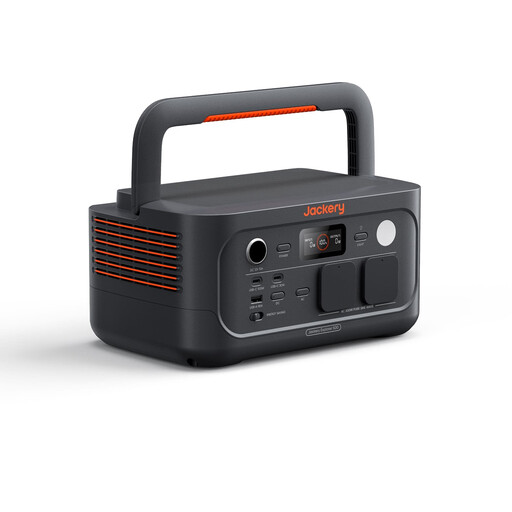
Why This Fits Their Persona: The classic all-rounder for a camping weekend. With 512Wh of capacity and 500W of continuous power, this model reliably runs a compressor cooler, charges drone batteries, and powers lights in the tent.
It provides a true continuous output of 500W, which is sufficient for most camping gear, avoiding the pitfall of inadequate power. The LiFePO4 battery promises a very long lifespan of up to 6,000 cycles.
A balanced ratio of capacity (512Wh), power (500W), and weight (5.7 kg). It features a fast-charging function and an integrated UPS function with a 10ms switchover time.
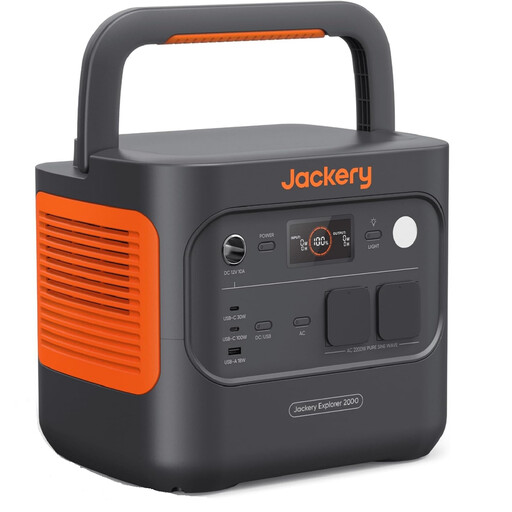
Why This Fits Their Persona: For users with high energy demands who want to be self-sufficient in their RV or secure their home against power outages. With 2042Wh of capacity and 2200W of power, it can even run energy-intensive appliances like a coffee machine or a small space heater.
It solves the problem of slow charging times for large capacities with extremely fast recharging (0-80% in 52 minutes). The fast UPS function (≤20ms) reliably protects against power interruptions.
Very high capacity and power output. Despite its performance, the unit is comparatively compact and features a durable LiFePO4 battery with over 4,000 cycles.
We have compiled a complete, up-to-date list of products that fully meet these strict selection criteria and rigorous safety standards.
A high-quality LiFePO4 battery is designed for a long lifespan. Many manufacturers specify a cycle life of 3,000 to 6,000 charge cycles before the remaining capacity drops to about 80% of its original value. If used every weekend of the year (approx. 100 cycles per year), this translates to a theoretical lifespan of over 10 years, making these devices a sustainable investment.
Yes, most modern power stations, especially those featured here, support "pass-through charging." This means you can charge the power station via a solar panel or an AC outlet while simultaneously running devices from its outputs. This is an essential feature for use as a solar generator or as a buffer battery in an RV.
UPS stands for "Uninterruptible Power Supply." A power station with a UPS function constantly monitors the grid power. If it fails, the device switches to its internal battery within milliseconds (often under 20ms). Connected devices like a PC, router, or medical equipment continue to run without interruption. This protects against data loss and equipment damage, making the power station a reliable emergency power supply for the home.