
Lieferung heute & morgen

Qualitätsgarantie

Willkommens-Angebote freischalten: KOSTENLOSE Lieferung | Bis zu 80 % RABATT | Kostenlose 30-Tage-JoyPlus-Testphase
App herunterladen
Choosing a new television can be a challenge given the vast array of technologies and features. A 55-inch 4K Smart TV has become the popular choice for many living rooms, offering an immersive viewing experience without overpowering the space. This article serves as your guide. It highlights the key criteria to consider when making your selection and presents a curated list of models to simplify your purchasing decision.
Spec sheets are often long and filled with technical jargon. To make an informed decision, it's helpful to focus on a few core features that significantly impact picture and sound quality, as well as the user experience.
The panel technology is crucial for display quality. While conventional LED TVs provide a solid foundation, a 55-inch QLED TV uses Quantum Dots to deliver more precise colour reproduction and higher brightness levels. Mini-LED TVs take it a step further by using thousands of tiny LEDs for backlighting, resulting in better contrast and deeper black levels.
For smooth motion, especially in sports and video games, the refresh rate is critical. A 144Hz gaming TV can update the image 144 times per second. This reduces motion blur and ensures a sharper, more responsive display, which is particularly relevant for owners of the latest gaming consoles.
A great picture deserves sound to match. Many modern devices support immersive audio formats. A TV with Dolby Atmos can create a three-dimensional soundscape that puts the viewer right in the middle of the action. Some models feature integrated subwoofers or speaker systems developed by audio specialists, potentially making an external soundbar unnecessary.
The operating system determines the user experience. A Smart TV with Google TV aggregates content from various streaming services on a user-friendly interface and offers personalised recommendations. Other manufacturers rely on their own systems, like HomeOS or Titan OS, which also provide quick access to apps and media libraries.
Depending on your specific needs, special features can be the deciding factor. For example, a 55-inch Philips Ambilight TV projects coloured light onto the wall behind the set, matching the on-screen content to visually extend the viewing experience. For gamers, features like VRR (Variable Refresh Rate) and ALLM (Auto Low Latency Mode) are important as they ensure a smooth and low-latency gaming experience.
Based on the criteria above, we've compiled a selection of models that each focus on different strengths.
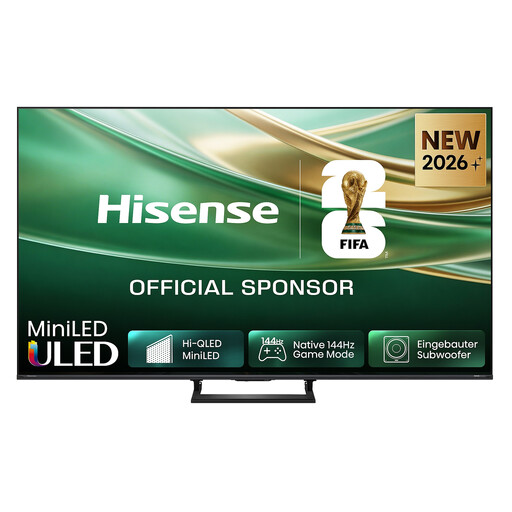
What makes it stand out: The Hisense 55E8S combines Mini-LED backlighting with QLED technology. This combination enables high contrast levels and precise brightness control, ensuring a detailed picture in both dark and bright scenes.
Pros:
Who is it for? This model is aimed at demanding home cinema enthusiasts and gamers who value high picture performance, smooth motion, and responsive controls.
View details for the Hisense 55E8S
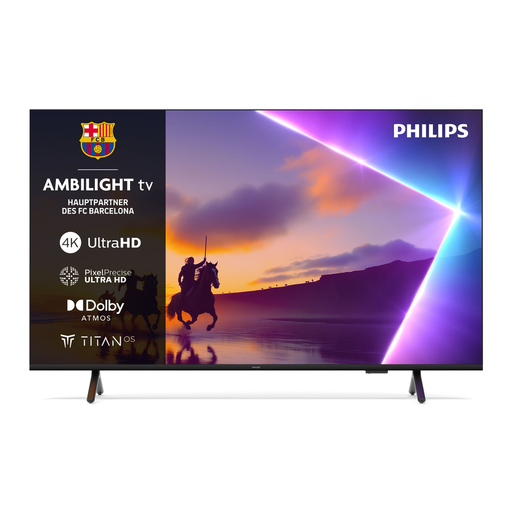
What makes it stand out: The unique selling point of this TV is its 3-sided Ambilight. The technology visually extends the picture by projecting the colours from the screen onto the surrounding wall in real-time. This creates an immersive atmosphere and can reduce eye strain during long viewing sessions.
Pros:
Who is it for? Ideal for users seeking an atmospheric and visually engaging TV experience that extends beyond the screen.
View details for the Philips 55PUS8500/12
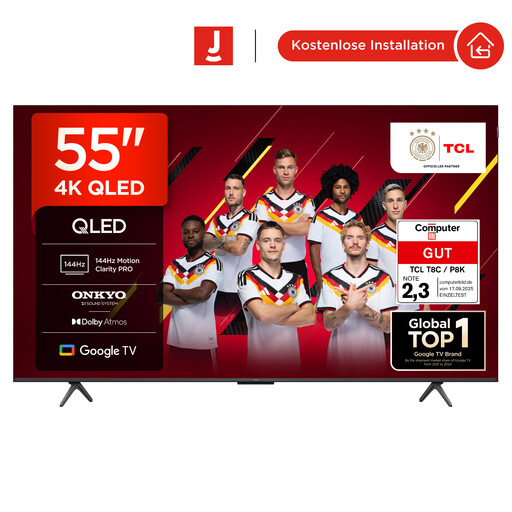
What makes it stand out: The TCL 55T8C is a versatile TV that combines a high refresh rate with the comprehensive Google TV operating system. With features like Game Master and FreeSync, it is specifically tailored to the needs of gamers, while the Onkyo sound system ensures clear acoustics.
Pros:
Who is it for? This model appeals to tech-savvy users and gamers looking for a feature-rich device with an established smart TV system and strong gaming capabilities.
View details for the TCL 55T8C
The models presented here already cover a broad spectrum of needs. If you haven't found the right model for your specific requirements, you can find more alternatives in our comprehensive selection.
Discover our entire range of 4K UHD Smart LED TVs.
A TV with a 144Hz refresh rate, often marketed as a 144Hz gaming TV, updates the image 144 times per second. This results in a visibly smoother depiction of fast motion, such as in video games, action films, or sports. Motion blur is reduced, leading to a sharper and clearer picture.
A 55-inch QLED TV uses a layer of what are known as Quantum Dots in front of the LED backlight. These nanoparticles enable the creation of a wider colour spectrum and more precise colour representation. In practice, this often means more vibrant colours and higher peak brightness compared to conventional LED TVs, which is especially beneficial for HDR content.
Many modern TVs advertised as a TV with Dolby Atmos use special algorithms and speaker configurations to create virtual 3D sound. This can already significantly improve the audio experience. However, for an even more immersive and powerful result that comes closer to a cinema experience, an external sound system—such as a dedicated Dolby Atmos soundbar or a multi-channel home cinema system—is generally recommended.