
Lieferung heute & morgen

Qualitätsgarantie
App herunterladen
Kategorien
Choosing a 55-inch 4K TV (equivalent to a 139 cm diagonal) requires an analysis of technical specifications to find a model that meets your individual needs for picture quality, functionality, and use case. The 55-inch class is a popular standard for living rooms and offers a wide range of technologies. This guide focuses on the key parameters for making an informed purchasing decision.
A TV's performance is determined by a combination of its panel technology, image processing, and connectivity. The following criteria are essential for your evaluation.
The choice of display technology is fundamental to picture quality.
The refresh rate, measured in Hertz (Hz), indicates how many frames per second the display can render.
High Dynamic Range (HDR) expands the contrast range and colour spectrum. TVs with Dolby Vision or HDR10+ use dynamic metadata to optimise the picture scene-by-scene or even frame-by-frame. This results in a more detailed and nuanced image than static HDR10.
A modern 55-inch Smart TV integrates streaming services and apps. Popular operating systems like Google TV or webOS offer different user interfaces and app ecosystems. For future-proof connectivity, HDMI 2.1 ports are essential. They support the high bandwidth required for 4K content at 120Hz, VRR, and ALLM (Auto Low Latency Mode), which is particularly crucial for a gaming TV.
Based on the technical criteria above, we present three models with different specialisations.
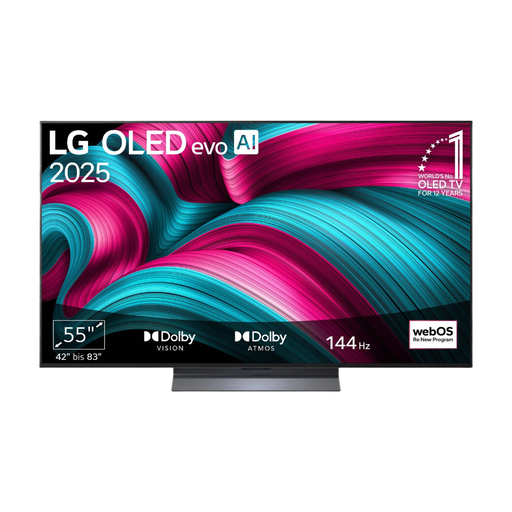
Why We Recommend It: The LG 55C57LA uses OLED evo technology, which delivers higher peak brightness compared to conventional OLED panels. Combined with the α9 Gen8 AI processor for image optimisation and a native 120Hz refresh rate (with VRR support up to 144Hz), this device offers high-end picture performance for home cinema and gaming.
Pros:
Who It's For: This model is aimed at home cinema enthusiasts who prioritise maximum picture quality, especially contrast and black levels, as well as gamers who will benefit from the high refresh rate and fast response times.
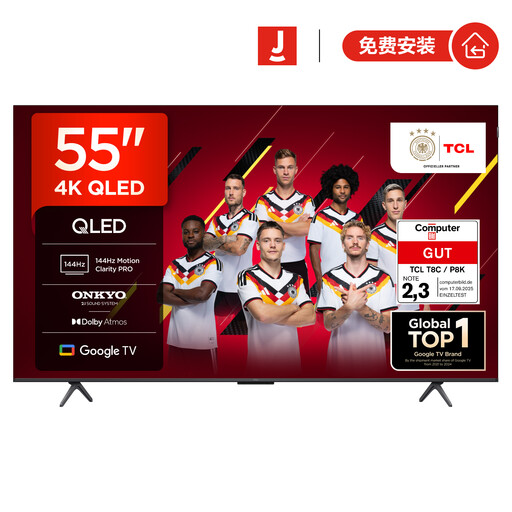
Why We Recommend It: The TCL 55T8C is designed as a high-performance gaming TV. Its QLED panel achieves a native 144Hz refresh rate and supports AMD FreeSync, enabling extremely smooth and responsive gameplay on PC and consoles. The wide colour gamut coverage (97% DCI-P3 according to TCL) and support for Dolby Vision and Dolby Atmos complete the package.
Pros:
Who It's For: This TV is primarily designed for serious gamers who require minimal latency and a maximum refresh rate. The high motion clarity is also a benefit for sports fans.
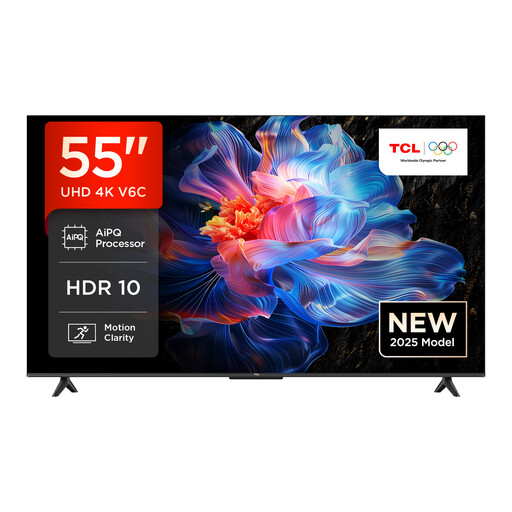
Why We Recommend It: The TCL 55V6C offers a solid overall package for budget-conscious users. Despite its entry-level positioning, it supports key HDR formats like Dolby Vision and HDR10+. With Google TV as its operating system and HDMI 2.1 with ALLM, it provides modern smart TV features and essential gaming functions. The HVA panel ensures a good contrast ratio.
Pros:
Who It's For: This model is suitable for users looking for a functional and modern 139 cm TV for everyday streaming and viewing, with a focus on excellent value for money.
The 4K TV market is dynamic and diverse. In addition to the models featured here, there are numerous other devices that can be suitable alternatives depending on your budget and specific requirements. You can find a broader selection in our HD Ultra TVs category.
1. What is the difference between OLED and QLED? The main difference lies in how light is produced. OLED pixels are self-emissive, enabling perfect blacks and infinite contrast. QLED TVs use an LED backlight and quantum dots, resulting in very high brightness and vibrant colours. The choice depends on whether you prioritise superior contrast (OLED) or higher brightness (QLED).
2. What refresh rate should a good 55-inch TV have? For general use like streaming films and series, 60Hz is sufficient. For a visibly smoother display of fast motion, such as in sports broadcasts or video games, a panel with a native 120Hz refresh rate is the technically superior choice.
3. What is the ideal viewing distance for a 55-inch 4K TV? For a 55-inch TV with 4K resolution, a viewing distance of approximately 1.7 to 2.3 metres is recommended. Within this range, the human eye can perceive the high detail of the 4K resolution without individual pixels becoming visible or the image feeling overwhelming.