
Lieferung heute & morgen

Qualitätsgarantie

Willkommens-Angebote freischalten: KOSTENLOSE Lieferung | Bis zu 80 % RABATT | Kostenlose 30-Tage-JoyPlus-Testphase
App herunterladen
A silicone baking tin can make baking easier when its material, dimensions and stability suit the intended use. The range of 5five silicone baking tins includes everything from classic cake tins and muffin tins to tarte, Madeleine and Cannelé moulds.
However, focusing only on terms such as “non-stick” or “flexible” means overlooking important details. A soft mould can warp under the weight of heavy batter, a tin that is too shallow will not be suitable for every cake, and unclear temperature specifications can make safe use more difficult. The following criteria can help you avoid disappointing purchases.
Silicone can be stored in a space-saving way and often makes it easier to remove baked goods from the mould. However, a very flexible silicone baking tin may be unstable when filling and moving it. A firm rim or integrated frame is particularly practical for sponge batter, bread and loaf cakes.
According to the product details, the 5five Silitop loaf tin combines steel and silicone. The integrated sturdy frame is designed to keep the tin in shape during use. With silicone-only moulds, it is generally advisable to use a baking tray or wire rack as a base.
A non-stick baking tin can make it easier to remove baked goods, but it does not replace proper preparation. Very sugary, sticky or delicate batters can still stick, even with silicone. With new moulds, follow the manufacturer’s care and usage instructions. Depending on the recipe, applying a thin film of grease may be helpful.
The shape of the mould is also important. Fine ridges in a Cannelé or Madeleine mould require careful cooling and release. The material alone does not guarantee a particular baking result.
Not every silicone mould is automatically suitable for all appliances. Before buying, check oven, microwave, freezer and cleaning suitability separately. The product description for the 5five Silitop Silicone Loaf Tin 26 cm Long states that it can withstand temperatures of up to 220 °C in the oven and down to −20 °C in the freezer. Specific limits are not always available in the product information for other models.
Look for food-safe silicone and additional reinforcements. A silicone baking mould with a steel frame is generally more stable when being filled. A flexible mould without a frame is easier to store, but requires more care when placing it in the oven.
Smooth, low-porosity surfaces are also important for regular use. They can make cleaning easier and absorb fewer odours or fats. Claims such as “dishwasher-safe” should be explicitly stated in the product description.
The external dimensions must fit both your oven and the recipe you intend to use. A 26 cm silicone cake tin is suitable for many standard recipes, while a shallow tarte tin is designed more for tartes, quiches and flans.
Also check:
A dishwasher-safe baking tin saves time, but it should be allowed to dry completely after the wash cycle. With moulds featuring fine indentations, traces of batter can remain in the grooves. Flexible models can be rolled or stacked, but should not be kept sharply folded for extended periods.
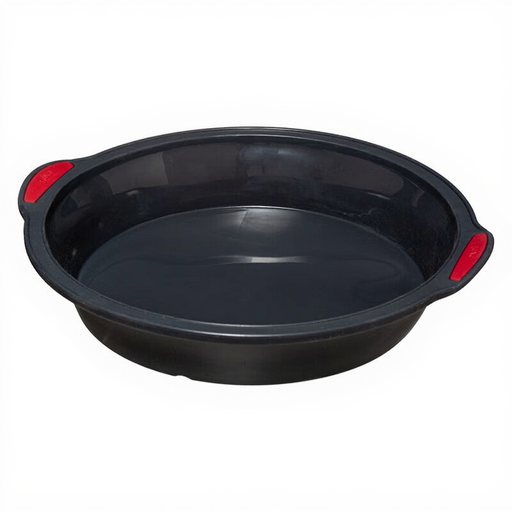
Why this product suits this profile: The round shape is versatile enough for cakes and straightforward baking recipes. It is an uncomplicated introduction to baking with silicone.
The clear, standard shape reduces the risk of buying a specialist mould with limited uses. Before ordering, check the specific dimensions and temperature specifications.
Round silicone mould with a 26 cm designation; suitable for classic cake recipes and easy to store in a space-saving way.
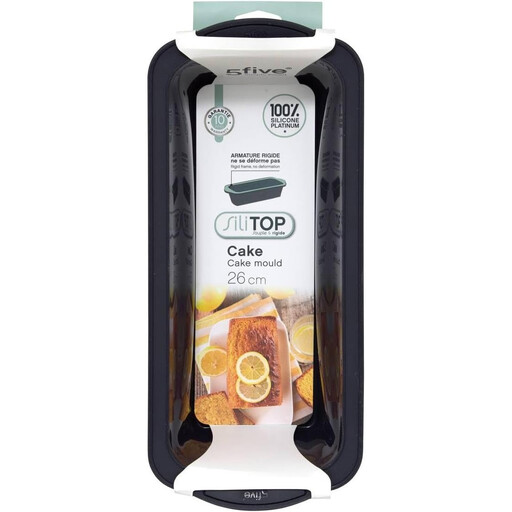
Why this product suits this profile: The combination of steel and silicone is aimed at bakers who value shape stability when making bread, sponge cakes and other loaf-style recipes.
The integrated rigid frame helps prevent the typical warping of a soft loaf tin when it is filled. The product details also state that it is suitable for the dishwasher, oven and freezer.
Steel-and-silicone construction, a capacity of 1.59 litres and a stated temperature range of −20 °C to 220 °C.
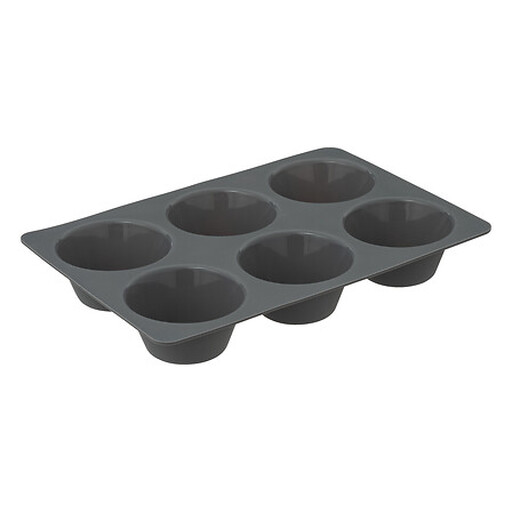
Why this product suits this profile: The multi-cavity mould is suitable for families, regular baking sessions and preparing portions for guests. It features several cavities for muffins or cupcakes.
The stated dimensions of 35 × 20 × 4 cm make it easier to check compatibility with your oven and storage space. The product description states that the surface is dishwasher-safe.
Multi-cavity muffin mould made from food-safe silicone; flexible construction and, according to the product details, suitable for use in the oven and freezer.
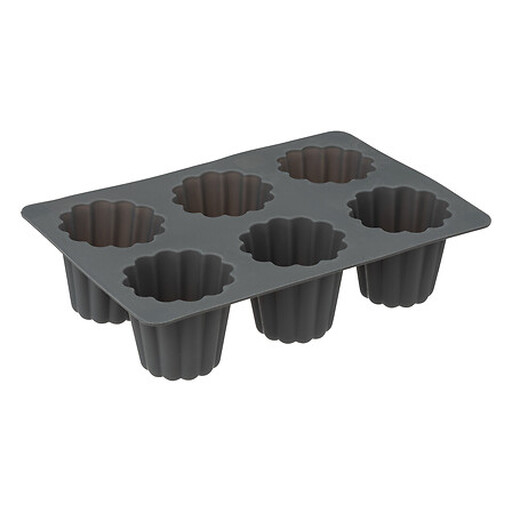
Why this product suits this profile: The Cannelé mould is designed for keen bakers who want to create delicate French pastries with a ridged surface.
The ridged, cylindrical shape is specifically designed for Cannelés. This avoids using a general-purpose cake tin for a pastry with a distinctive shape.
Dimensions of 31 × 17 × 6 cm, food-safe silicone and, according to the product description, suitable for the oven, microwave, freezer and dishwasher.
Before buying, place the mould on a baking tray before filling it with liquid batter. After baking, allow the pastries to cool briefly, then carefully remove them from the cavities. Knives and sharp-edged kitchen utensils can damage the surface.
We have put together a complete, regularly updated list of products that fully meet these strict selection criteria and the safety regulations applicable in the EU.
Several models are explicitly described as dishwasher-safe in the product details, including the Silitop loaf tin, the muffin tin and the Cannelé mould. Nevertheless, always check this information on the relevant product page, as it does not automatically apply to every version of a mould.
A baking tray is a practical base for a soft silicone mould. It makes placing the mould in and removing it from the oven easier, while reducing the risk of the mould warping when filled with liquid batter. Models with an integrated steel frame are more stable during transport, although a firm base can still be useful.
Its lifespan depends on how often it is used, the temperature, cleaning and handling. Do not use sharp objects, follow the stated temperature limits and store the mould without permanent creases. Visible cracks, sticky patches or lasting deformation are reasons to replace the mould.