
Lieferung heute & morgen

Qualitätsgarantie

Willkommens-Angebote freischalten: KOSTENLOSE Lieferung | Bis zu 80 % RABATT | Kostenlose 30-Tage-JoyPlus-Testphase
App herunterladen
A 5 m LED strip can illuminate a TV wall, shelving unit or desk evenly. In practice, however, unclear information about length, colour reproduction and control methods often leads to unsuitable purchases. Offers containing lots of technical terms deserve particularly close attention to their actual features.
A classic RGB LED strip usually displays a single, uniform colour along its entire length. An RGBIC LED strip, on the other hand, can display several different colours across multiple segments at the same time. This makes colour gradients, running-light effects and rainbow patterns possible. If you are looking for calm, single-colour background lighting, you do not necessarily need this feature.
It is therefore important to distinguish between RGB, RGBIC and a simple white LED light strip. Product images showing dynamic colour gradients do not, on their own, reveal which technology is actually built in.
When buying an LED strip for indoor spaces, check whether the product actually contains 5 m of illuminated strip or whether the connecting cable and other components are included in the total length. The following points are also relevant:
An LED strip should not be folded sharply. Tight 90-degree bends can damage the conductor tracks, particularly around the LED components. For corners, gentle curves or suitable corner connectors are advisable, provided they are supported by the relevant system.
A Wi-Fi LED strip generally requires a connection to a 2.4 GHz network. A Bluetooth LED strip can usually be controlled directly from a smartphone within a short range. An LED light strip with remote control, by contrast, works without an app or smart home hub.
Before buying an LED strip with Matter, check whether you have a compatible smart home hub. Matter can simplify integration with platforms such as Apple Home, Google Home, Alexa or Samsung SmartThings, but it does not automatically replace every gateway or app you may need.
A 5 m LED strip is often suitable for a TV wall or longer shelving unit. Measure the distance before ordering and allow extra length for connections and curves. The wattage indicates energy consumption, but does not by itself determine perceived brightness. LED density, diffusion and the mounting surface also affect the result.
An LED strip should not remain wound up while switched on. The resulting heat can build up in a confined space. This is particularly important with more powerful models. The power supply, control box and plug connections should remain unobstructed and must not be covered.
For dry living spaces, a version with IP20 is often sufficient. This protection rating is not intended for water or consistently high humidity. A model with a protective coating may also offer protection against dust and light mechanical strain, but it is not automatically suitable for outdoor use or direct contact with water.
For bathrooms, kitchen areas exposed to splashing water or outdoor surfaces, the protection rating specified by the manufacturer must expressly match the intended location. For the products presented here, note that they are intended for indoor use.
The adhesive backing works most reliably on a clean, dry and preferably smooth surface. Dust, grease, textured wallpaper and silicone-based coatings can reduce adhesion. Before installation, decide where the power supply and controller will be positioned.
With long light strips, an aluminium profile can improve heat dissipation and create a more even lighting effect. However, it is only worthwhile if the dimensions of the LED strip and the profile are compatible.
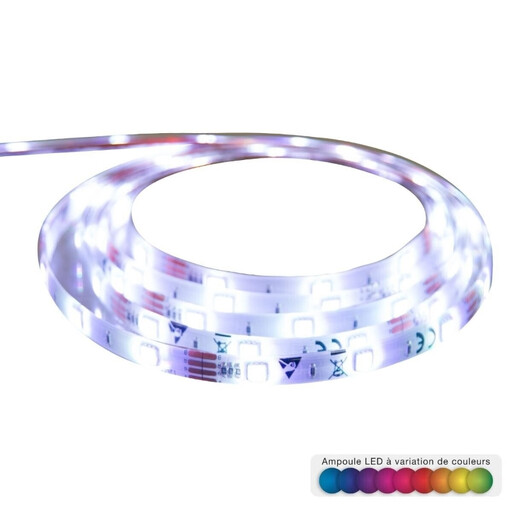
Why this product suits this profile: This mains-powered 5 m light strip is aimed at shoppers looking for multicoloured decoration without setting up an app or Wi-Fi. It is controlled with an infrared remote control.
The product details specify the 5 m length, 150 LEDs, 22 W, mains operation and IP20 protection rating. This means the key buying criteria are clear before you place your order.
5 m length, 150 LEDs, IR remote control and a power supply included. Intended for dry indoor spaces.
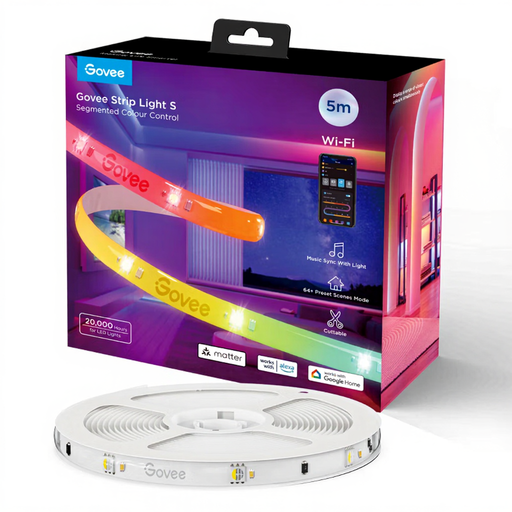
Why this product suits this profile: This strip is suitable for users who want to combine app control and segmented colours with integration into a compatible smart home system.
The specifications clearly distinguish between Wi-Fi, Bluetooth and Matter. The 5 m length, 24 W power rating, 24 V DC and suitability for indoor use are also specified.
RGBIC segment control, 24 LEDs per metre, protective coating and Matter support according to the product description.
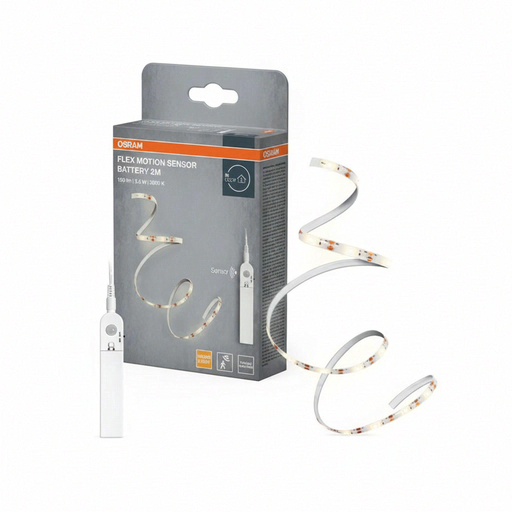
Why this product suits this profile: This model is designed for short areas that need automatic lighting, such as hallways, cupboards or sections of stairs. At 2 m long, it is not a direct 5 m alternative.
The specified 2 m length makes the intended area of use clear. If you are looking for motion-sensor lighting, you can avoid accidentally buying a system that is too long for a small area.
Motion sensor and compact 2 m design for demand-controlled white lighting.
We have put together a complete, regularly updated list of products that fully meet these strict selection criteria and the safety regulations applicable in the EU.
For gaming and TV use, indirect installation behind the screen, along the edge of a desk or on the back of a shelving unit is ideal. The LED strip should not shine directly into your eyes. On reflective surfaces, a lower brightness setting may be more comfortable.
Consumption depends on power, brightness and operating time. A 24 W model uses 0.024 kWh per hour of operation at full power. To calculate the running costs, multiply the consumption in kilowatt-hours by your current electricity tariff. Dimming the lights or using a timer can reduce actual consumption.
The lifespan depends, among other things, on heat, power supply quality, operating time and mechanical strain. Good heat dissipation, a smooth mounting surface and avoiding sharp bends can help maintain reliable operation. Check the specific product details for the stated lifespan of each model.
This is only permitted at the cut marks specified by the manufacturer. Before cutting, check whether the separated section can still be used and whether special connectors are required. Additional restrictions may apply to an RGBIC system, as its segment control may be designed around the original electrical configuration.