
Lieferung heute & morgen

Qualitätsgarantie

Willkommens-Angebote freischalten: KOSTENLOSE Lieferung | Bis zu 80 % RABATT | Kostenlose 30-Tage-JoyPlus-Testphase
App herunterladen
A 60 cm 4-zone induction hob fits into many standard kitchens and provides enough space to use several pans at once. However, model names often sound more similar than the technical specifications suggest. Terms such as “Boost”, “FlexZone” or “Touch Control” alone say little about whether a hob is compatible with your cookware, electrical connection and existing worktop cut-out.
A hob with an external width of around 59 cm does not automatically require the same cut-out. Many 60 cm models require a cut-out of 560 × 490 mm, while other appliances differ slightly. The installation height may also be important if there is a drawer or oven beneath the hob.
You should therefore compare three measurements before buying:
Figures such as 6.000, 6.600, 7.200 or 7.400 W describe the maximum connected load. If several zones are used simultaneously at a high setting or with PowerBoost, the power management system may distribute the power between the cooking zones. For everyday use, the wattage is therefore not the only important factor. You should also consider how the power levels, boost function and zones work together.
An induction hob with PowerBoost is particularly useful for heating food quickly. However, this function should not be confused with permanently higher power across all four zones.
A FlexZone connects adjacent induction areas and, on suitable models, detects the position of a larger pan or griddle. On a ceramic hob, by contrast, a multi-ring zone uses predefined heating rings. This is practical for pans of different sizes, but does not offer the same freedom of positioning as an induction FlexZone.
A built-in induction hob heats the magnetic base of the pan directly. You therefore need suitable cookware made from materials such as cast iron or magnetic stainless steel. A magnet test on the base of the pan provides an initial indication of compatibility.
A 60 cm ceramic hob works with electrically heated radiant zones. It is generally compatible with more types of cookware, although the surface remains hot for longer after switching off. A black induction hob may also be made from black glass ceramic, so the colour alone does not indicate the heating technology.
An induction cooker with 4 cooking zones and an integrated oven is a different appliance category from an independent hob. With an independent hob, the controls are located directly on the hob, while freestanding or combined appliances may allow the oven and hob to be controlled together.
An induction hob with Touch Control should have a clear display and logically arranged controls. Check whether each zone can be adjusted separately and whether an induction hob with timer switches the relevant zone off automatically.
Useful features include:
In Germany, appliances with connected loads of up to around 7.400 W must be installed by a qualified electrician. The exact connection requirements, fuse protection and ventilation clearances must comply with the relevant installation instructions.
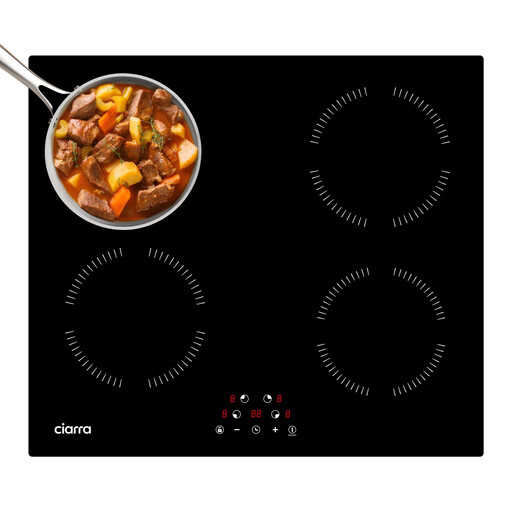
Why this product suits this profile: This 60 cm model offers four zones, nine power levels and a separate timer function for everyday use.
The specified installation dimensions of 560 × 490 mm make it easier to compare the hob with a standard worktop cut-out. The need for a magnetic pan base is clearly stated.
6.000 W total power, touch controls, child lock, residual heat indicator and automatic shut-off.
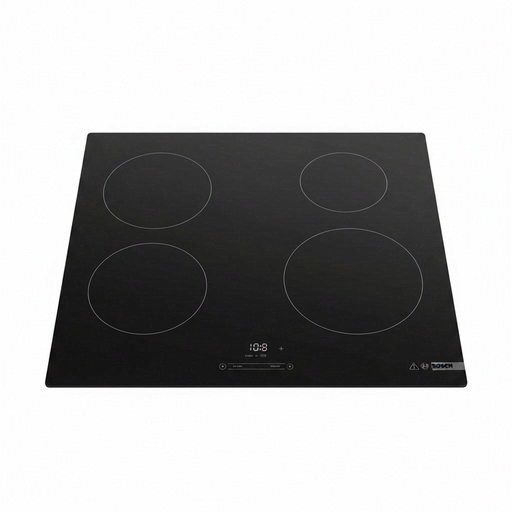
Why this product suits this profile: The four zones, 17 power levels and varied zone sizes are suitable for households that regularly use different types of cookware.
The technical documentation specifies the external dimensions, a 560 mm-wide cut-out and the minimum worktop thickness. This makes it easier to assess the installation conditions accurately.
PowerBoost on all four zones, QuickStart, Restart, child lock and timer with automatic shut-off.
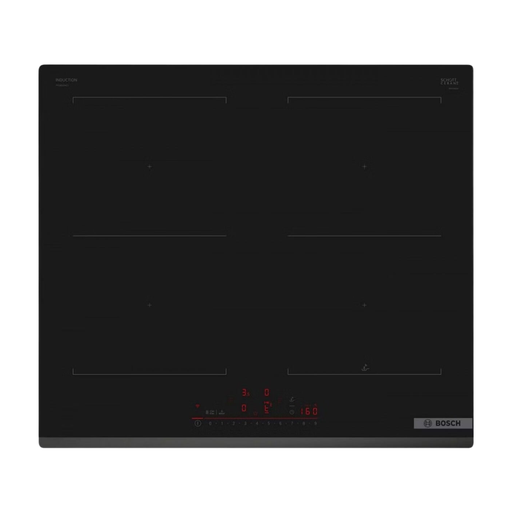
Why this product suits this profile: The FlexInduction function is designed for long griddles, oval pans or larger pots that require two adjacent zones.
The FlexZone is not merely mentioned as a buzzword. It is described with a combined area of 360 mm and the designated zones.
7.400 W total power, TouchSelect, PowerBoost, four timers, pan detection and a two-stage residual heat indicator.
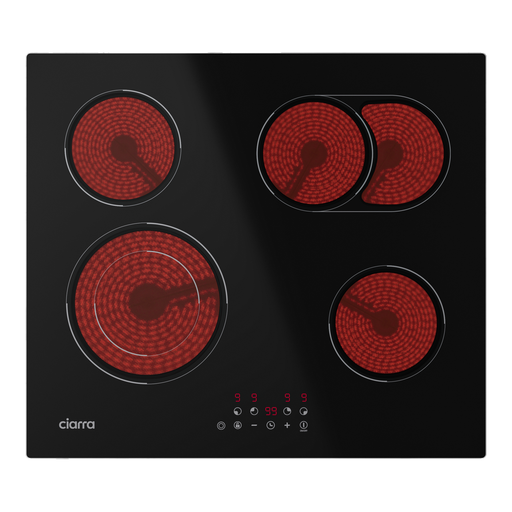
Why this product suits this profile: This ceramic hob offers four radiant zones, including an oval zone and a two-stage expandable zone for cookware in different shapes.
The heating rings are listed with their diameters and power levels. This allows you to check whether your existing pans and roasting dishes match the zone sizes.
6.600 W, nine power levels, Touch Control, timer up to 99 minutes, child lock and residual heat indicator.
The smooth glass-ceramic surface can be cleaned with a soft cloth once it has cooled down. Burnt-on residue should be removed with a suitable ceramic hob scraper. Abrasive cleaners and direct contact between water and the control panel can damage the surface or sensors.
Induction transfers heat directly to the base of a suitable pan. As a result, the cooking surface does not heat up in the same way as a ceramic hob, although residual heat is still present. Running costs mainly depend on usage time, power level, pan size and your electricity tariff. Wattage alone does not provide a reliable indication of actual consumption.
We have put together a complete, regularly updated list of products that fully meet these strict selection criteria and the safety regulations applicable in the EU.
No. Always check the exact installation dimensions. For several of the models mentioned, the cut-out measures 560 × 490 mm, while the external dimensions and installation height may vary.
There is no single standard lifespan. It depends on factors including frequency of use, professional installation, ventilation and the condition of the glass-ceramic surface. Cracks, damaged cables or malfunctions should not be repaired yourself. Have them inspected by an authorised or qualified service provider instead.
The cost depends on actual electricity consumption and your tariff. An appliance with a higher connected load does not automatically use more electricity continuously if the higher power is only used briefly or at a low setting. You should therefore compare the power management system, usage conditions and the technical consumption data for the relevant model.