
Lieferung heute & morgen

Qualitätsgarantie

Willkommens-Angebote freischalten: KOSTENLOSE Lieferung | Bis zu 80 % RABATT | Kostenlose 30-Tage-JoyPlus-Testphase
App herunterladen
A 60 cm cooker hood fits many standard hobs, making it a popular choice for rented properties, small kitchens and compact open-plan kitchens. However, width alone says little about how well a hood will perform day to day. Airflow, operating mode, filter maintenance, noise levels and installation height are all important factors.
Figures such as 600 or 650 m³/h often refer to the highest power setting or specific testing conditions. In everyday use, the extractor hose, backdraught damper, filter and ducting can affect actual performance. A 60 cm cooker hood with a high maximum airflow is therefore not automatically suitable for every kitchen.
Higher airflow can be useful in an open-plan kitchen or if you frequently fry food. In a small, enclosed kitchen, a lower-powered appliance may be sufficient, depending on your cooking habits. Always check the airflow and operating mode in the product data sheet.
There are technical differences between extraction and recirculation:
A cooker hood with an activated carbon filter is therefore practical when no extraction duct is available. However, the filter is a consumable component and creates ongoing costs.
Touch controls, digital displays and gesture control can make an appliance easier to operate. For long-term use, easily accessible grease filters, a smooth surface and readily available replacement filters are just as important. A cooker hood with LED lighting can illuminate the hob effectively, but it cannot replace the correct installation height or sufficient extraction performance.
A 60 cm-wide hood should ideally match the width of the hob. For a standard cooking surface, a 60 cm wall-mounted cooker hood is often straightforward to install. An under-cabinet cooker hood is suitable for kitchens with wall units or limited wall space. Before buying, you should also measure the depth, chimney height and distance from the wall.
A sloping-front cooker hood can provide more freedom of movement in front of the hob. However, it requires sufficient clear wall space and should be installed so that it does not obstruct your view or affect the distance from the hob.
Do not compare only the maximum airflow. Also consider the available settings and the noise level in decibels. A model advertised as a quiet cooker hood should state specific dB figures in its data sheet. Bear in mind that the noise level at the highest setting is usually considerably higher than at a lower power setting.
For open-plan kitchens, figures of around 60 dB or below at the highest stated setting provide a useful point of reference. Actual perceived noise also depends on the room size, installation and extraction ducting.
Multi-layer aluminium grease filters can capture grease particles, and some models are dishwasher-safe. Before buying, check whether the filter can be removed and which cleaning temperature the manufacturer recommends.
When assessing energy efficiency, the energy efficiency class and stated annual consumption are more informative than motor power alone. An energy-efficient cooker hood can help limit electricity consumption if used regularly. Also check whether activated carbon filters are included or need to be purchased separately.
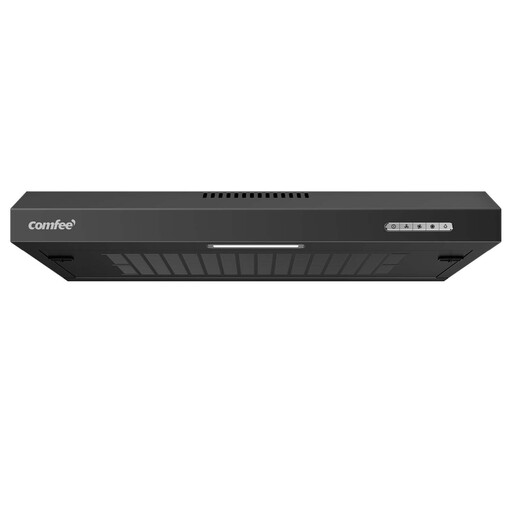
Why this product suits this profile: This 60 cm-wide hood is designed for smaller kitchens and offers three power settings along with LED lighting. It can be used in extraction or recirculation mode; the required cotton filter for recirculation must be purchased separately.
The product description states the maximum airflow of 200 m³/h and clearly points out that the recirculation filter is required separately. This allows you to factor in ongoing costs before buying.
600 × 80 × 440 mm, three speeds, removable aluminium filter and LED light.
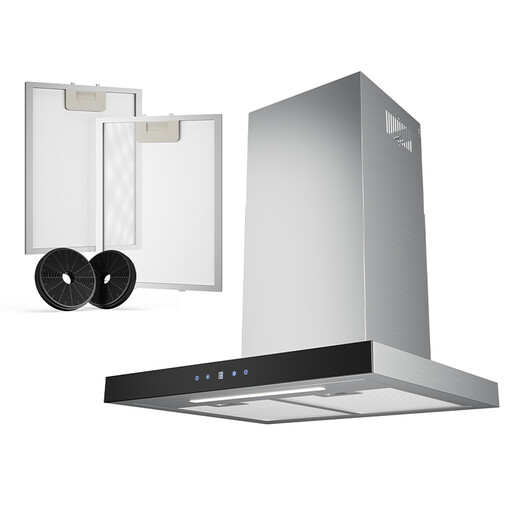
Why this product suits this profile: This wall-mounted hood combines digital touch controls with a stated airflow of 611 m³/h and supports both extraction and recirculation.
The relevant operating data is clearly stated. According to the product information, an activated carbon filter set, chimney components and mounting materials are included.
A++ energy efficiency class, five-layer aluminium grease filter, dishwasher-safe grease filter and LED lighting.

Why this product suits this profile: This 60 cm-wide sloping-front hood is designed for households that cook frequently. It offers Wi-Fi, app and touch controls, as well as a booster function.
Alongside the maximum airflow of 650 m³/h, the product specifies 59 dB, A+++ energy efficiency class and annual consumption of 12 kWh/a. These figures allow for a more meaningful comparison.
Four speed settings, washable aluminium filters, CBCF003*2 activated carbon filters and flexible extraction or recirculation installation.
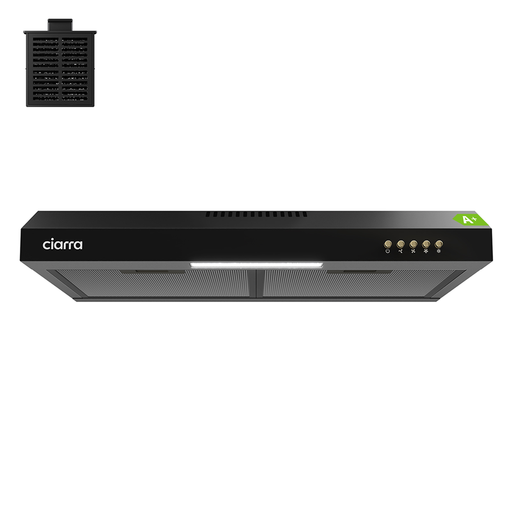
Why this product suits this profile: The slim design, measuring 85 mm in height, is intended for cabinet areas and kitchens with limited space. It is operated using push buttons.
The compact design, two operating modes and washable metal filter are all described clearly in the technical specifications.
Dimensions of 596 × 440 × 85 mm, A+ energy efficiency class, three settings and a maximum of 61 dB.
We have put together a complete, regularly updated list of products that fully meet these strict selection criteria and the safety regulations applicable in the EU.
Before installation, check the appliance dimensions, distance from the wall and the position of the extraction connection. The installation height specified in the product information must be observed. Figures of at least around 65 cm for electric hobs and 75 cm for gas hobs are often given; however, the instructions from the relevant manufacturer and local installation requirements take precedence.
For extraction operation, the hose should be routed as short as possible, with as few changes of direction as possible. In recirculation mode, the activated carbon filter should be replaced in accordance with the manufacturer’s instructions. Aluminium grease filters should be cleaned regularly depending on use, for example every two to four weeks. Disconnect the appliance from the mains before carrying out any maintenance. If you are unsure, electrical installation should be carried out by a qualified professional.
This depends on the room size, cooking intensity and operating mode. Lower figures may be sufficient for occasional cooking in a small kitchen. Higher power settings are useful if you frequently fry food or have an open-plan kitchen. Also compare the noise level, filter and information about the extraction ducting.
Recirculation is usually easier if there is no wall opening or extraction duct. However, a cooker hood with an activated carbon filter requires regular filter replacements. Extraction can remove moisture and odours from the room, but it requires the landlord’s permission and suitable structural conditions.
With recirculation, activated carbon filters create an additional cost alongside electricity consumption. The exact amount depends on the model, filter type and frequency of use. Low annual consumption, washable grease filters and readily available replacement filters make it easier to estimate ongoing costs.