
Lieferung heute & morgen

Qualitätsgarantie

Willkommens-Angebote freischalten: KOSTENLOSE Lieferung | Bis zu 80 % RABATT | Kostenlose 30-Tage-JoyPlus-Testphase
App herunterladen
A 60 cm cooker hood fits many standard hobs, making it a popular choice for rented homes, compact kitchens and modern open-plan kitchens. However, width alone says little about whether an appliance is genuinely suitable for your space and technical requirements. Key factors include the design, airflow, operating mode and cleaning requirements.
Figures such as 650 m³/h usually refer to a maximum or boost setting. In normal operation, lower settings may move considerably less air. The actual performance is also affected by the extraction duct, duct length, bends and non-return flap. A unit delivering 200 to 400 m³/h may be sufficient for a small kitchen, while open-plan kitchens or frequent frying can benefit from greater performance headroom.
A cooker hood with recirculation and extraction can be used flexibly. In recirculation mode, however, the air is generally passed through a grease filter and an activated carbon filter before being returned to the room. Depending on usage, the carbon filter must be checked and replaced regularly. If you do not allow for these ongoing costs and maintenance requirements, you may end up buying a model that does not meet your needs.
A 60 cm angled cooker hood can provide more freedom of movement thanks to its sloping front. Even so, you must check the height, depth, chimney adjustment and distance from the hob. With a 60 cm under-cabinet cooker hood or built-in cooker hood, it is also important to check whether the existing wall cabinet provides enough room for the housing, air ducting and connection.
Measure the available width, depth and height before placing your order. Ideally, the hood should cover the cooking area as fully as possible. The manufacturer’s specified minimum distance from gas and electric hobs must be observed. If you are unsure, installation should be carried out according to the instructions or by a qualified professional.
Airflow is measured in m³/h. Appliances delivering 200 to 400 m³/h are often designed for smaller kitchens and moderate cooking. Models offering around 580 to 650 m³/h provide greater performance headroom, although they can be noticeably louder at maximum power.
For extraction mode, a suitable connection to the outside is required. Recirculation mode requires compatible activated carbon filters. Check whether filters are included, which replacement filters are required and whether an extraction hose is supplied.
A model described as a quiet cooker hood should be compared using its specific noise level in decibels. Several appliances in the selection, for example, have noise levels of 58 to 65 dB. The key point is to check which power setting the figure applies to.
The energy efficiency class and stated annual consumption help you estimate ongoing costs. An energy-efficient cooker hood can help limit electricity consumption with regular use; actual costs depend on operating time and power setting. Useful additional features include a cooker hood with LED lighting, touch controls, several fan speeds or an overrun timer. However, these features should not be prioritised at the expense of a suitable installation arrangement.
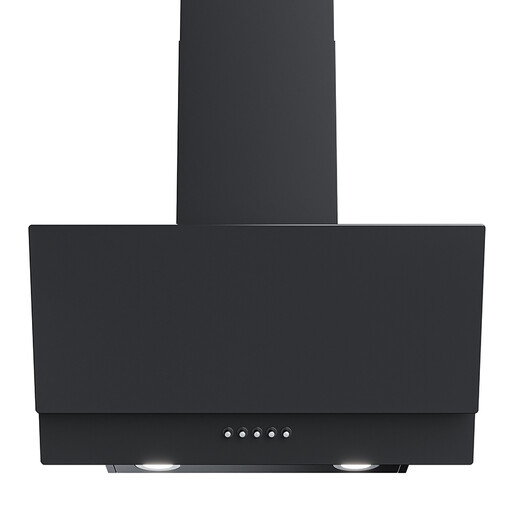
Why this product suits this profile: The 60 cm wall-mounted hood is designed for straightforward operation and supports both recirculation and extraction modes. According to the product information, airflow is 300 m³/h.
The contents include an activated carbon filter set, an extraction connection and mounting hardware. This makes it easier to plan the operating mode before installation.
LED lighting, push-button controls and a five-layer aluminium grease filter; according to the specifications, the filter is dishwasher-safe.
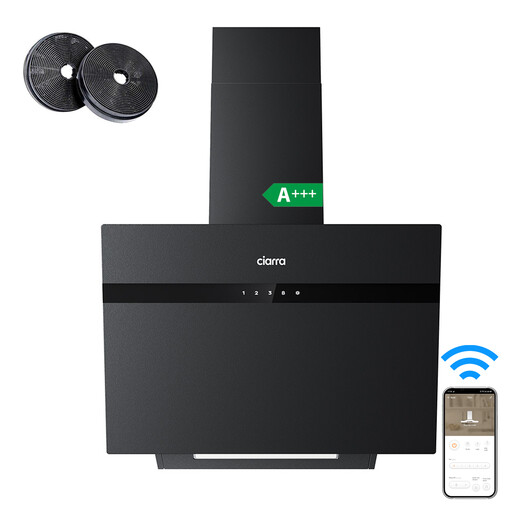
Why this product suits this profile: The sloping glass front, touch controls and app/Wi-Fi connectivity are aimed at modern kitchens where cooking is frequent.
The specifications state an airflow of 650 m³/h together with a maximum noise level of 58 dB. This allows buyers to assess performance and noise levels together.
A+++ according to the product data, three power levels with booster, dimmable LED lighting and two operating modes.
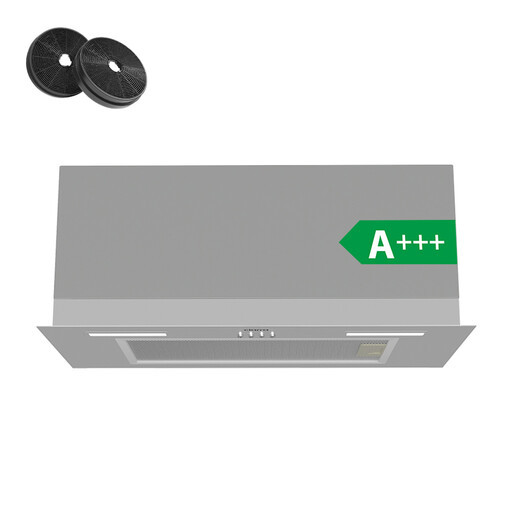
Why this product suits this profile: This built-in cooker hood is designed for kitchens where the appliance should be integrated as discreetly as possible into a wall cabinet.
The specification distinguishes between three airflow levels from 373 to 640 m³/h, along with the respective noise levels. According to the product description, the extraction hose is not included and must be purchased separately.
A+++ and annual consumption of 9 kWh according to the product data, washable aluminium filter, plus recirculation and extraction options.

Why this product suits this profile: The model supports both recirculation and extraction, offers app control and, according to the product description, comes with CBCF003 carbon filters.
The product data states a maximum airflow of 650 m³/h, 59 dB and two operating modes. This makes it easier to assess how well it suits a home without a wall outlet.
A+++ according to the supplier’s information, four speed settings including booster, touch and app control, plus washable aluminium filters.
We have put together a complete, regularly updated list of products that fully meet these strict selection criteria and the safety regulations applicable in the EU.
The grease filter should be cleaned regularly. With frequent use, an interval of around two to four weeks may be sensible; the level of soiling and the manufacturer’s instructions are the deciding factors. A washable aluminium filter creates fewer ongoing replacement costs than a disposable filter, but it must still be allowed to dry completely before being refitted.
Recirculation mode creates additional costs for activated carbon filters. In extraction mode, the air path should be as short and straight as possible. Before installation, you should also check the socket, mounting points, duct diameter and the required distance from the hob. With gas appliances, the requirements for using the burner and extraction system at the same time must be taken into account.
This depends on the size of the room, your cooking habits and the operating mode. For small kitchens, 200 to 400 m³/h may be sufficient. In open-plan kitchens, when frying frequently or when cooking larger quantities, a model delivering 580 to 650 m³/h may offer more reserve. The maximum figure does not represent the performance at every setting.
Extraction removes odours and moisture to the outside, but requires a suitable connection. Recirculation is suitable for rented homes or rooms without an extraction duct. However, a cooker hood with an activated carbon filter requires regular filter maintenance and replacement filters.
There is no single fixed service life that applies to every model. Regular filter cleaning, professional installation and using the appliance correctly can all help maintain it in good working order. Before buying, check whether grease and carbon filters are available for the specific model and whether the controls suit your everyday cooking routine.