
Lieferung heute & morgen

Qualitätsgarantie

Willkommens-Angebote freischalten: KOSTENLOSE Lieferung | Bis zu 80 % RABATT | Kostenlose 30-Tage-JoyPlus-Testphase
App herunterladen
A 60 cm cooker hood suits many standard hobs, making it a popular choice for rented homes, owned kitchens and compact layouts. But choosing the right model involves more than just its width. Extraction rate, installation type, filter costs and noise levels all determine whether it will really suit your kitchen day to day.
A figure such as 650 m³/h may sound impressive at first. However, it usually describes the maximum airflow under specific conditions. With recirculation, long extraction ducts or an unsuitable duct diameter, the actual performance may be lower. So consider extraction rate alongside operating mode and installation guidance.
A recirculating cooker hood needs charcoal filters, which must be replaced regularly. How often this is necessary depends on how frequently you cook and the types of food you prepare. A cooker hood with a charcoal filter can be practical in a rented home, but replacement filters add ongoing costs.
Noise is measured in decibels, and it’s worth checking the figures for several fan speeds. A reading of 58 or 59 dB at maximum power doesn’t mean the hood is particularly quiet on its lowest setting. If you have an open-plan kitchen and living area, compare the noise levels at each setting.
Start by measuring the available space, the width of the wall and the distance to the hob. A 60 cm wall-mounted hood should ideally cover the entire hob. Also check:
If you have a gas hob or another open-flame appliance, follow the guidance on room ventilation. If an open-flue appliance is being used at the same time, you may need advice from a qualified installer or your local building control team to ensure it’s safe.
An extractor cooker hood carries cooking fumes outside through a duct. You’ll need an existing wall vent or a suitable, permitted route for the duct. Short, as-straight-as-possible ducts help the hood work efficiently.
With recirculation, air passes through grease and charcoal filters before being returned to the room. This is often easier to arrange in a rented home. However, it doesn’t remove the moisture created by cooking, so you’ll still need to ventilate the room regularly.
Washable aluminium grease filters can reduce ongoing maintenance. Some models have multi-layer filters which, according to the product details, are suitable for cleaning in a dishwasher. Follow the instructions and choose a gentle programme.
An energy-efficient cooker hood shouldn’t be chosen on its energy rating alone. Check the stated annual energy consumption, lighting and motor power consumption too. Compare energy ratings and product details with the current product information sheet, as retailer information can vary between models.
Other useful features include an LED cooker hood, a touch-control cooker hood or a Wi-Fi cooker hood. Wi-Fi and app controls are most useful if you want to operate the timer and fan speeds remotely. For straightforward operation, mechanical buttons are often enough.
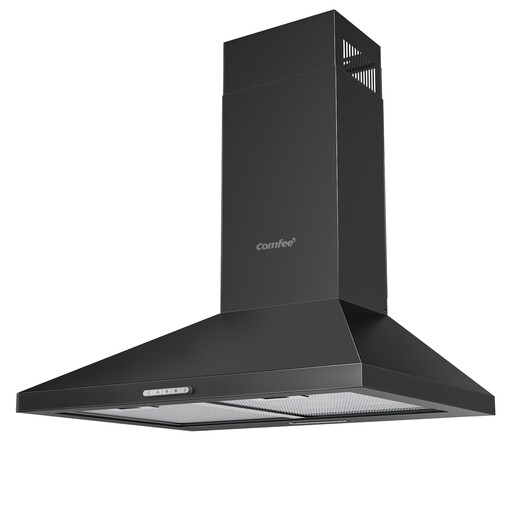
Why this product suits this profile: This black wall-mounted hood is 60 cm wide and offers three fan speeds, as well as recirculation and extraction modes. The product details state an extraction rate of 400 m³/h and LED lighting.
Having two operating modes means your choice doesn’t have to depend solely on whether you already have an extraction duct. The product description says a charcoal filter is included.
60 cm wide, maximum extraction rate of 400 m³/h, LED lighting and three fan speeds.

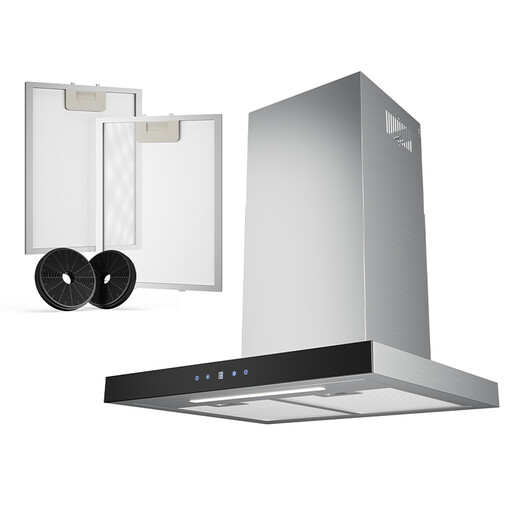
Why this product suits this profile: This model combines wall mounting and a 60 cm width with touch controls and Wi-Fi app operation. According to the product details, it offers 650 m³/h, four fan speeds with a booster and a maximum noise level of 59 dB.
The maximum noise level and filter specification are clearly stated. CBCF003 charcoal filters are listed for recirculation; check replacement intervals before buying.
Wi-Fi app, touch controls, washable aluminium grease filters, and a choice of recirculation or extraction.
Why this product suits this profile: This wall-mounted hood is worth considering if you’re looking for a higher stated extraction rate and straightforward controls, including touch controls and a digital display. The product description lists 611 m³/h, LED lighting and an A++ energy rating.
The product details specify the extraction rate, filter type and both installation options. Before fitting it, check that the duct route and distance from the hob are suitable.
Stated maximum extraction rate of 611 m³/h, touch controls, digital display and LED lighting. The product description says the grease filter is dishwasher-safe.
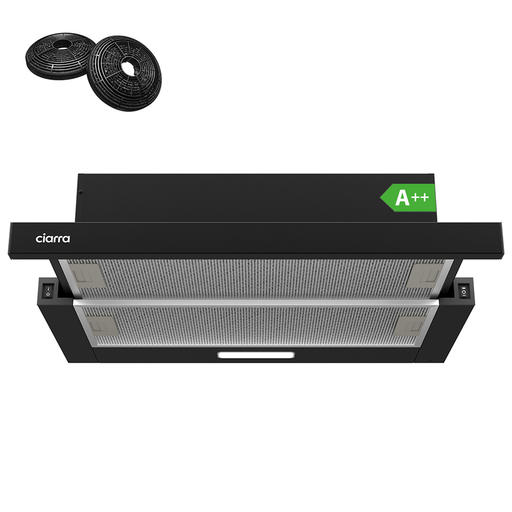
Why this product suits this profile: This black telescopic hood is designed to fit under a wall cupboard where space is limited. According to the product description, it supports recirculation and extraction, has two fan speeds and offers an extraction rate of up to 355 m³/h.
Its compact design reduces the risk of a wall-mounted hood with a chimney not fitting your existing kitchen. Even so, check the filter and operating mode before placing your order.
Telescopic extension, 60 cm width, washable aluminium filters, LED lighting and an A++ energy rating, according to the product details.
We’ve put together a complete, regularly updated list of products that meet these strict selection criteria and fully comply with the safety regulations in force in the EU.
Switch the hood on shortly before you start cooking, if possible, and leave it running for a few minutes afterwards. Clean the grease filters according to how often you use the hood, typically every two to four weeks. If you use recirculation, replace the charcoal filters as instructed by the manufacturer.
Disconnect the power before cleaning the hood or changing a filter. Avoid naked flames and flambéing beneath the hood, as grease deposits can catch fire.
The required distance depends on the hood design, hob and fuel type. Installation instructions often specify around 65 to 75 cm for electric hobs, with greater distances for gas hobs. Always follow the instructions from the manufacturer of your appliance and any local installation requirements.
Recirculation is usually easier to install, as it doesn’t require a hole in the wall. Extraction can carry cooking fumes outside, but requires a suitable route through the building. If you’re renting, check with your landlord before making any changes to the wall or exterior of the property.
The cost depends on the power consumption, how long you use it, your electricity tariff and how often you replace the filters. For a realistic estimate, multiply the stated power consumption in kilowatts by the number of hours you use the hood and your electricity price. With recirculation, you’ll also need to factor in the regular cost of charcoal filters.