
Lieferung heute & morgen

Qualitätsgarantie

Willkommens-Angebote freischalten: KOSTENLOSE Lieferung | Bis zu 80 % RABATT | Kostenlose 30-Tage-JoyPlus-Testphase
App herunterladen
A 60 cm cooker hood fits many standard hobs, making it a popular choice for rented homes, smaller kitchens and renovation projects. However, width alone does not determine whether a kitchen extractor will perform well in everyday use. Airflow, installation type, filters and operating mode all need to suit your kitchen and cooking habits.
Manufacturers often state the maximum airflow in m³/h. This figure is measured under specific conditions and may be reduced by long extraction routes, bends or an unsuitable duct diameter. A cooker hood with 650 m³/h is therefore not automatically more suitable for every kitchen than a model with 400 m³/h.
For a small kitchen with a short extraction route, a 60 cm kitchen extractor with 200 to 400 m³/h may be sufficient. If you regularly fry food, have an open-plan kitchen or need a longer extraction route, a higher nominal airflow may be worthwhile. Correct installation remains crucial.
With extraction and recirculation, cooking air is either vented outside or filtered and returned to the room. Extraction requires a suitable connection through the wall or building. Recirculation is often easier in rented homes, but requires a suitable activated carbon filter.
The metal or aluminium grease filter is washable on many models. The activated carbon filter in a cooker hood with an activated carbon filter, however, is a consumable component and must be checked and replaced according to how often the hood is used. If these ongoing costs are not included in your buying plan, a model that seems inexpensive may cost more in the long run.
An under-cabinet cooker hood requires a suitable wall-unit size or an appropriate section of wall. A built-in cooker hood must fit the intended cabinet. A 60 cm wall-mounted hood, on the other hand, needs sufficient clear wall space and secure mounting.
Headroom is another practical consideration: a vertical or angled cooker hood slopes forwards and can provide more freedom of movement while cooking. You should nevertheless check that the dimensions, chimney and distance from the hob are suitable for your kitchen.
Do not just measure the niche width; also check the depth, height and available space above the hob. For a 60 cm hob, the hood should cover the cooking zone as effectively as possible. Installation distances differ for gas and electric hobs. The instructions in the relevant operating and installation manual are the deciding factor.
For wall-mounted models with an adjustable chimney, you must also take the ceiling height into account. With under-cabinet and built-in models, it is essential to check whether the hood fits completely beneath or inside the existing cabinet.
Compare the stated airflow with the noise level in dB. Higher airflow can mean more operating noise. For open-plan kitchens and homes with an adjoining living area, the figures for each individual power setting are particularly important.
For example, the CIARRA CBCS6201 is specified at 221, 291 and 367 m³/h at 51, 57 and 63 dB respectively. This gives you a better idea of which setting can be used in everyday life, rather than simply looking at the maximum figure.
A washable aluminium grease filter reduces the need for regular replacement. Descriptions such as “multi-layer” should be checked against the actual filter design and cleaning options. A LED cooker hood can illuminate the work surface directly above the hob; nevertheless, check the light position, brightness and controls.
The energy efficiency class and annual energy consumption are further points of comparison. An energy-efficient cooker hood with low consumption can help limit running costs when used regularly. However, the efficiency class alone says nothing about airflow, installation quality or filter costs.
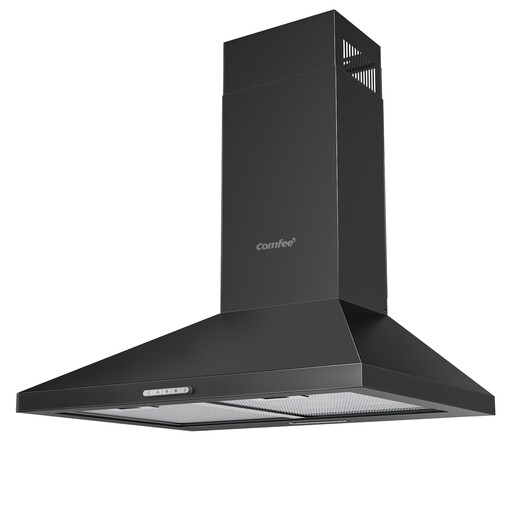
Why this product suits this profile: This 60 cm model offers three speed settings as well as extraction and recirculation modes. It is therefore suitable for standard kitchens and households looking for straightforward operation.
The two operating modes mean that the hood does not rely exclusively on an existing extraction connection. Carbon filters are required in recirculation mode.
Specifications include 400 m³/h airflow, LED lighting and a push-button control panel.
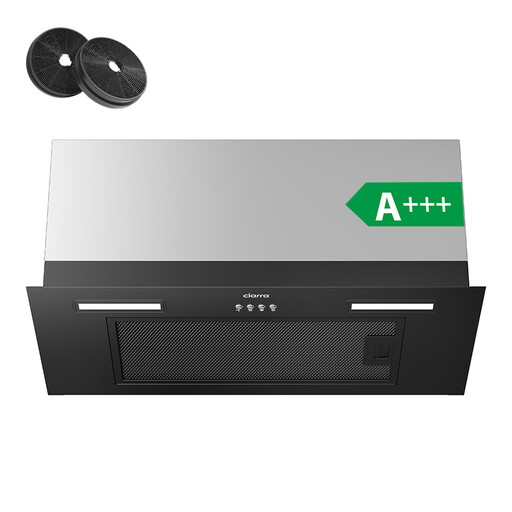
Why this product suits this profile: The fully integrated design is aimed at buyers who prefer a discreet look and a clean, streamlined kitchen front.
The installation dimensions of 599 × 309 × 263 mm must be checked against the kitchen cabinet before ordering. This helps prevent fitting problems during renovations.
According to the product specifications: up to 650 m³/h, A+++ energy efficiency class and three power settings.
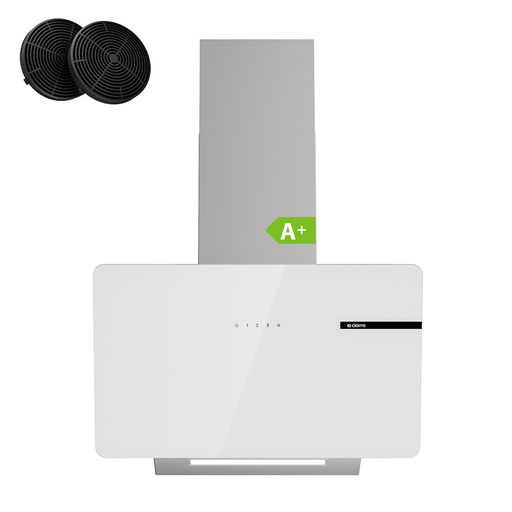
Why this product suits this profile: The angled design creates more open space in front of the hob. This can be particularly useful for keen cooks and compact kitchens where freedom of movement is limited.
The specifications state that it supports extraction and recirculation and includes a washable five-layer aluminium grease filter. This means filter care and installation options can be clearly checked before purchase.
Specifications include approximately 580 m³/h, touch controls, LED lighting and A+ energy efficiency class.
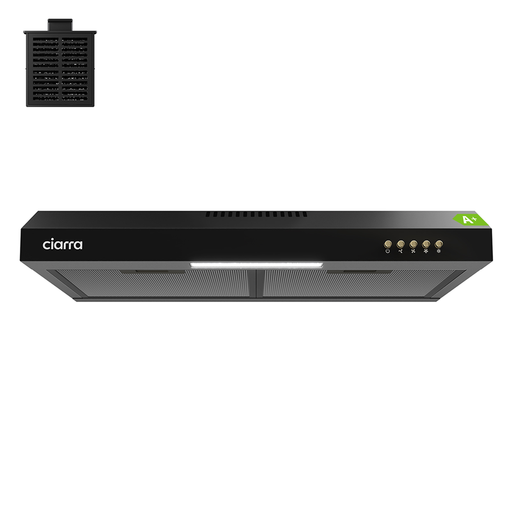
Why this product suits this profile: The compact under-cabinet or built-in solution takes up little space and supports both extraction and recirculation.
The height of 85 mm and width of 596 mm make it easier to check compatibility with tight installation spaces. The carbon filter is intended for recirculation mode.
According to the product data: 184 m³/h maximum airflow, washable aluminium filters, LED lighting and A+ energy efficiency class.
We have put together a complete, regularly updated list of products that fully meet these strict selection criteria and the safety regulations applicable in the EU.
Before installation, check the power connection, extraction ducting and minimum clearances using the instructions. With an extraction system, the duct, backdraught flap and wall outlet must be compatible. Incorrect or improper installation can reduce airflow performance.
Clean the grease filter regularly. Depending on how often you cook, checking it every two to four weeks may be advisable. The appliance must be disconnected from the mains before cleaning or maintenance. In recirculation mode, you should also check the condition of the activated carbon filter. The listed appliances should be installed by a qualified professional.
This depends on the size of the room, your cooking habits and the extraction route. For smaller kitchens, 200 to 400 m³/h may be sufficient. Frequent frying or an open-plan kitchen may require higher airflow. You should also compare the noise level and the figures for each individual setting.
Extraction vents cooking fumes outside and requires a suitable connection. Recirculation is more flexible in rented homes, but requires suitable activated carbon filters and regular replacement. The structural conditions therefore matter more than any generalised judgement.
Its service life depends on the motor, materials, installation and maintenance. Regular grease filter cleaning, correctly fitted carbon filters and unobstructed extraction ducting can help support reliable operation. The manufacturer’s specifications should remain the main reference when buying and maintaining the appliance.