
Lieferung heute & morgen

Qualitätsgarantie

Willkommens-Angebote freischalten: KOSTENLOSE Lieferung | Bis zu 80 % RABATT | Kostenlose 30-Tage-JoyPlus-Testphase
App herunterladen
A 60 cm cooker hood fits many standard hobs, making it particularly suitable for small kitchens, rented homes and compact kitchen units. However, width alone is not enough when choosing a model. The key considerations are the installation type, operating mode, extraction rate, noise level, filters and the available space above the hob.
If you focus solely on a high extraction rate or modern design, you may later have to contend with reduced performance, extensive cleaning requirements or additional filter costs. The following selection by the Joybuy Product Recommendation Officer provides an objective overview of the most important criteria.
The figure in m³/h usually refers to the maximum airflow under specific conditions. A long or convoluted extraction duct, small pipe diameters and multiple bends can reduce the airflow. In recirculation mode, the activated carbon filter and how dirty it is also affect performance.
Therefore, do not compare only the highest figure. Pay attention to the available power levels, the noise level and whether the figure is stated as a maximum value or for each individual setting.
A 60 cm cooker hood with recirculation and extraction can adapt to different kitchen conditions. In extraction mode, vapours are channelled outside through a suitable duct. For rented homes or kitchens without an external wall outlet, recirculation is often more practical. In this mode, the hood requires a suitable activated carbon filter, which traps odours and must be replaced regularly.
Before buying, check whether the carbon filter is included or needs to be purchased separately. With some models, the extraction hose, backdraught flap or connection adapter may also not be included in full.
A 60 cm angled cooker hood or sloping glass front provides more freedom of movement in front of the hob. However, it often requires greater depth and precise wall mounting. A slim 60 cm under-cabinet cooker hood or telescopic hood takes up less space and can sometimes be installed beneath a wall unit.
Therefore, measure not only the appliance width, but also the depth, height, internal cabinet dimensions and distance from the hob.
For a 60 cm hob, a hood approximately 595 to 600 mm wide is often suitable. Ideally, the hood should cover the hob completely. For a wider hob, a 90 cm cooker hood may be more suitable, provided the wall and cabinet space allows for it.
The main designs include:
For a meaningful comparison, consider extraction rate and noise level together. A figure such as 580 or 650 m³/h describes the maximum airflow according to the product specifications. Noise is measured in dB; higher power settings are generally louder than lower settings.
A quiet cooker hood is particularly important in open-plan kitchens or small flats. Where possible, compare the noise levels for each setting rather than just the maximum value.
A multi-layer aluminium filter captures grease particles and can be cleaned if the product is marked as suitable for this. A dishwasher-safe grease filter reduces cleaning effort, but should still be treated according to the manufacturer's instructions. The filter must be cleaned regularly, as grease deposits can impair airflow and pose a safety risk.
In recirculation mode, you will also need to factor in the cost of activated carbon filters. Check the compatible filter designation and expected replacement intervals in advance.
The energy efficiency class and stated annual consumption help you assess electricity usage. An energy-efficient cooker hood can be particularly worthwhile if you use it frequently. Integrated LED lighting improves visibility over the hob, but does not replace general kitchen lighting.
A cooker hood with touch controls or app connectivity offers additional functions. Mechanical switches or push buttons, on the other hand, are straightforward and usually easy to operate even with damp hands. The important thing is to choose controls that suit your habits.
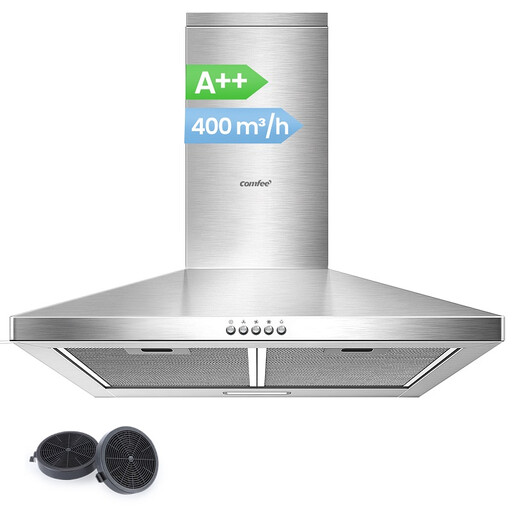
Why this product suits this profile: This wall-mounted hood offers 400 m³/h, three power levels and mechanical controls. It is suitable for shoppers looking for a straightforward specification without app or touch functions.
The product information specifies recirculation and extraction modes, as well as a washable five-layer aluminium filter. Nevertheless, check which connection components are included before installation.
400 m³/h extraction rate, five filter layers and adjustable chimney according to the product description.
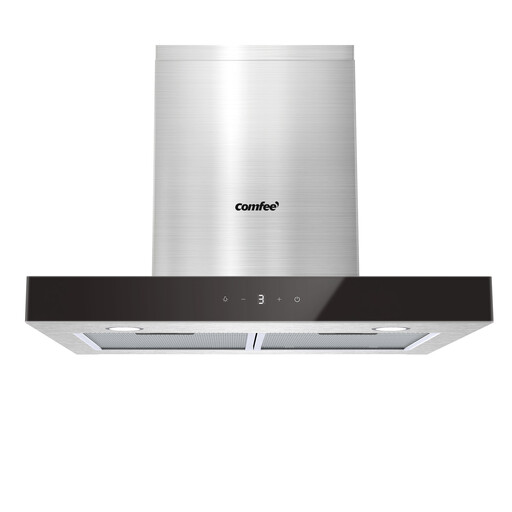
Why this product suits this profile: According to the product information, this model combines 650 m³/h with touch and gesture controls, LED lighting and four power levels.
The technical specifications state both the maximum value and a noise level of around 59 to 60 dB. For specific kitchen planning, the duct layout and installation height should be taken into account.
A+++ rating, five-layer aluminium filter and a choice of recirculation or extraction mode according to the product description.
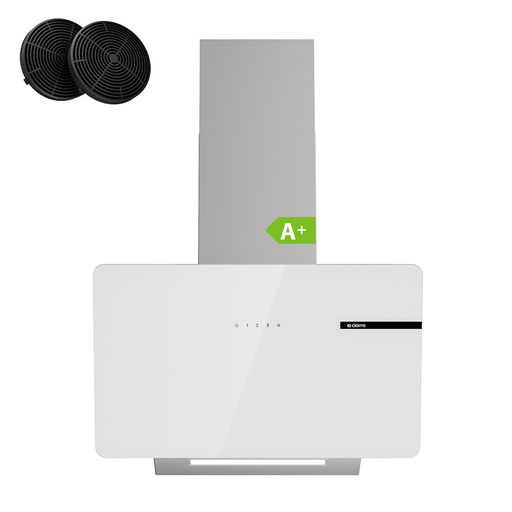
Why this product suits this profile: The angled 60 cm design creates additional space in front of the hob. Touch controls, LED lighting and 580 m³/h according to the product information make it suitable for modern, compact kitchens.
The supplier specifies recirculation and extraction options, a washable five-layer grease filter and an activated carbon filter for recirculation mode.
595 mm width, LED lighting, three power levels and a stated noise level of around 64 dB.
We have put together a complete, regularly updated list of products that fully meet these strict selection criteria and the safety regulations applicable in the EU.
Installation should be carried out according to the instructions and by a qualified person. Observe the minimum distance from the hob specified by the manufacturer; the required distance may vary depending on whether you have an electric or gas hob. In extraction mode, the duct should be as short and straight as possible.
Ideally, switch the hood on before you start cooking and leave it running for a few minutes after cooking. Clean the grease filter regularly; depending on usage, an interval of two to four weeks is often recommended. Disconnect the power supply before every cleaning or maintenance procedure. Avoid using naked flames beneath the hood.
For rented homes, a hood with recirculation mode is often suitable, as no opening through the wall is required for an extraction duct. Check that activated carbon filters are included or available, and choose an installation method that can be dismantled when you move out.
Washable metal grease filters should be cleaned regularly. If the hood is used frequently, an interval of two to four weeks may be appropriate. Activated carbon filters for recirculation mode are consumable parts; replacement depends on the model, how often you cook and the manufacturer's instructions.
Ongoing electricity costs depend on power consumption, usage time and energy efficiency class. In recirculation mode, you may also incur the cost of activated carbon filters. A low annual consumption figure is therefore helpful, but should always be considered alongside the extraction rate and the operating mode you require.