
Lieferung heute & morgen

Qualitätsgarantie

Willkommens-Angebote freischalten: KOSTENLOSE Lieferung | Bis zu 80 % RABATT | Kostenlose 30-Tage-JoyPlus-Testphase
App herunterladen
A 60 cm cooker hood fits many standard hobs and kitchen units. However, the same width does not automatically guarantee the right solution. The key factors are the design, air extraction method, noise level, filters and the existing installation setup.
The Joybuy Product Recommendation Officer therefore focuses on clear, verifiable product data rather than broad marketing claims.
A figure such as 580 or 650 m³/h usually describes the maximum airflow under specific conditions. Duct length, bends, diameter and backdraft damper all affect how much air is actually extracted. For ducted operation, the existing connection should be compatible with the hood. A duct that is too long or has too many bends can reduce airflow and increase noise.
A ducted and recirculating cooker hood is flexible, but the two operating modes differ considerably:
Glass fronts, touch controls and black surfaces look modern, but they show fingerprints and grease splashes more quickly. A 60 cm black cooker hood should therefore have a smooth, easily accessible surface and removable grease filters. Washable aluminium filters reduce the need for replacement parts; however, activated carbon filters remain consumables when using recirculation.
Several options are suitable for small kitchens:
A nominal width of 60 cm does not mean that every model has exactly the same installation dimensions. Product specifications such as 596, 599 or 600 mm may be important when fitting the hood into an existing cabinet.
For occasional cooking, around 200 to 300 m³/h may be sufficient if the kitchen is small and the hood is installed correctly. For frequent frying, wok cooking or open-plan kitchens, models with a high-extraction cooker hood and several power settings are more suitable.
Noise levels are stated in decibels. Wherever possible, compare the figures for the relevant power setting. A rating of 58 to 65 dB may be perceived differently depending on the design and operating mode. A quiet cooker hood cannot therefore be identified by a marketing term alone. Check the stated maximum level and use the lower setting wherever possible in everyday use.
A multi-layer aluminium grease filter can be removed and, where suitably labelled, is often dishwasher-safe. Depending on how often you cook, it should be cleaned approximately every two to four weeks. When using recirculation, suitable activated carbon filters must be fitted and replaced according to the manufacturer’s instructions.
A cooker hood with LED lighting improves illumination over the hob while using little electricity. For running costs, the stated annual consumption in kWh/a is also relevant. The energy efficiency class should always be considered alongside the actual consumption, as high power settings and frequent use affect real-world energy usage.
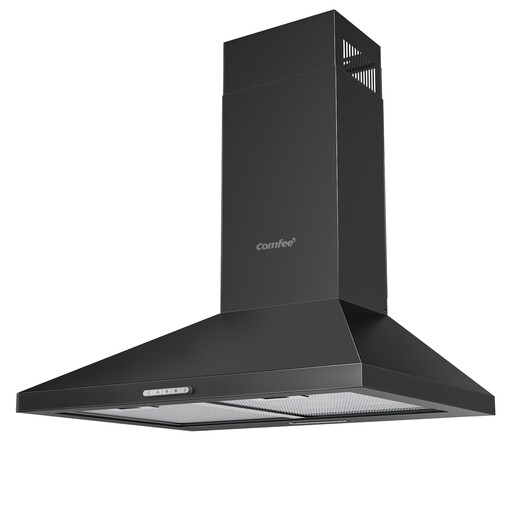
Why this product suits this profile: This black 60 cm wall-mounted hood offers three power settings, LED lighting, and both ducted and recirculating operation. The stated airflow is up to 400 m³/h.
The two operating modes mean buyers without an extraction connection are not limited to an external-only solution. According to the product information, the carbon filter is included.
60 cm width, three speeds, LED lighting and height-adjustable chimney.
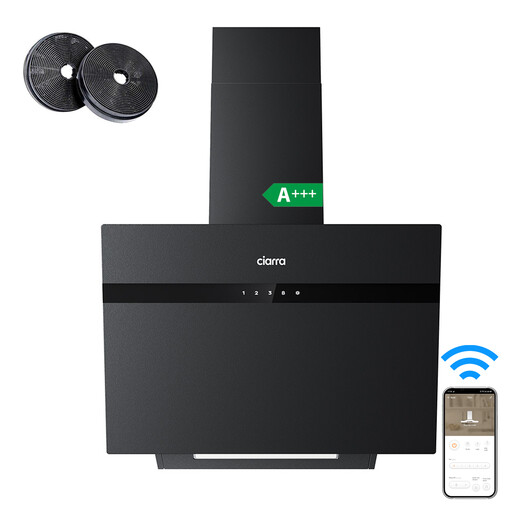
Why this product suits this profile: The angled wall-mounted design provides extra clearance in front of the hob. The stated specifications include up to 650 m³/h, 58 dB, three settings with booster, LED lighting and app/Wi-Fi control.
The technical specifications state the airflow and noise level clearly. This makes it easier to compare the model with the room size and your personal sensitivity to noise.
A+++ according to the product information, washable aluminium filter, two LED brightness settings, and ducted and recirculating options.
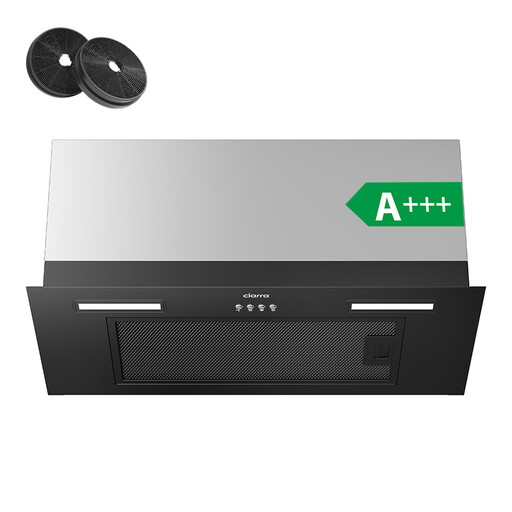
Why this product suits this profile: The fully integrated design is aimed at renovators looking for a discreet solution inside a wall unit with a high stated airflow.
The installation depth of 309 mm and width of 599 mm are specified. This allows you to check before buying whether the kitchen cabinet has enough space.
Up to 640 m³/h, three power settings, washable aluminium filter and A+++ according to the product information.
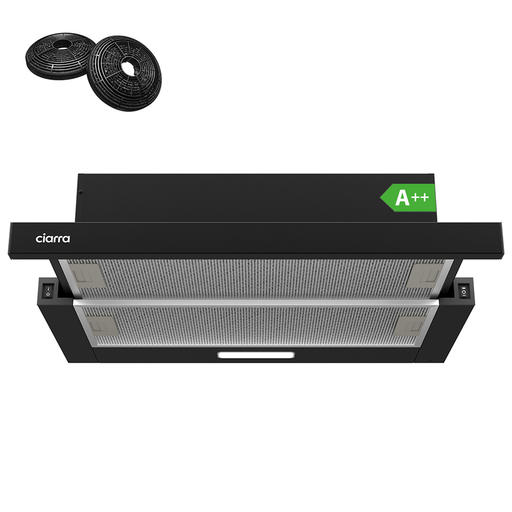
Why this product suits this profile: This pull-out under-cabinet cooker hood takes up little visible space and supports both ducted and recirculating operation. The stated airflow is up to 370 m³/h.
The compact depth and pull-out front help to overcome space restrictions. Before installation, check the cabinet width and the required filter type.
A++ according to the product information, LED lighting, two power settings and a carbon filter included for recirculating operation.
The installation height must be suitable for both the instruction manual and the hob. As a guide, the product information for several models specifies 65 cm to 75 cm above electric hobs and 75 cm above gas hobs. The instructions provided by the relevant manufacturer and applicable safety requirements are binding.
Before drilling, check the power connection, wall load-bearing capacity, duct routing and the position of the extraction outlet. If there are gas appliances or fireplaces in the same room, ensure that there is an adequate supply of fresh air. If you are unsure, installation and electrical connections should be carried out by a qualified professional.
We have put together a complete, regularly updated list of products that fully meet these strict selection criteria and the safety regulations applicable in the EU.
For small, enclosed kitchens, 200 to 400 m³/h may be sufficient. For frequent use, open-plan kitchens or intensive cooking, higher figures such as 580 to 650 m³/h may be worth considering. Duct routing and installation affect the actual performance.
Ducted extraction directs vapours outside and requires a suitable connection. Recirculation is more flexible for rented accommodation, but requires compatible activated carbon filters and regular replacement. The structural requirements and maintenance involved should guide your decision.
Noise levels are stated in dB. Figures of around 58 to 65 dB at the maximum setting are specific comparison values for the models mentioned. For a realistic assessment, you should also consider the noise levels at lower power settings and the acoustics of your own room.