
Lieferung heute & morgen

Qualitätsgarantie

Willkommens-Angebote freischalten: KOSTENLOSE Lieferung | Bis zu 80 % RABATT | Kostenlose 30-Tage-JoyPlus-Testphase
App herunterladen
A 60 cm cooker hood fits many standard kitchens and is a natural choice, particularly when renovating or working with limited space. However, width alone does not determine whether it is suitable. The installation type, extraction route, filters, noise level and actual extraction rate all affect how well the appliance performs in everyday use.
Many disappointing purchases result from three common marketing traps:
Before buying, measure the available recess, the depth of the wall unit and the distance to the hob. Depending on your kitchen, different designs may be suitable:
Do not look only at the nominal width. For example, the Ciarra CRGCS6903D-FG model is 596 mm wide, while its depth is 440 mm. Details like these are essential for accurate planning.
Extraction rate is stated in m³/h. For a small kitchen and occasional cooking, an appliance with an extraction rate of 300 to 400 m³/h may be sufficient. Higher figures are advisable if you frequently fry food, use several cooking zones or have an open-plan kitchen.
A 650 m³/h cooker hood can move more air per hour, but requires a suitable extraction route or an appropriately configured recirculation system. Long ducts, narrow cross-sections and numerous changes of direction can reduce the actual airflow. You should therefore also check the maximum noise level and the available power settings.
In extraction mode, vapours are channelled outside through a duct. An activated-carbon filter is normally not required, although the grease filter remains important. In recirculation mode, the air passes through a grease filter and usually an activated-carbon filter, before being returned to the room.
Before buying, check the following:
A washable multi-layer filter can make ongoing cleaning easier. In recirculation mode, activated-carbon filters should be checked and replaced in line with the manufacturer’s instructions.
A quiet cooker hood is particularly important in open-plan kitchens. Noise is measured in decibels and generally increases with the selected power setting. The maximum figure should therefore not be confused with the noise level on the lowest setting.
The energy efficiency rating is also only one part of the ongoing cost. An appliance with LED lighting and low annual energy consumption may be more economical in everyday use. You should also check the motor output, how long the appliance is used and the duration of any run-on periods. Product details such as A+, A++ or A+++ should be taken directly from the relevant datasheet, as the rating depends on the specific model.
The following models differ in design, extraction rate, controls and width. The recommendations are based on the published product data, rather than blanket claims about quality.
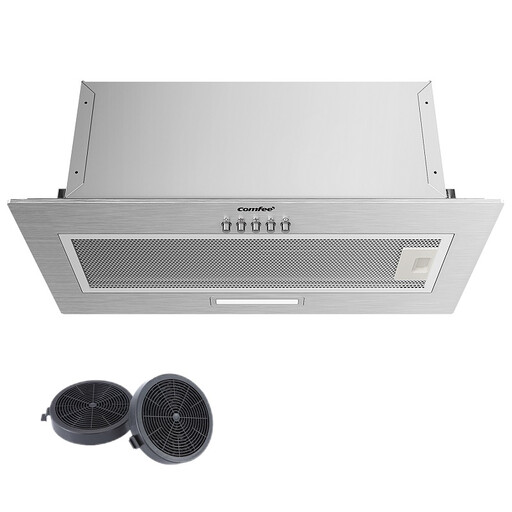
Why this product suits this profile: The 52 cm design is intended for small kitchens and compatible wall units. Recirculation and extraction modes, together with three power settings, provide a straightforward basic specification.
The product details specify 400 m³/h, a five-layer filter and both installation types. This makes it possible to compare the extraction rate and filter specification before buying.
52 cm width, LED lighting, three speeds and energy efficiency class B according to the product information.
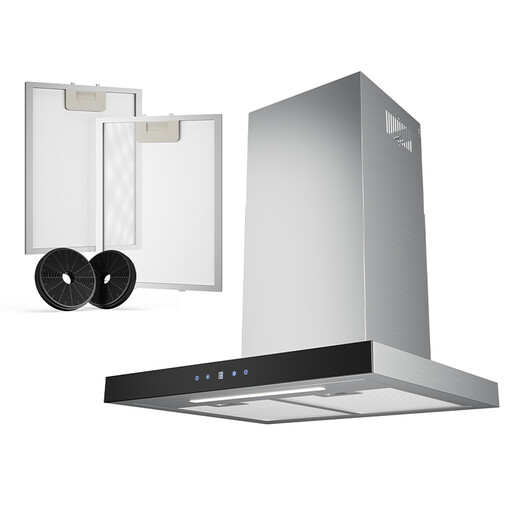
Why this product suits this profile: This wall-mounted cooker hood combines a 60 cm width with touch controls, a digital display and a stated extraction rate of 611 m³/h.
Both extraction and recirculation modes are specified. According to the product information, an activated-carbon filter set and installation materials are included.
611 m³/h, LED lighting, five-layer aluminium grease filter and energy efficiency class A++ according to the product information.
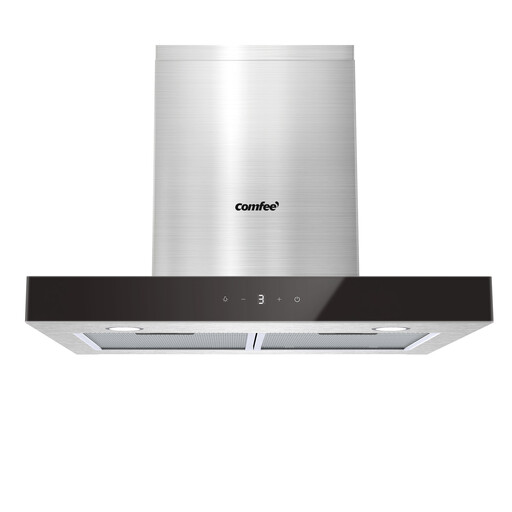
Why this product suits this profile: For frequent cooking, the model offers four speeds, a maximum extraction rate of 650 m³/h, plus touch and gesture controls.
The product page states 59 to 60 dB, a washable five-layer aluminium filter and both operating modes. This documents important follow-on criteria alongside the extraction rate.
650 m³/h, LED lighting, gesture control and energy efficiency class A+++ according to the product information.
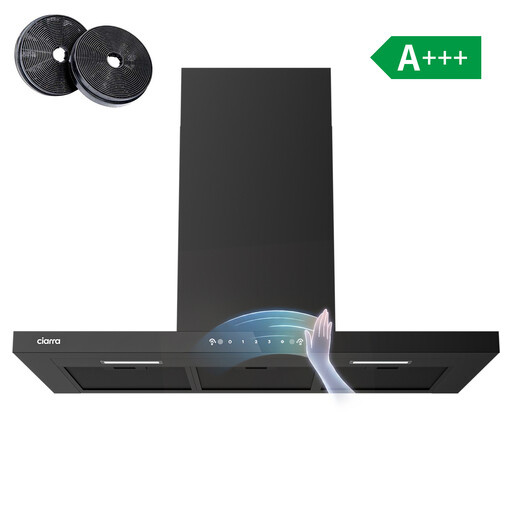
Why this product suits this profile: The 90 cm width is suitable for larger hobs or kitchens where a wider extraction area is preferred. The model supports recirculation and extraction.
The product data lists 650 m³/h, 59 dB, three washable aluminium filters and two CBCF003 activated-carbon filters.
90 cm width, wave and touch controls, LED lighting and energy efficiency class A+++ according to the product information.
The grease filter should be cleaned regularly, depending on how often the hood is used. If you frequently prepare fried dishes, a shorter cleaning interval may be advisable. Always disconnect the appliance from the mains before cleaning. Use suitable, non-abrasive cleaning products for stainless steel, glass and painted surfaces.
For an extraction installation, you need to take the duct diameter, backdraught shutter and wall penetration into account. Professional installation is particularly important if a hole needs to be made through the wall or the hood must be connected to existing extraction ducts. Also observe the installation clearances specified in the relevant instruction manual. For example, the Comfee TSHM77SS-60 model mentioned above specifies 75 cm for gas hobs and 65 cm for electric hobs as the minimum clearances.
We have put together a complete, regularly updated list of products that fully meet these strict selection criteria and the safety regulations applicable in the EU.
A 60 cm hood is suitable for many standard kitchens. However, the appliance’s actual dimensions, the position of the hob and the extraction area are all important. With a wider hob or more intensive use, a 90 cm cooker hood may be the better choice.
Extraction removes vapours to the outside and requires a suitable connection. Recirculation is more flexible in rented homes or where there is no external opening, but requires a compatible activated-carbon filter and regular filter replacement. The right choice therefore depends on the structural conditions of your kitchen.
Running costs depend on the energy efficiency class, motor output, usage time and lighting. LED lighting can reduce the proportion of electricity used for illumination. With recirculation, you also need to factor in the cost of replacement activated-carbon filters. As well as the extraction rate, check the annual energy consumption and the availability of replacement filters.