
Lieferung heute & morgen

Qualitätsgarantie

Willkommens-Angebote freischalten: KOSTENLOSE Lieferung | Bis zu 80 % RABATT | Kostenlose 30-Tage-JoyPlus-Testphase
App herunterladen
A 60 cm cooker hood fits many standard hobs, making it a popular choice for rented flats, kitchen renovations and compact households. However, width alone says little about how practical it will be day to day. Key factors include the installation type, airflow rate, noise level and whether extraction or recirculation is possible.
Many poor purchases result from three typical marketing traps:
An integrated cooker hood is fitted into a suitable wall cabinet and remains largely discreet when the cabinet door is closed. An under-cabinet cooker hood is mounted directly beneath a cabinet and is suitable for kitchens where there is limited installation height. A wall-mounted hood, on the other hand, requires a load-bearing wall and sufficient space above the hob.
Before buying, check:
The term 60 cm cooker hood only describes the basic dimensions. Models with an extendable front can cover a larger area while operating than when retracted.
A cooker hood with recirculation and extraction offers greater flexibility. In extraction mode, cooking fumes are routed outside through a duct. This can remove odours and moisture from the room, but requires a suitable opening in the building.
With recirculation, the air passes through a grease filter and usually an activated carbon filter before being returned to the kitchen. This solution is more practical for many rented flats. However, activated carbon cannot bind odours indefinitely. Depending on usage, the filter must be replaced regularly.
Therefore, look out for:
A high m³/h figure is not automatically the right choice for every kitchen. A higher airflow rate can be useful in an open-plan kitchen or when frying frequently. For occasional cooking in a small kitchen, lower settings may be sufficient.
A quiet cooker hood should be assessed not only by a marketing claim, but also by a specific dB value. For comparison, the product specifications for the following models state between 58 and 64 dB at maximum power, for example. Also check whether the noise figure applies to the highest setting, normal operation or a boost mode.
When considering energy efficiency, look at annual energy consumption in kWh alongside the efficiency class. The product data available here includes models in classes A++ and A+++, among others. Actual electricity costs depend on frequency of use, operating setting and running time. A cooker hood with LED lighting can illuminate the cooking area precisely, without requiring the entire kitchen lighting system to be switched on.
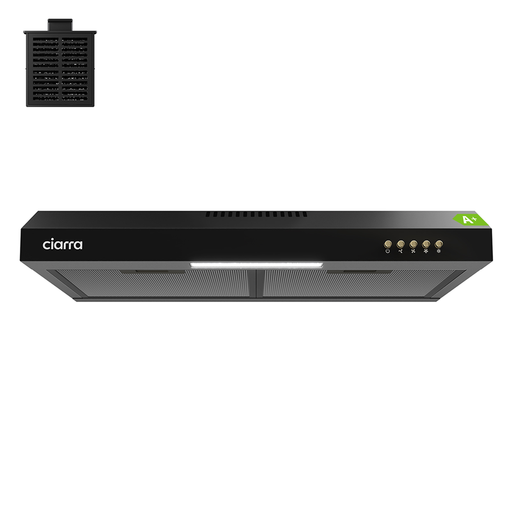
Why this product suits this profile: This compact under-cabinet cooker hood is designed for smaller kitchens, rented flats and existing wall cabinets. It offers recirculation and extraction modes, along with simple push-button controls.
The product data gives specific performance levels from 138 to 184 m³/h and a maximum noise level of 61 dB, rather than making only general performance claims.
A+; two washable aluminium grease filters; integrated lighting; 24-month warranty according to the product specifications.
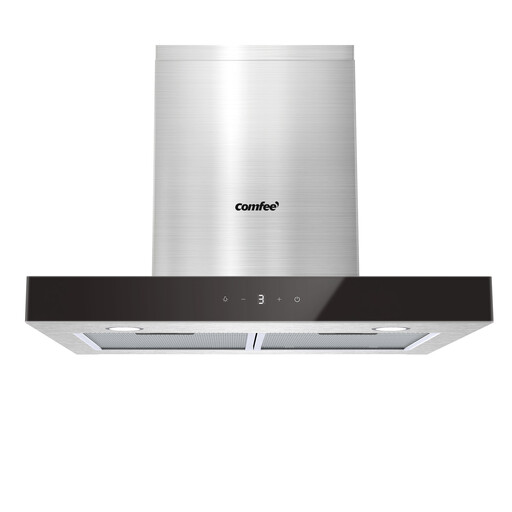
Why this product suits this profile: This model combines a maximum output of 650 m³/h, four settings, touch controls and gesture control for households where cooking is a frequent activity.
The specifications distinguish between airflow, a noise level of around 59 to 60 dB and energy class A+++, rather than treating them as one figure.
Five-layer, dishwasher-safe aluminium filter; recirculation and extraction; LED lighting; stainless steel construction according to the product description.
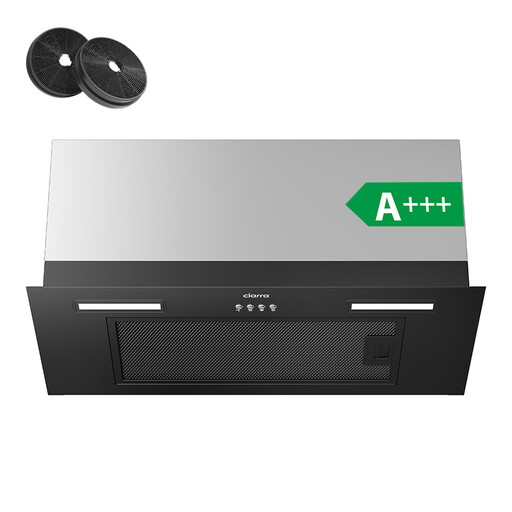
Why this product suits this profile: This integrated cooker hood is designed to blend discreetly into kitchen furniture and offers both recirculation and extraction modes.
The stated installation dimensions of 599 × 309 × 263 mm should be checked against the existing cabinet before installation.
A+++; stated annual consumption of 9 kWh; up to 640 m³/h on the third setting; washable aluminium grease filter.
Clean metal grease filters regularly, for example every two to four weeks depending on how often you cook. A clogged filter can restrict airflow and increases the risk of fire caused by grease deposits. Activated carbon filters are consumable parts and must be replaced during recirculation operation according to the manufacturer’s instructions.
Before installation, observe the minimum distances from the hob stated in the relevant instructions. Different requirements may apply to gas and electric hobs. Electrical connections and structural extraction installations should be carried out by a qualified professional where necessary. When operating room-air-dependent combustion appliances at the same time, make sure the room is adequately ventilated.
We have put together a complete, regularly updated list of products that fully meet these strict selection criteria and the safety regulations applicable in the EU.
The required distance depends on the type of hood, the hob and the manufacturer’s specifications. Follow the installation measurements given in the instructions. Different minimum distances may apply to gas and electric hobs.
Extraction vents moisture and odours outside, but requires a suitable opening in the building. Recirculation is more flexible for rented flats and renovations, but requires activated carbon filters to be replaced regularly. The right operating mode therefore depends on the structural conditions and your willingness to carry out maintenance.
Its service life depends on the motor, materials, cleaning, filter maintenance and intensity of use. Regularly cleaned grease filters, unobstructed air paths and timely replacement of the activated carbon filter can help maintain reliable operation over time. The availability of spare parts, warranty terms and professional installation are also important factors.