
Lieferung heute & morgen

Qualitätsgarantie

Willkommens-Angebote freischalten: KOSTENLOSE Lieferung | Bis zu 80 % RABATT | Kostenlose 30-Tage-JoyPlus-Testphase
App herunterladen
A 60 cm cooker hood suits many standard hobs, making it a good choice for rented homes, small kitchens and compact fitted kitchens. But choosing the right one involves more than just width or appearance. Key considerations include the operating mode, available installation space, extraction rate and maintenance requirements.
As a Joybuy Product Recommendation Officer, I check the information against verifiable product details. This helps you avoid common buying mistakes without relying solely on marketing claims.
A wall-mounted hood needs enough clear space above the hob. A headroom hood, with its angled front, often gives you more room to move, but depending on the model it may need to be mounted higher and take up more depth.
For wall cabinets, an under-cabinet cooker hood, a telescopic hood or a built-in cooker hood may be more suitable. Before you buy, compare the following measurements:
A stated width of 60 cm doesn’t automatically mean that every model will fit every 60 cm cabinet.
With extraction, cooking fumes are carried outside through an extraction duct. You’ll need a suitable wall vent, an extraction hose and enough space for installation. In rented homes, this option may require permission for building work.
With recirculation, air passes through a grease filter and an additional charcoal filter. The cleaned air is then returned to the room. A cooker hood with a charcoal filter is therefore a practical option if you don’t have an extraction outlet. The charcoal filter is a consumable and should be checked or replaced regularly, depending on how often you use the hood and the manufacturer’s guidance.
Models with recirculation and extraction offer greater flexibility. However, check whether the hose, non-return valve and charcoal filter are actually included.
A high extraction rate is only useful if the hood is installed correctly and the airflow isn’t unnecessarily obstructed. At the same time, many appliances get noisier at higher power settings. The stated noise level in dB is therefore especially important for open-plan kitchens or small homes.
Check the following:
Don’t choose a “quiet cooker hood” based on the claim alone. Specific figures, such as 51 dB, 61 dB or 64 dB at the relevant setting, are more useful.
Aluminium grease filters collect grease particles from cooking fumes. Washable filters can be cleaned regularly, so you don’t have to replace them every time they get dirty. Some models have dishwasher-safe filters; this should be clearly stated in the product description or instruction manual.
Regular cleaning is important to keep your hood working properly. Depending on how often you cook, it may be worth checking the filter every two to four weeks.
An energy-efficient cooker hood can help limit electricity use if you run it regularly. However, compare the energy efficiency rating alongside the stated annual consumption in kWh/a. LED lighting makes it easier to see your hob and, on many appliances, uses relatively little power.
Black-painted metal or black glass suits modern kitchens, but can show fingerprints and dust more easily. A black cooker hood should therefore have a surface that can be cleaned with a soft, damp cloth.
Push buttons are practical and straightforward to use. Touch controls have a sleek, flat finish and are easy to wipe clean, but the surface needs to be dry when you use them. The best choice also depends on your household’s habits.
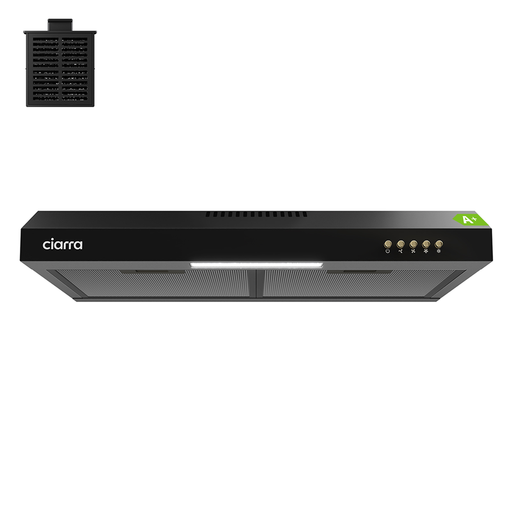
Why this product suits this profile: Its compact 596 mm width is designed for small kitchens and spaces beneath wall cabinets. Push-button controls and integrated lighting keep operation straightforward.
The description explicitly lists both recirculation and extraction modes. It also comes with a washable aluminium filter, so you won’t need to replace it every time it gets dirty.
A+ energy efficiency rating, three power settings and a stated maximum noise level of 61 dB.
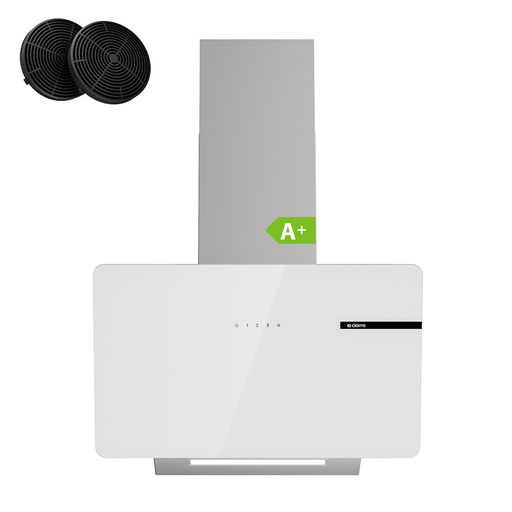
Why this product suits this profile: The angled glass front gives you extra room in front of the hob. Touch controls, LED lighting and a stated extraction rate of up to 580 m³/h will appeal if you’re looking to combine several convenient features.
The product details list both operating modes and a washable, multi-layer aluminium grease filter. This means you’re not limited to just one type of installation when choosing between recirculation and extraction.
A+ energy efficiency rating, 595 mm width, LED lighting and a stated maximum noise level of 64 dB.
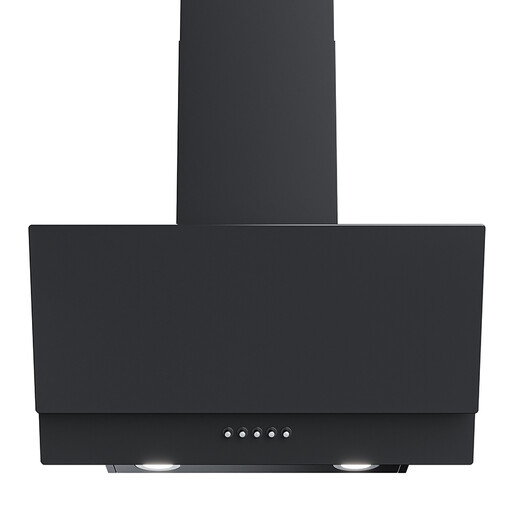
Why this product suits this profile: This black, headroom wall hood is designed for households looking for a statement appliance with a glass front, LED lighting and flexible operating modes.
It supports both extraction and recirculation. According to the product details, a charcoal filter set, chimney sections, non-return valve and installation materials are included.
Stated extraction rate of 300 m³/h, B energy efficiency rating, LED lighting and a five-layer, dishwasher-safe aluminium grease filter.
We’ve put together a complete, regularly updated list of products that meet these strict selection criteria and the safety regulations in force across the EU.
A recirculating hood is often easier to install in a rented home, as it doesn’t require a hole in the wall or an existing extraction duct. Check that you have a suitable charcoal filter and whether it’s included or needs to be bought separately.
It depends on the size of your room, how you cook and the operating mode. Lower settings may be enough if you only cook occasionally; higher extraction rates are useful if you fry food often or have an open-plan kitchen. Always compare the extraction rate with the noise level and installation information.
Washable metal or aluminium filters should be cleaned regularly. If you use your hood frequently, every two to four weeks is a useful guide. Charcoal filters shouldn’t be washed; replace them according to the manufacturer’s instructions. Frequent frying and heavy use may mean you need to change them more often.