
Lieferung heute & morgen

Qualitätsgarantie

Willkommens-Angebote freischalten: KOSTENLOSE Lieferung | Bis zu 80 % RABATT | Kostenlose 30-Tage-JoyPlus-Testphase
App herunterladen
A 60 cm cooker hood fits many standard hobs, making it a popular choice for small to medium-sized kitchens. However, choosing one doesn’t automatically mean you’ll find the right model. The key factors are your installation requirements, the operating mode and the upkeep involved – not simply a high airflow rate or a modern-looking design.
The “60 cm” measurement usually refers to the width of the appliance. For installation, you’ll also need to consider its depth and height, the distance from the wall and the position of the exhaust outlet. For example, an under-cabinet cooker hood needs to fit beneath a cupboard, while a 60 cm wall-mounted cooker hood needs a sturdy section of wall and enough room for the chimney.
Before buying, measure the available space and check the manufacturer’s installation diagram. For a 60 cm hob, the hood should cover at least the same width. If there’s a lot of steam, a larger capture area may be a good idea, provided your kitchen has enough space.
Airflow is measured in m³/h. This figure shows how much air the appliance moves under certain conditions. In practice, the duct, its length and bends, the backdraft damper and the filters all affect how well the hood performs.
Check the decibel rating carefully, too. Some suppliers give only the maximum noise level, while others also list figures for individual settings. A model with three settings lets you adjust the hood to suit different cooking situations. If you have an open-plan kitchen, it’s particularly important to check the stated maximum noise level.
Extraction and recirculation are two different installation options. In extraction mode, cooking fumes are carried outside through a duct. This requires a suitable wall or building outlet. In recirculation mode, the air passes through a grease filter and often an additional activated carbon filter before being returned to the room.
Activated carbon filters are consumable parts. Before you buy, check whether they’re included, which replacement filters you’ll need and how often the instructions recommend changing them. Recirculation can be a more practical option in rented homes, as it doesn’t require structural changes to an external wall.
Check which fixings are included, as well as the exhaust connector and installation instructions. An existing duct won’t necessarily fit the new appliance.
A washable grease filter made from aluminium can be removed and cleaned regularly. This helps reduce ongoing costs compared with disposable filters, but doesn’t replace routine maintenance. Grease build-up can affect airflow and, if left to accumulate, may become a safety risk.
Recirculating models also need an activated carbon filter. Product specifications should clearly state details such as “multi-layer aluminium filter” or “dishwasher-safe”. For exterior surfaces, use soft cloths and suitable cleaning products; abrasive cleaners can damage stainless steel, glass or paint.
Integrated LED lighting makes it easier to see your cooking surface. Check whether the light and fan can be controlled separately, and whether the controls are buttons, a slider or touch-sensitive.
The energy efficiency rating and stated annual consumption give you a rough idea of running costs. Low consumption is particularly useful if you cook often. However, always consider these figures alongside airflow, operating mode and how you plan to use the hood.
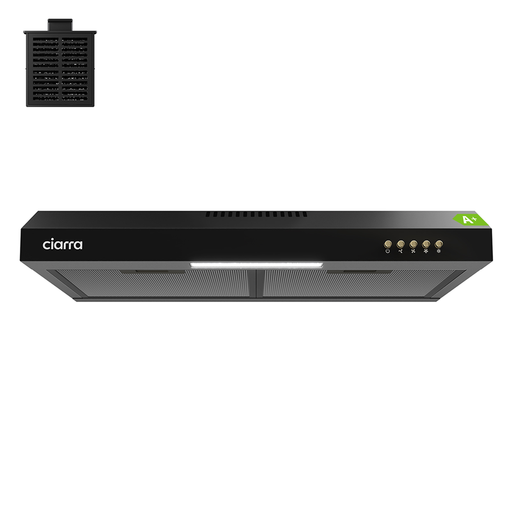
Why this product suits this type of user: Its compact design is made for small kitchens, rented homes and low wall cupboards. The hood can be used in extraction or recirculation mode.
The product specifications state that it is 596 mm wide and has three power settings and two washable aluminium filters. It can also be used in recirculation mode with a CBCF009 activated carbon filter.
Slim installation depth of 85 mm, push-button controls, LED lighting and an A+ energy efficiency rating, according to the product details.
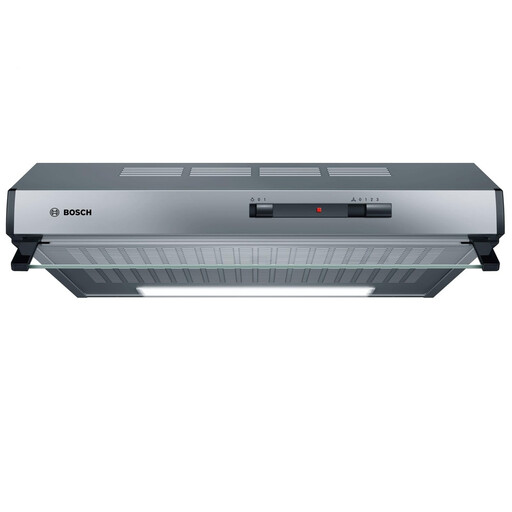
Why this product suits this type of user: This model is designed for under-cabinet or wall installation, with straightforward controls and three power settings.
The product description clearly states that the recirculation kit is required separately. This means you can factor in the extra cost before placing your order.
Maximum airflow of 250 m³/h, LED lighting, a stainless steel body and a dishwasher-safe grease filter, according to the product details.
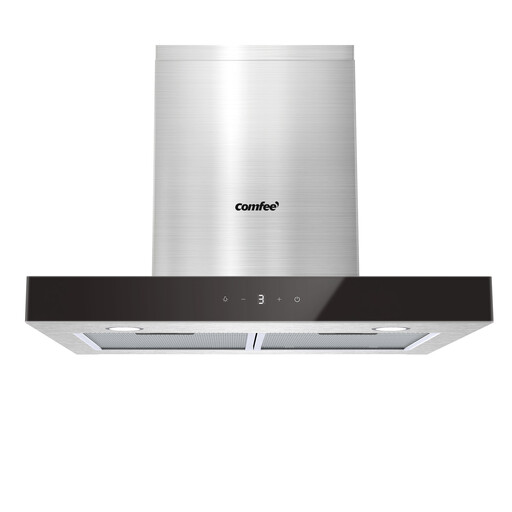
Why this product suits this type of user: This T-shaped wall hood is suited to households that cook frequently and have room for a wider, deeper wall-mounted appliance.
It can be used in extraction or recirculation mode. The five-layer aluminium filter is removable and, according to the product description, dishwasher-safe.
Up to 650 m³/h, four fan speeds, LED lighting, plus touch and gesture controls, according to the manufacturer.
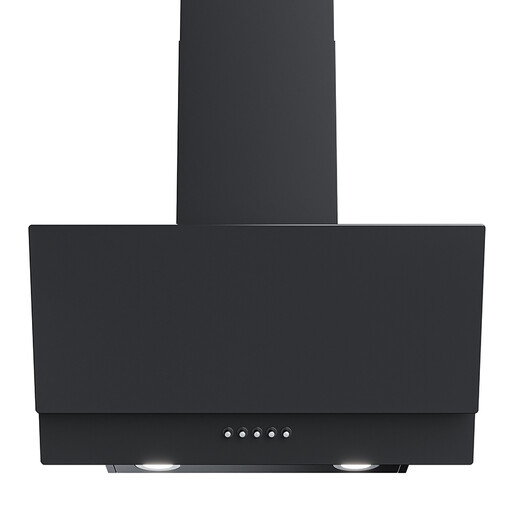
Why this product suits this type of user: Its black glass front and angled design make it a striking wall-mounted option that also gives you more headroom while cooking.
It can be used in extraction or recirculation mode. According to the product details, an activated carbon filter set, fixings and a backdraft damper are included.
Airflow of 300 m³/h, a five-part dishwasher-safe aluminium filter, LED lighting and a B energy efficiency rating, according to the product details.
We’ve put together a comprehensive, regularly updated list of products that meet these strict selection criteria and fully comply with the safety regulations in force in the EU.
The installation height must be suitable for your type of hob and comply with the manufacturer’s instructions. Minimum clearances may differ for gas and electric hobs. Follow the instructions for your model, and have electrical connections or structural ductwork installed by a qualified professional if needed.
Ideally, switch the hood on shortly before you start cooking and leave it running for a few minutes afterwards. Clean the grease filters regularly, disconnect the appliance from the mains before carrying out maintenance, and use only compatible activated carbon filters in recirculation mode.
For many standard kitchens, yes, as long as the hood covers the entire cooking surface and its airflow suits the way you cook. If you often fry food, produce a lot of steam or have an open-plan kitchen, a more powerful model or a larger capture area may be worth considering.
Extraction removes moisture and cooking fumes from your home, but it needs a suitable outlet. Recirculation is more flexible for rented homes, but requires compatible activated carbon filters and regular filter changes. Your choice will depend on your installation options and ongoing maintenance costs.
It depends on how often you cook. If you cook regularly, checking the filter every two to four weeks is a practical rule of thumb. Always follow the instructions in your appliance manual. A washable grease filter makes maintenance easier, but should be completely dry before you put it back.