
Lieferung heute & morgen

Qualitätsgarantie

Willkommens-Angebote freischalten: KOSTENLOSE Lieferung | Bis zu 80 % RABATT | Kostenlose 30-Tage-JoyPlus-Testphase
App herunterladen
A 60 cm cooker hood fits many standard hobs, making it a popular choice for rented homes, owner-occupied kitchens and compact layouts. However, width alone won’t tell you whether a kitchen extractor is right for you. The key factors are the operating mode, extraction rate, filters, noise level and available connections.
There are three common pitfalls to watch out for when buying:
An extraction cooker hood channels cooking fumes outside through an air duct. This requires a suitable opening in the wall, a compatible connection and approval from your landlord or residents’ association. Installation should follow the instructions and local requirements.
A recirculating cooker hood filters the air and returns it to the room. This option is often easier for rented homes or kitchens without an extraction duct. The grease filter traps grease particles, while an activated carbon filter helps reduce odours. The filter is a consumable, so it needs to be factored into your ongoing costs.
Some models support both operating modes, which is useful if your living arrangements change later on. Before ordering, check whether a filter for recirculation is included or needs to be bought separately.
The extraction rate is given in m³/h. A higher figure may be useful if you often fry food or have an open-plan kitchen, but it should always be considered alongside the noise level. Noise is usually given in dB and can vary considerably between speed settings.
For example, the Ciarra CBCS6201 wall-mounted hood is listed with extraction rates of 221 m³/h, 291 m³/h and 367 m³/h across three settings, and noise levels of 51, 57 and 63 dB. These figures for each setting are more useful when comparing models than a single maximum figure. In a small, enclosed kitchen, a lower setting may be enough for everyday use; an open-plan kitchen will often need more power.
A washable aluminium or metal grease filter can be cleaned regularly, reducing the need for replacements compared with a non-reusable filter. Product details should also tell you how many filter elements are included and which activated carbon filter is needed for recirculation.
A cooker hood with LED lighting makes it easier to see your cooking area, but it isn’t a substitute for adequate room lighting. Use suitable, non-abrasive cleaning products on stainless steel surfaces. Black glass or lacquered finishes can create a sleek, compact look, but depending on the surface, fingerprints and grease marks may show up more easily.
Installation measurements matter too. For example, the COMFEE' model is listed as measuring 600 × 80 × 440 mm, with a recommended installation height of between 650 and 750 mm. Always follow the instructions for your model and the requirements for your hob.
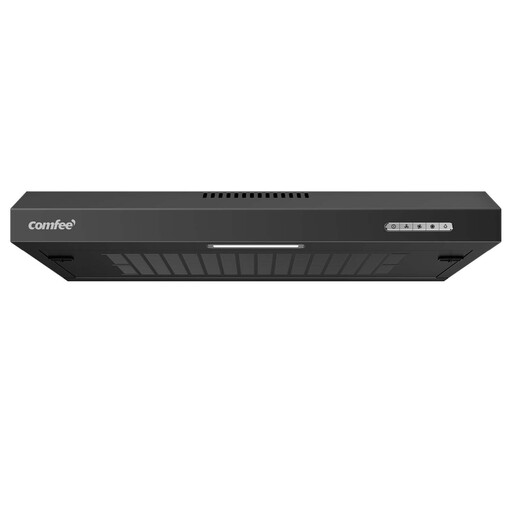
Why this product suits this profile: Its 60 cm design is made for standard-sized hobs and small kitchens. Three speed settings, LED lighting and the option to use it in extraction or recirculation mode provide all the essentials.
The product details list an extraction rate of 200 m³/h, three speed settings and a removable aluminium filter. Recirculation requires a cotton filter, which is sold separately, so remember to factor in this additional purchase.
According to the product description: 600 mm width, LED lighting, removable aluminium filter and energy efficiency class B.
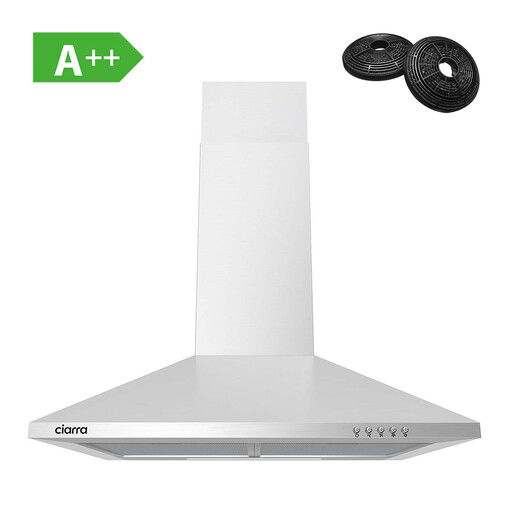
Why this product suits this profile: This wall-mounted hood combines stainless steel, washable aluminium filters, mechanical push-button controls and two operating modes. It’s a good choice if you value clear technical specifications and easy-to-maintain components.
The extraction rate is listed separately for each of the three speed settings. The product details also specify a noise level of 51 to 63 dB, the filter type and the adjustable height.
According to the product details: 367 m³/h on the highest setting, energy efficiency class A++, a 24-month guarantee and two washable aluminium filters.
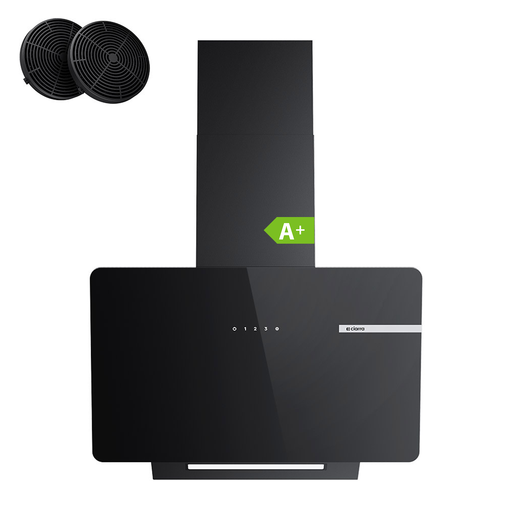
Why this product suits this profile: With its black finish, glass front and SensorTouch controls, this cooker hood is suited to kitchens where design, lighting and a higher stated extraction rate are all priorities.
The specifications list 580 m³/h, a maximum noise level of 64 dB and an adjustable height of 633 to 900 mm. Be sure to measure the wall clearance and installation space before buying.
According to the product description: LED lighting, extraction and recirculation modes, a washable aluminium filter and energy efficiency class A+.
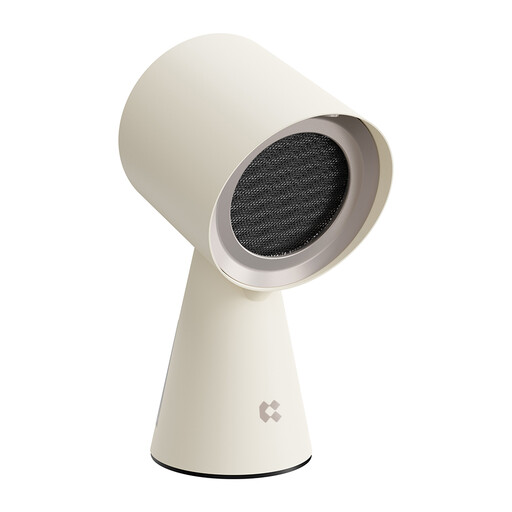
Why this product suits this profile: This portable unit doesn’t require a hole in the wall, making it suitable for rented kitchens, mobile cooking stations, motorhomes or temporary cooking areas.
This compact recirculating solution avoids the need for complex permanent installation. According to the instructions, it’s designed for electric cooking appliances and isn’t suitable for use with open flames.
According to the product details: two speed settings, 24 W power consumption, airflow rates of 77.8 and 108 m³/h, and a multi-layer filter unit.
We’ve put together a complete, regularly updated list of products that meet these strict selection criteria and fully comply with the safety regulations in force in the EU.
Clean the grease filter regularly, depending on how often you cook and how dirty it gets. If you use it frequently, checking it every two to four weeks may be a good idea. Disconnect the appliance from the mains before cleaning. Clean metal filters according to the manufacturer’s instructions. Activated carbon filters should not be washed like metal filters; replace them when they become less effective at trapping odours.
With a recirculating hood, filter replacements are part of the running costs. By contrast, an extraction model may involve extra costs for installation, ducting, a backdraught shutter and building work. A lower purchase price doesn’t necessarily mean a lower overall cost.
A 60 cm hood is generally designed for hobs of the same width. You should also check the depth, shape, installation height, wall clearance and the hob manufacturer’s guidance. If you do a lot of steam-heavy cooking, a larger capture area may be worth considering, if you have enough space.
Recirculation is usually easier, as it doesn’t require a hole in the wall. However, you’ll need to allow for the ongoing cost of an activated carbon filter. Extraction may involve more building work, so check with your landlord before going ahead.
‘Quiet’ isn’t a standardised measurement. The key figures are the dB ratings for each speed setting. For a fair comparison, look at models on the same setting. The duct, installation and resonance can also affect how noisy a hood seems in practice.