
Lieferung heute & morgen

Qualitätsgarantie

Willkommens-Angebote freischalten: KOSTENLOSE Lieferung | Bis zu 80 % RABATT | Kostenlose 30-Tage-JoyPlus-Testphase
App herunterladen
Choosing a new hob is a fundamental decision in kitchen planning. The 60 cm induction hob, in particular, has become a standard for many households, as it fits most standard kitchen units and offers modern technology. However, the sheer number of models, features, and price points can make the decision difficult.
As a Joybuy Product Recommendation Officer, my job is to provide you with clear and objective guidance. This article explains the most important criteria to consider when buying and presents a selection of models to help you find the right appliance for your needs.
Before you decide on a model, there are a few technical aspects to consider. These criteria will help you objectively evaluate a hob's performance and functionality.
A 4-zone induction hob is the most common configuration for a 60 cm width. Pay attention to the total power rating, specified in watts (W). A higher value generally allows for faster heating. Many models feature an induction hob with a boost function, which temporarily directs maximum power to a single cooking zone—ideal for bringing water to a boil quickly. Also, check the arrangement and size of the zones to ensure they match your usual cookware.
Modern appliances are controlled almost exclusively via a hob with touch controls. This smooth surface is not only visually appealing but also particularly easy to clean, as there are no joints or knobs where dirt can accumulate. Key safety features that should be included with any model are:
Most models on the market are designed as built-in induction hobs. A crucial factor here is whether it is a standalone 60 cm hob. "Standalone" means the hob has its own power supply and controls, allowing it to be installed independently of an oven. This offers maximum flexibility in kitchen design. Before purchasing, be sure to compare the manufacturer's specified cut-out dimensions with the existing opening in your worktop. The ceramic glass induction hob surface is standard on all common models and is known for its heat resistance and ease of maintenance.
Here is a selection of three models that cater to different needs and budgets. The evaluation is based on the technical data and feature descriptions provided by the manufacturer.
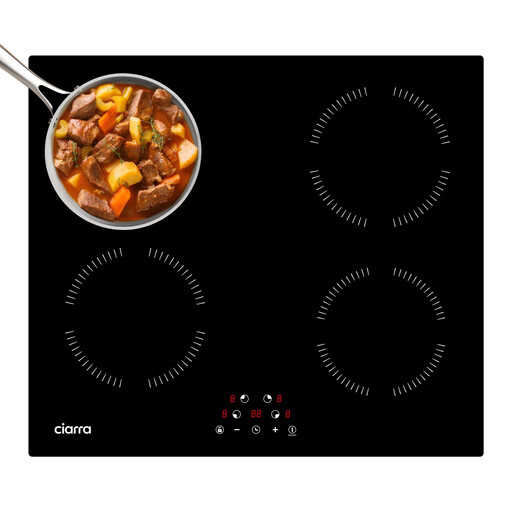
Why it stands out: The CIARRA CABBIH4-A focuses on the essential functions of an induction hob. With a total power of 6000 W and four clearly defined cooking zones, it provides a solid foundation for daily cooking.
Pros:
Who it's for: This model is a great choice for budget-conscious buyers looking for a reliable and functional standalone 60 cm hob without complex extra features. It is also well-suited for first-time kitchen setups or rental properties.
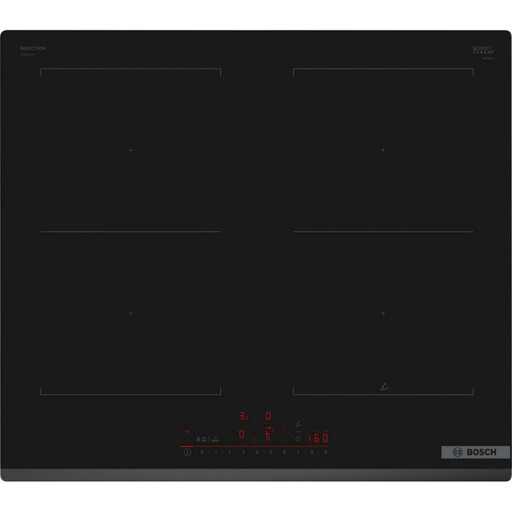
Why it stands out: The Bosch PVQ631HC1E distinguishes itself with its flexibility and high performance. The CombiZone function (also known as FlexInduction) allows two cooking zones to be combined into one large, continuous surface, ideal for roasting pans or large cookware.
Pros:
Who it's for: This hob is aimed at ambitious home cooks who frequently work with different pan sizes and value brand quality, high performance, and flexible cooking zones.

Why it stands out: The Topwish model offers a remarkable combination of high power and useful features at a competitive price. With a total power of 7200 W and a boost function on all four zones, it is designed for demanding cooking tasks.
Pros:
Who it's for: Users who appreciate high performance and features like a four-zone boost function, but are not necessarily committed to an established brand, will find this an interesting alternative.
If the models presented here don't exactly match your requirements, or if you are interested in other sizes and features, you can find more alternatives in our range. Discover our entire category of hobs and compare other appliances.
Induction hobs require cookware with a ferromagnetic base. You can easily test if a pot or pan is suitable with a magnet: if it sticks to the bottom of the pan, the cookware is compatible. Materials like cast iron, iron, and special magnetic stainless steel are generally suitable. Glass, pure aluminium, or copper will not work.
Yes, induction technology is considered more energy-efficient. The electromagnetic field directly heats the base of the cookware, not the ceramic glass surface itself. This means less heat is lost to the surroundings, the heating process is faster, and energy consumption is lower compared to a conventional ceramic hob (radiant heating).
A standalone hob has its own power supply and control panel. It can therefore be installed independently of an oven at any location in the worktop. The counterpart to this are oven-controlled hobs, which are powered and controlled by the oven situated below them. The standalone version offers significantly more flexibility in kitchen planning.