
Lieferung heute & morgen

Qualitätsgarantie

Willkommens-Angebote freischalten: KOSTENLOSE Lieferung | Bis zu 80 % RABATT | Kostenlose 30-Tage-JoyPlus-Testphase
App herunterladen
A 60 cm induction hob fits into many standard kitchens and typically offers four cooking zones. However, models can differ significantly in cut-out dimensions, connected load, controls and safety features. Focusing solely on wattage or a low price can result in buying a hob that does not fit the existing worktop cut-out, electrical installation or cookware.
This buying guide from the Joybuy Product Recommendation Officer helps you assess technical specifications objectively and avoid common purchasing mistakes.
A hob with a width of around 59 to 60 cm does not automatically fit every 60 cm worktop cut-out. Many models require a cut-out of approximately 560 × 490 mm. Other appliances call for different dimensions, such as 565 × 495 mm.
Before purchasing, compare the following specifications:
An existing cut-out should not be enlarged or reduced without first checking the requirements.
A 4-zone induction hob rated at 7,400 W can deliver high power to individual zones and across the appliance as a whole. In practice, however, the power-management system distributes the available output among the active zones, depending on the model. A boost function may therefore affect the power available to other cooking zones.
Pay attention to:
In Germany, a built-in appliance should be connected by a qualified electrician in accordance with the applicable installation requirements. An appliance supplied with a connection cable but no plug is not automatically intended for connection by unqualified users.
Terms such as FlexInduction, CombiZone, PowerBoost or TouchSelect describe specific functions, but their implementation is not identical across all manufacturers. Always check the product description and operating instructions.
Examples:
Four individual zones are well suited to family kitchens and preparing several dishes at once. Common diameters include 145, 160, 180 and 210 mm. For large pots, roasting dishes or elongated grill pans, a flex induction hob may be more practical. Check whether the pan sensor actually covers the entire combined area and what minimum and maximum cookware sizes are supported.
For smaller kitchens or a secondary kitchen, a 30 cm hob with two zones may be sufficient. However, such an appliance is not a direct substitute for a 60 cm hob if you regularly use several pots at the same time.
A touch-control induction hob requires a clean, dry control surface. Water, grease or objects placed over the controls can interfere with the sensor system. Separate displays for each cooking zone and clearly identifiable power levels are especially useful.
Ideally, an induction hob with timer should offer an individual switch-off timer for multiple zones. Check the available setting range, such as up to 99 minutes, and whether the zone switches off automatically when the time expires.
Most models feature a black glass-ceramic induction cooking surface. Once cool, it can be cleaned with a soft cloth and a suitable cleaner. Sugary residues should be removed as soon as possible. Abrasive cleaners, aggressive sponges and using the surface as a storage area can damage it.
An induction hob with child lock should also include a residual-heat indicator, pan detection, overheating protection and automatic switch-off. The glass surface can still become hot from the heat of the pan, so the residual-heat indicator remains important.
Only use pots and pans with a magnetic base. A simple magnet test on the underside provides an initial indication of compatibility. If you have a pacemaker or another electronic implant, follow the manufacturer’s guidance and seek medical advice if necessary.
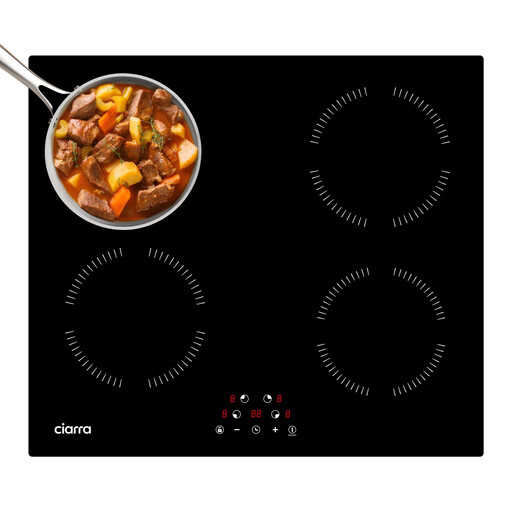
Why it suits this profile: This 60 cm model is aimed at households looking for four cooking zones, touch controls and essential safety features in a straightforward package.
The stated installation dimensions of 560 × 490 mm make it easier to compare the hob with a standard cut-out. The specification also lists 9 power levels, individual timers and automatic switch-off.
4 zones, 6,000 W total power, glass-ceramic surface, child lock, pan detection and overheating protection.
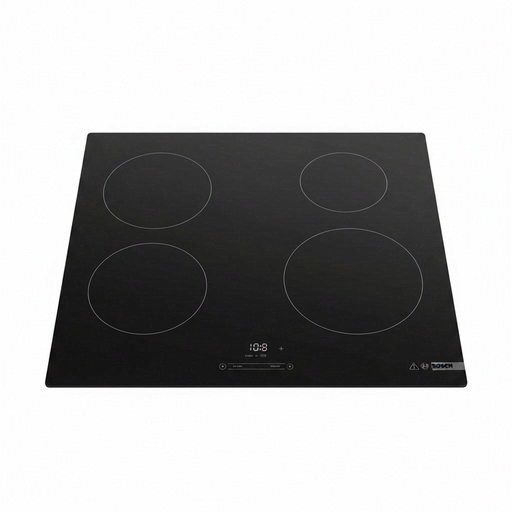
Why it suits this profile: This hob offers four zones, 17 power levels and a frameless design for users who value precise settings and a sleek, flush appearance.
QuickStart, Restart, digital timers and PowerBoost are listed as specific functions. This allows buyers to assess more precisely which control features they actually need.
592 × 522 × 51 mm external dimensions, 560 mm cut-out width, 4 boost functions, child lock and automatic switch-off.
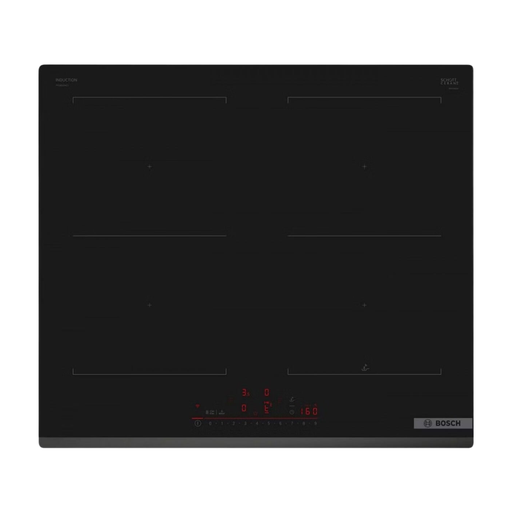
Why it suits this profile: The combinable zone is designed for elongated griddles, oval pans and larger cookware. This makes the model well suited to cooking situations where standard round zones are not sufficient.
The CombiZone is specifically described as linking two adjacent 180 mm zones. Before purchasing, compare your cookware dimensions and positioning requirements with the instructions.
7,400 W total power, 4 zones, boost function, individual timers, pan detection and two-stage residual-heat indicator.
For a compact kitchen, the CIARRA CRGDBIH2 or a comparable 30 cm built-in induction hob with two zones may be a sensible choice. If you are looking for four zones and 7,200 W, consider the TOPWISH 4-Burner 60 cm, which offers 9 power levels, a timer, boost function and child lock. For both options, checking the relevant cut-out and connection specifications before ordering is essential.
An independent induction hob is operated separately from an oven, allowing greater flexibility when planning a kitchen. However, the term does not mean that the appliance can be operated without a fixed electrical connection.
Explore the complete category for a current selection of induction hobs and induction cooktops. Check the dimensions, power specifications, functions and connection details for each listing.
No. The external width is often around 590 to 592 mm, while the cut-out usually measures approximately 560 × 490 mm. Variations are possible. Measure the existing cut-out and compare it with the installation diagram for the specific model.
Running costs depend on electricity consumption, usage time, selected power level and your electricity tariff. Induction heats the base of the pan directly, which can shorten cooking times in certain situations. This does not automatically translate into universal savings for every household. Actual consumption in kilowatt-hours is the decisive factor.
A fixed service life cannot be guaranteed. It depends, among other things, on usage intensity, care, ventilation and the electrical installation. An undamaged glass-ceramic surface, dry touch controls and compliance with the installation instructions all support reliable operation. If cracks appear or the appliance behaves unusually, switch it off and have it inspected by an authorised service centre.