
Lieferung heute & morgen

Qualitätsgarantie

Willkommens-Angebote freischalten: KOSTENLOSE Lieferung | Bis zu 80 % RABATT | Kostenlose 30-Tage-JoyPlus-Testphase
App herunterladen
A 600 W hand blender is ideal for many everyday kitchen tasks: puréeing soups, thickening sauces, chopping vegetables, preparing baby food or mixing desserts. However, the wattage alone doesn't determine whether an electric hand blender is practical for daily use. Its design, speed control, materials, accessories and cleaning method all influence how well it performs.
If you focus only on a high power rating, you often overlook important details. Three common buying patterns frequently lead to disappointment:
A hand blender with 600 W offers a suitable power level for liquid and soft to medium-hard ingredients. For potatoes, cooked vegetables, fruit, dips and sauces, this power is sufficient for most households. For very firm ingredients, larger quantities or frequent chopping, you should also check the instruction manual and the permitted operating time.
A variable speed control is practical when preparing different consistencies. A low speed reduces splashing with liquids, while a higher setting can be used for finer purées. Models with only two speeds are simpler to operate but offer fewer gradations.
Important: The hand blender should not run continuously without a break. If you notice unusual noises, excessive heat or smoke, switch the appliance off and disconnect it from the mains.
A hand blender with a removable blending shaft makes cleaning easier and saves space when storing. Stainless steel is temperature-resistant and, with proper use, absorbs fewer odours than some plastic surfaces. A protected blade area can reduce splashing and prevent the blades from directly touching the bottom of the pan.
For hot soups: follow the manufacturer's temperature guidelines and work slowly. The blending shaft must be fully submerged in the liquid before switching the appliance on. This helps avoid splashes and burns. Not every design is suitable for blending boiling-hot liquids.
For a BPA-free hand blender, the claims should apply to the parts that actually come into contact with food, such as the mixing beaker, chopper or whisk. A dishwasher-safe hand blender usually means that removable accessories are suitable. The motor unit, cable and plug should only be cleaned with a slightly damp cloth.
For families, a measuring beaker with a scale can be useful. If you also process cream, egg whites or dough ingredients, a whisk attachment is beneficial. A chopper expands the range of uses but requires more storage space and creates extra individual parts to clean.
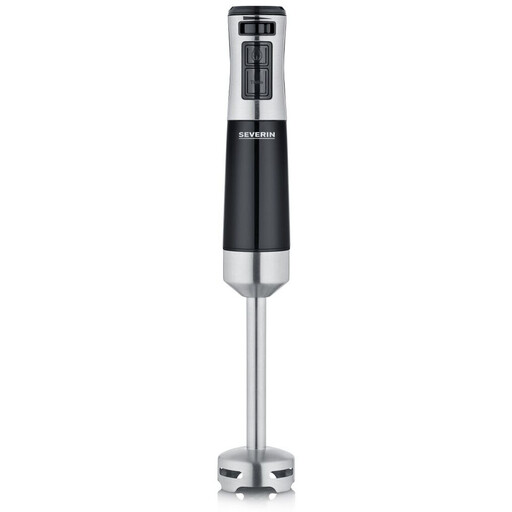
Why this product fits the profile: This 600 W hand blender offers variable speed control and a removable blending shaft. It's ideal for everyday tasks like soups, sauces, purées and baby food, without requiring unnecessary extra parts.
The power rating is complemented by a practical control option. The blending shaft is removable; according to the product details, the removable parts are dishwasher-safe.
600 W, variable speed control, BPA-free materials and a removable stainless steel blending shaft.
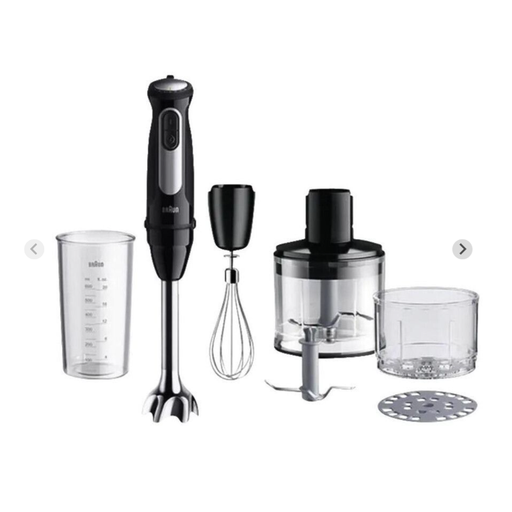
Why this product fits the profile: If you frequently prepare different consistencies, you get 25 speed settings plus a turbo function. The 1,000 W motor is aimed at users who want more power reserve beyond a 600 W hand blender.
The higher motor power is combined with specific controls. BPA-free, dishwasher-safe contact parts and the EasyClick-Plus system reduce cleaning and swapping effort.
25 speed settings plus turbo, PowerBell-Plus technology and dishwasher-safe accessories.
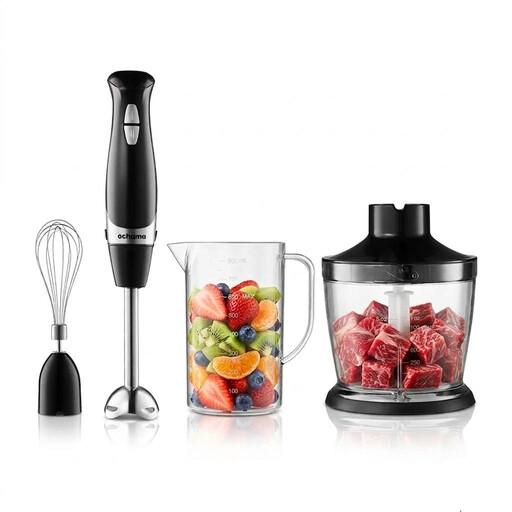
Why this product fits the profile: This set is designed for families and home cooks who want to use a whisk and chopper alongside the blending stick. It includes a 500 ml chopper and an 800 ml measuring beaker, among other items.
The accessories are clearly divided by function. Two speed settings keep operation straightforward, while the removable design makes cleaning the contact parts easier.
600 W, 4-in-1 accessories, whisk, meat chopper, 500 ml chopper and 800 ml beaker.
We've put together a complete, regularly updated list of products that fully meet these strict selection criteria and the safety regulations in force in the EU.
A hand blender is suitable for soups, sauces and purées directly in the pan or in a tall container. A hand mixer with beaters is better suited for cake batter, cream and egg whites. A stand or personal blender often processes smoothies in its own container, but is less flexible for puréeing larger pots.
For a small household, a compact hand blender with a measuring beaker is often enough. Families should look for sufficient accessories, an ergonomic handle shape and the permitted filling capacity. For baby food, smooth, finely puréed consistencies are important; the appliance should be cleaned immediately afterwards according to the instructions.
For many liquid, soft and cooked ingredients, 600 W is sufficient. What also matters is the blade shape, container size, ingredient quantity and the recommended operating time. Very hard or frozen ingredients may fall outside the intended use range depending on the model.
It's not possible to give a reliable general lifespan. It depends on frequency of use, cleaning, overloading and correct storage. Short operating intervals, cooling breaks and adhering to filling quantities can reduce the strain on the motor.
The 600 W rating describes the maximum electrical power requirement during operation. Since a hand blender usually runs for only a few minutes per use, the energy consumption per application is generally limited. What determines the electricity cost is the operating time and frequency of use.