
Lieferung heute & morgen

Qualitätsgarantie

Willkommens-Angebote freischalten: KOSTENLOSE Lieferung | Bis zu 80 % RABATT | Kostenlose 30-Tage-JoyPlus-Testphase
App herunterladen
Choosing a new hob is an investment in your daily kitchen routine for years to come. Especially with a 60cm built-in induction hob, the selection is vast, but the differences are in the details. Many models advertise features with questionable practical benefits, while crucial technical specifications often remain hidden in the fine print. This guide will help you cut through the noise and avoid the three most common purchasing pitfalls.
Before we dive into the important parameters, let's look at the typical stumbling blocks that can lead to dissatisfaction and unexpected costs.
To make an informed decision, you should focus on the technical fundamentals that determine your hob's performance and safety.
The power rating, specified in watts (W) or kilowatts (kW), is the most important technical feature. It determines how much power the hob can draw across all zones simultaneously.
Before purchasing, always check what type of connection is available in your kitchen or if an upgrade is feasible.
A standard 4-zone ceramic hob offers four round cooking zones. However, modern induction hobs often provide more flexibility.
Modern hobs offer a range of safety mechanisms that are indispensable in daily use.
A hob with a timer and child lock is standard equipment today and should be considered a minimum requirement when making your choice.
Here are some recommendations tailored to different needs and budgets, taking the aforementioned criteria into account.

Why This Fits Their Persona: This model offers all the essential functions you'd expect from a modern induction hob, including a booster function and a timer, without burdening your wallet with rarely used extras. It's a pragmatic choice for everyday use.
It bypasses the "Smart Features" trap by focusing on reliable and intuitive touch controls instead of complex app integrations that drive up the price.
With 7200W of total power and a booster function on all four zones, it delivers solid performance for rapid cooking. The standard installation dimensions make it easy to replace older appliances.
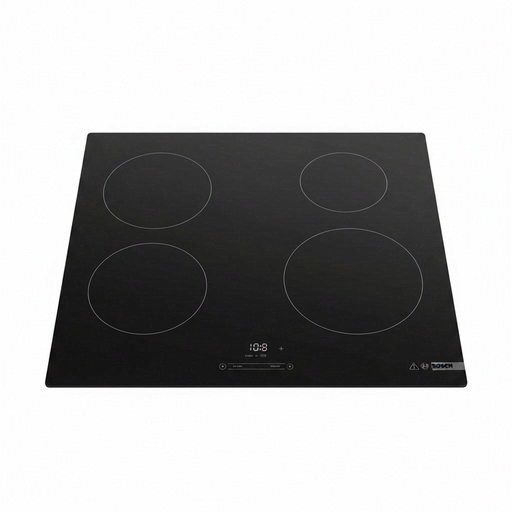
Why This Fits Their Persona: For cooks who value precision and speed. The 17 power levels allow for fine temperature adjustments, while the PowerBoost function brings water to a boil in no time—ideal for searing or quick cooking.
It avoids the "Paper Booster" trap. With a 7400W power rating, the PowerBoost function demonstrably delivers up to 50% more power without compromising other cooking zones. The performance is real and accessible.
The QuickStart and ReStart functions offer great convenience. The hob automatically detects the pot's position and restores the last setting if accidentally switched off.
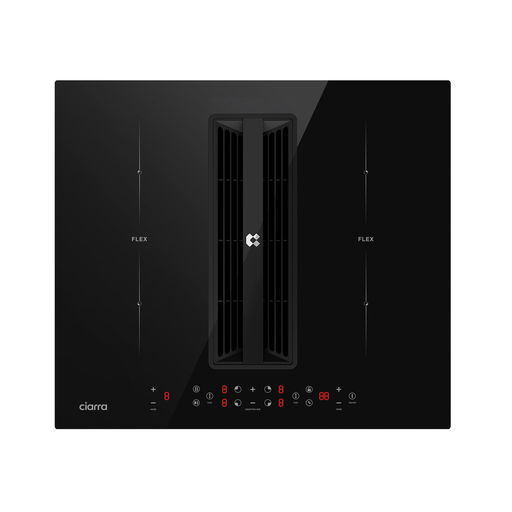
Why This Fits Their Persona: This 2-in-1 solution is perfect for modern, open-plan kitchen concepts and islands. It combines a powerful induction hob with an integrated downdraft extractor, eliminating the need for a separate, often bulky, extractor hood.
It solves the "Installation Oversight" trap by simplifying planning. Instead of coordinating two appliances (hob and hood), you get an integrated unit that simplifies installation into standard kitchen cabinets.
The integrated Plasma? filter system effectively cleans the air of odours and grease without needing an external exhaust duct. The FlexZones also offer maximum flexibility for cooking with various pot sizes.
We've compiled a complete, up-to-date list of products that fully meet these strict selection criteria and rigorous safety standards.
An induction hob is generally more energy-efficient than a ceramic hob. With induction, heat is generated directly in the base of the pot, whereas a ceramic hob first heats the glass-ceramic surface, leading to heat loss. Induction heats up faster and responds more precisely to temperature changes. Although the initial purchase price for induction may be higher, the operating costs are usually lower over its lifespan.
In many cases, yes, but two points are crucial:
For induction, you need cookware with a ferromagnetic base. You can easily test if your pots and pans are suitable: hold a magnet to the bottom of the pot. If the magnet sticks, the cookware is induction-compatible. Pots made of pure copper, aluminium, or glass will not work. Many modern stainless steel or cast iron pots are designed for all hob types, including induction.