
Lieferung heute & morgen

Qualitätsgarantie

Willkommens-Angebote freischalten: KOSTENLOSE Lieferung | Bis zu 80 % RABATT | Kostenlose 30-Tage-JoyPlus-Testphase
App herunterladen
A 60 cm cooker hood fits many standard hobs, making it a popular choice for small to medium-sized kitchens. However, choosing the right model is not just about width. The extraction connection, filters, noise level, installation type and ongoing costs all determine whether the appliance remains practical for everyday use.
As a Joybuy Product Recommendation Officer, I assess the available information objectively and show you which features to check before buying.
Figures such as 400 m³/h or 650 m³/h generally refer to the maximum airflow. In practice, long extraction ducts, several bends, a small pipe diameter or an unsuitable external wall grille can reduce the actual performance. A cooker hood with 200 to 400 m³/h may be sufficient for a small kitchen, while open-plan kitchens or intensive frying require greater capacity.
A cooker hood with extraction and recirculation offers flexibility, but the two operating modes work differently:
An energy-efficient cooker hood is not automatically cheaper to run in every situation. The key factors are the energy efficiency class, annual energy consumption, daily operating time and selected power setting. A model with a high maximum output can still be economical in everyday use if the lower setting is sufficient for many cooking tasks.
The hood should be at least as wide as the hob. For a 60 cm hob, a 60 cm wall-mounted cooker hood or a 60 cm integrated or built-under model is an obvious choice. Also check:
A telescopic hood can save space in a cooker hood for small kitchens, as it can be partially pushed in when not in use. An angled hood provides extra headroom in front of the hob, but requires enough clear wall space.
Airflow is measured in m³/h. Models with 370 to 400 m³/h are a useful starting point for many compact kitchens. Higher figures may be suitable for larger rooms or frequent cooking that produces a lot of steam. When comparing models, look at more than just the maximum figure and consider the individual power settings too.
Noise level is measured in dB(A). Even a difference of a few decibels can be noticeable in an open-plan living area. A model advertised as a “quiet cooker hood” should therefore be compared using specific dB figures for each setting. Several of the appliances considered here offer maximum-power noise levels of around 58 to 64 dB(A).
A removable, washable aluminium filter reduces the effort required for maintenance. With regular use, the grease filter should be cleaned in accordance with the instructions. This helps prevent grease from building up in the filter and inside the appliance.
A suitable activated carbon filter is required when using recirculation mode. Check whether it is included in the package or must be purchased separately. The filter reference is important, as not every carbon filter is compatible with every hood.
Integrated LED lighting improves visibility over the hob. Check whether the brightness, colour temperature or dimming function meets your requirements. The lighting does not replace general kitchen lighting, but it can provide targeted illumination over the work area.
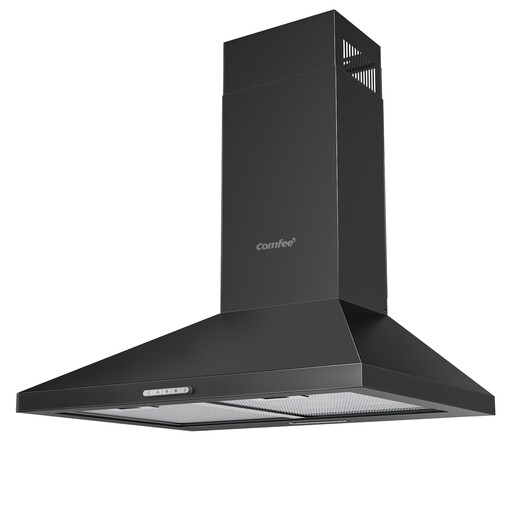
Why this product suits the profile: This 60 cm wall-mounted hood offers extraction and recirculation modes, three power settings and a stated airflow of 400 m³/h. Activated carbon filters are provided for recirculation use.
The two operating modes prevent you from committing too soon to a structural extraction connection. However, the filter and maintenance requirements should still be checked before purchase.
400 m³/h maximum airflow, three settings, LED lighting and height-adjustable chimney.
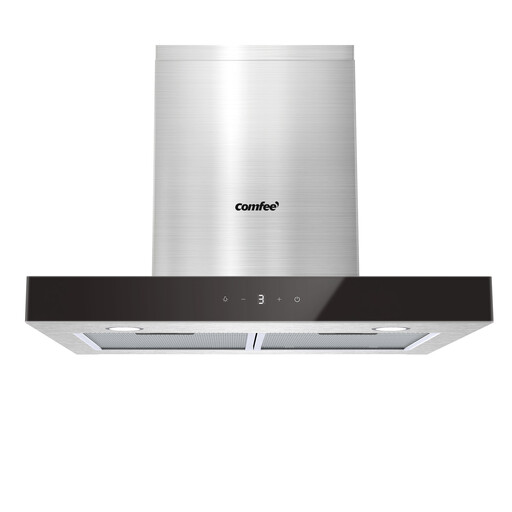
Why this product suits the profile: This model combines a stated airflow of 650 m³/h with four speed settings, LED lighting and gesture or touch controls.
The specific noise figure of around 59 to 60 dB and the reusable five-layer aluminium filter make it easier to assess the technical details.
A+++ according to the product information, 650 m³/h maximum airflow and dishwasher-safe five-layer aluminium filter.
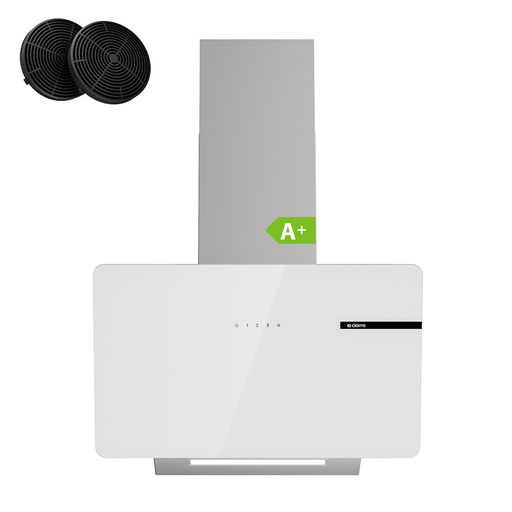
Why this product suits the profile: The angled design, three power settings and extraction and recirculation modes are suitable for compact kitchens with limited room to move in front of the hob.
The specifications list airflow, noise level, filter type and energy efficiency class separately. This makes it easier to compare performance with day-to-day practicality.
580 m³/h maximum airflow, washable five-layer aluminium filter and integrated LED lighting.
We have put together a complete, regularly updated list of products that fully meet these strict selection criteria and the safety regulations applicable in the EU.
Flat built-under or telescopic hoods are suitable options for small kitchens. Look for a width of at least 60 cm, and check the installation depth, airflow and noise level. If there is no extraction connection, choose a model with recirculation mode and a compatible activated carbon filter.
Extraction removes moisture and odours from the room, but requires a suitable external connection. Recirculation is more flexible in terms of installation and is therefore often more practical in rented homes. However, it involves ongoing costs because the activated carbon filter needs to be replaced regularly.
Washable aluminium grease filters should be cleaned regularly, depending on how often the hood is used. If you cook frequently, an interval of two to four weeks may be appropriate, unless the instructions specify otherwise. Activated carbon filters cannot be reused indefinitely and must be replaced according to the manufacturer’s instructions.