
Lieferung heute & morgen

Qualitätsgarantie

Willkommens-Angebote freischalten: KOSTENLOSE Lieferung | Bis zu 80 % RABATT | Kostenlose 30-Tage-JoyPlus-Testphase
App herunterladen
A 60 cm cooker hood fits many standard hobs and is therefore a popular choice for small to medium-sized kitchens. However, the width alone doesn't determine whether it's right for you. The installation type, extraction rate, operating mode, noise level and filter costs all affect how well the appliance will perform in everyday use.
If you only focus on a high extraction rate or a striking design, you risk overlooking important details. The following advice will help you avoid common buying mistakes and choose the right built-in cooker hood, under-cabinet cooker hood or wall-mounted hood 60 cm.
A figure like 650 m³/h sounds clear enough at first. In practice, the actual extraction rate you achieve also depends on the duct length, duct diameter, bends and the external vent grille. A long or sharply curved duct run can reduce the airflow.
What's more, some product specifications refer to the maximum power setting. You won't need this for every cooking session in daily use, and it can come with a higher noise level.
A cooker hood with recirculation and extraction offers flexibility. In extraction mode, cooking vapours are vented to the outside. For recirculation mode, however, you'll usually need a charcoal filter that traps odours and must be replaced regularly.
So before you buy, you should check:
A width of 60 cm doesn't automatically mean every appliance will fit into any wall cabinet. The depth, height, air outlet position and fixing points can vary significantly. With a built-in cooker hood, the internal dimensions of the cabinet must match the product dimensions.
For wall-mounted hoods, you also need to consider the distance from the wall, the chimney height and the position of the duct connection. If you're renting, you should get your landlord's permission before making any structural changes.
The right design depends on your existing kitchen:
The hood should be at least as wide as your hob. If you often cook with large pans, a larger capture area can be beneficial, provided you have the space.
For a small kitchen, a model with a lower extraction rate may be sufficient. If you frequently fry, cook with gas or have an open-plan living and kitchen area, you should compare extraction rates more carefully. Ideally, the product data should show several power settings with the airflow and noise level for each.
One example is the CIARRA Full Built-In Cooker Hood, which has a stated maximum extraction rate of up to 640 m³/h in the technical specifications. The product description also mentions recirculation and extraction modes. For recirculation, two CBCF003 charcoal filters are required; the ducting pipe is not included according to the product information.
A quiet cooker hood shouldn't be judged solely by its maximum noise level. What matters is how loud it is on the settings you'll use regularly. Noise levels are given in decibels, and even a few decibels difference can be noticeable in your daily kitchen routine.
When it comes to energy efficiency, the stated energy class and annual consumption are relevant. An energy-efficient cooker hood can help keep your running electricity costs down if you use it frequently. The label A+++ cooker hood appears in some of the product data listed here; always refer to the current energy label and the product data sheet for the definitive information.
Washable aluminium grease filters reduce the need for replacement parts. They should be cleaned regularly – with heavy use, the care instructions suggest doing this every two to four weeks. Always disconnect the appliance from the mains before cleaning.
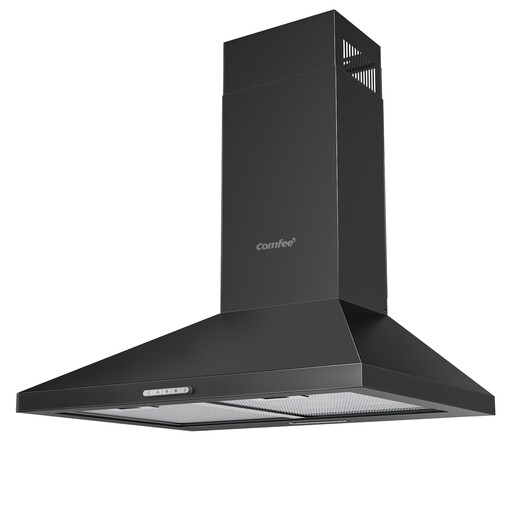
Why this product fits the profile: This black wall-mounted 60 cm hood combines three power settings with a stated extraction rate of 400 m³/h, making it suitable for standard cooking situations in compact kitchens.
The product data lists both operating modes, three settings and the required filter options. This means you can check before buying whether recirculation or extraction suits your kitchen.
400 m³/h extraction rate, LED lighting and adjustable chimney height; energy efficiency class B according to the product information.
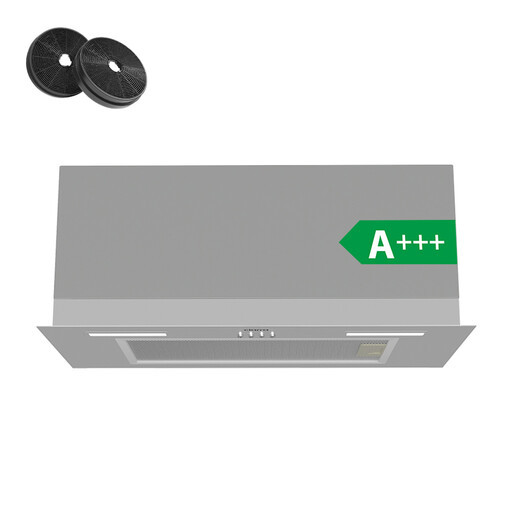
Why this product fits the profile: The integrated design is aimed at buyers looking for a discreet solution that fits into a suitable wall cabinet.
The dimensions of approximately 599 × 309 × 263 mm, the filter type and the operating modes are all specified. These values should be checked against your cabinet before installation.
According to the product information: energy efficiency class A+++, 9 kWh annual consumption, up to 640 m³/h on the highest stated setting and a maximum noise level of 62 dB.
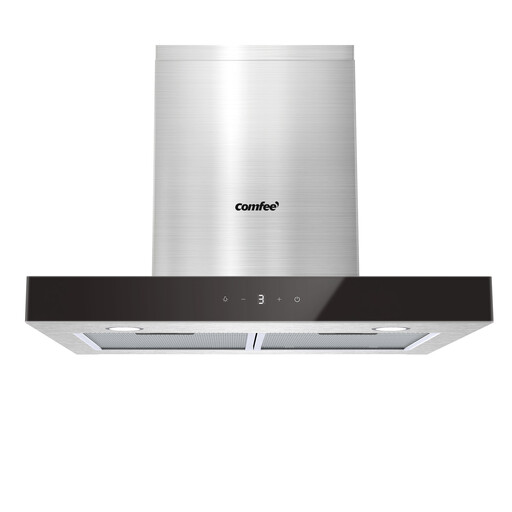
Why this product fits the profile: The combination of four power settings, a stated extraction rate of 650 m³/h and a stainless steel housing is designed for frequent cooking and open-plan kitchen areas.
The power settings allow you to adapt to different cooking tasks. The washable five-layer aluminium filter is designed for regular cleaning.
A+++ according to the product information, LED lighting, touch and gesture control, plus recirculation and extraction modes.
Before installation, you must observe the safety clearances given in the relevant instruction manual. Gas hobs often require different minimum distances than electric hobs. The installation and electrical connection should be carried out in accordance with the manufacturer's instructions and local requirements.
For consistent performance, we recommend:
We've put together a complete, regularly updated list of products that fully meet these strict selection criteria and the safety regulations in force in the EU.
The required distance depends on the design, hob type and manufacturer's instructions. Gas hobs usually require a greater distance than electric hobs. Always refer to the installation manual and the applicable safety requirements for your specific appliance.
Extraction vents cooking vapours to the outside and requires a suitable wall or building connection. Recirculation is suitable for homes without the option for external venting, but it incurs ongoing costs due to the necessary charcoal filter. A hood with both operating modes offers greater flexibility.
Consumption depends on the energy efficiency class, annual usage and the power setting selected. When comparing, buyers should look at the stated annual consumption in kWh rather than just the energy class. Filter changes and proper planning of the ducting can also affect running costs.