
Lieferung heute & morgen

Qualitätsgarantie

Willkommens-Angebote freischalten: KOSTENLOSE Lieferung | Bis zu 80 % RABATT | Kostenlose 30-Tage-JoyPlus-Testphase
App herunterladen
A 60 cm cooker hood fits many standard hobs and is particularly suitable for small to medium-sized kitchens. However, choosing one doesn't automatically mean you'll get the right appliance. What really matters is the installation situation, operating mode, extraction rate, noise level and maintenance requirements.
Figures like 400 m³/h, 611 m³/h or 650 m³/h refer to the technical performance of each model. In practice, a long duct run, several bends or an unfavourable wall vent can reduce airflow. For a small kitchen, a 400 m³/h cooker hood may be sufficient, whereas frequent frying or an open-plan kitchen may call for more reserve capacity.
So don't just compare the maximum number – also look at:
A cooker hood with recirculation and extraction offers more flexibility, but works differently in each mode. With extraction, steam is vented outside through a suitable duct. With recirculation, the filtered air flows back into the room. This usually requires a charcoal filter, which must be replaced regularly.
A common mistake is buying a kitchen hood for recirculation without checking the cost and availability of the right charcoal filters. Always check the exact filter reference from the manufacturer.
A black glass front or digital controls may look great in your kitchen. But visible fingerprints, hard-to-reach filters or poor lighting quickly become an issue in daily use. Even a hood described as a "quiet cooker hood" should be judged by a specific dB value.
A wall-mounted hood is fixed visibly to the wall and works well in kitchens without a wall cabinet above the hob. An under-cabinet cooker hood is fitted beneath a cabinet or directly to the wall. A built-in cooker hood is largely concealed inside a kitchen cabinet.
For limited space, telescopic pull-out models are a good option. Before ordering, check:
The exact installation height must follow the instructions for your specific appliance and hob type. For one of the models mentioned, for example, a minimum of 65 cm above an electric hob and 75 cm above a gas hob is specified.
For occasional cooking in a closed kitchen, a cooker hood with around 300 to 400 m³/h may be suitable. If you frequently fry at high heat, use a gas hob or have an open-plan kitchen, you might consider a model with a higher extraction rate.
However, a higher maximum performance doesn't automatically mean a better fit. Also check the noise level. Among the available models, you'll find values ranging from 59 dB to 63 dB at the highest setting. Because decibels are measured on a logarithmic scale, you should compare the numbers directly from the product data.
Multi-layer aluminium grease filters are practical if they are removable and dishwasher-safe. They still need regular cleaning, as grease build-up can be a safety risk. For recirculation mode, you'll also need a charcoal filter.
A cooker hood with LED lighting illuminates the cooking zone independently of the room lighting. For ongoing running costs, it's worth checking the energy efficiency class and the stated annual energy consumption. Ratings like A+, A++ or A+++ should always be considered alongside the actual consumption figure.
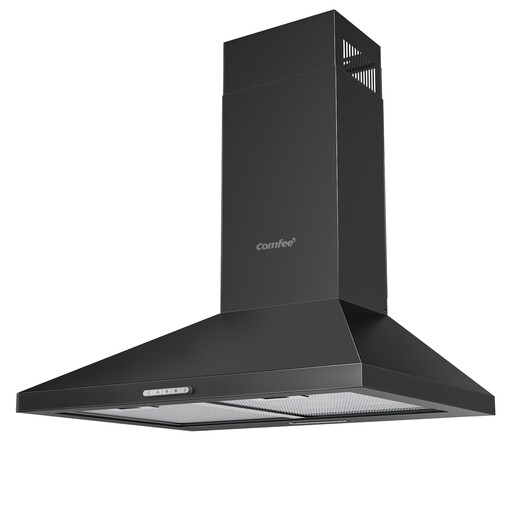
Why this product fits the profile: The black wall-mounted hood offers 400 m³/h, three speed settings and both recirculation and extraction modes. That's a solid basic specification for smaller households.
The two operating modes mean your buying decision isn't limited by whether you have an existing vent. A charcoal filter is included according to the product description.
400 m³/h, LED lighting, three speeds and energy efficiency class B.

Why this product fits the profile: This model combines 650 m³/h with four speeds, a booster, touch controls and app control. The wall-mounted design suits kitchens where you want a visible appliance.
The product data states 59 dB, A+++ and 12 kWh annual consumption. This makes it easier to assess noise and running costs than relying on marketing claims alone.
650 m³/h, washable aluminium filters, LED and two operating modes.
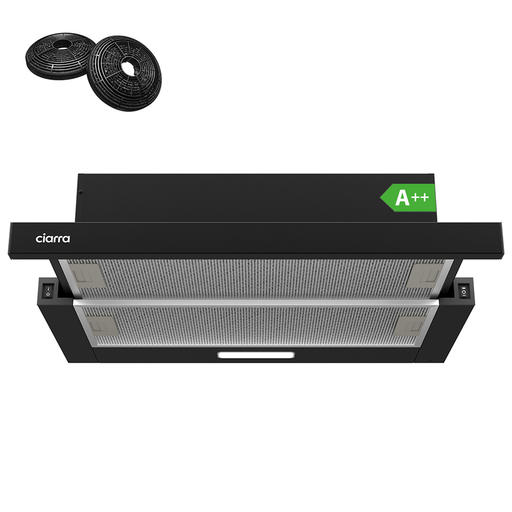
Why this product fits the profile: This pull-out model is designed for small kitchens and wall cabinets. The product data states up to 370 m³/h, two speeds, LED and a width of 599 mm.
The compact dimensions and telescopic extension reduce the risk of a too-deep or visible appliance making the cabinet area impractical.
370 m³/h, energy efficiency class A++, washable aluminium filters and both extraction and recirculation modes.
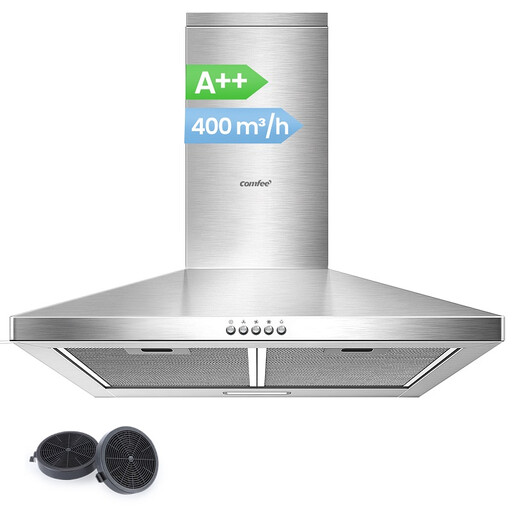
Why this product fits the profile: The stainless steel wall-mounted hood offers 400 m³/h, a five-layer aluminium filter and mechanical buttons. That's ideal for anyone who prefers straightforward operation.
The product description mentions a removable, washable filter and an adjustable chimney height. This makes it easier to plan for maintenance and installation.
400 m³/h, energy efficiency class A++, five filter layers and both recirculation and extraction modes.
We've put together a full, regularly updated list of products that fully meet these strict selection criteria and the safety regulations in force across the EU.
For a small, closed kitchen, models in the range of around 300 to 400 m³/h may be sufficient. If you frequently fry, use a gas hob or have an open-plan kitchen, a higher extraction rate such as 600 to 650 m³/h could be sensible. The actual effectiveness also depends on the ducting, filter condition and installation.
Recirculation is usually simpler if there's no wall vent or if structural changes aren't allowed. You will need a suitable charcoal filter. Extraction can be an alternative if a suitable installation is already in place, but you must check with your landlord, building regulations and arrange professional installation.
The lifespan depends on the motor, usage, cleaning and availability of spare parts. Regularly cleaned grease filters and timely replacement of charcoal filters help keep the hood working properly. So before you buy, check whether filters and other consumables are available for your specific model.