
Lieferung heute & morgen

Qualitätsgarantie

Willkommens-Angebote freischalten: KOSTENLOSE Lieferung | Bis zu 80 % RABATT | Kostenlose 30-Tage-JoyPlus-Testphase
App herunterladen
A 60 cm cooker hood fits many standard hobs, making it a popular choice for rented homes, smaller kitchens and renovation projects. However, choosing the right model depends on more than just width or colour. The key factors are the installation type, extraction rate, filter system, noise level and whether an existing extraction connection is available.
Anyone who focuses only on a high extraction rate or a modern glass design can overlook important details. Three common purchasing misconceptions occur particularly often:
A cooker hood with extraction and recirculation allows you to plan your kitchen flexibly:
If you have an open-flued appliance, such as a gas boiler or fireplace, follow the instructions on room ventilation and negative pressure in the installation manual. The electrical connection and installation should be carried out by qualified professionals in accordance with the manufacturer's instructions.
A 650 m³/h cooker hood may be an interesting option for frequent frying, open-plan kitchens or preparing larger quantities of food. However, a high maximum value alone is not enough to base your choice on. You should also consider:
For smaller kitchens, models offering around 200 to 400 m³/h may also be suitable if cooking intensity is moderate. Suitability depends on the room size, your cooking habits and the installation conditions.
A quiet cooker hood is assessed based on its stated sound level. Values should ideally be compared for each power setting, as the maximum figure usually applies to the highest setting. Figures such as 58 to 64 dB for the listed models are manufacturer values and do not represent a universally applicable statement about perceived noise in every kitchen.
The energy efficiency class is relevant to running costs. An energy-efficient cooker hood may, for example, be labelled A+, A++ or A+++. However, actual electricity costs depend on how often the hood is used, how long it runs and which power setting is selected.
Washable aluminium filters reduce ongoing replacement costs, but they still need to be cleaned regularly. Recirculation mode requires a compatible activated carbon filter. Before buying, check the filter type and the expected cost of replacement filters.
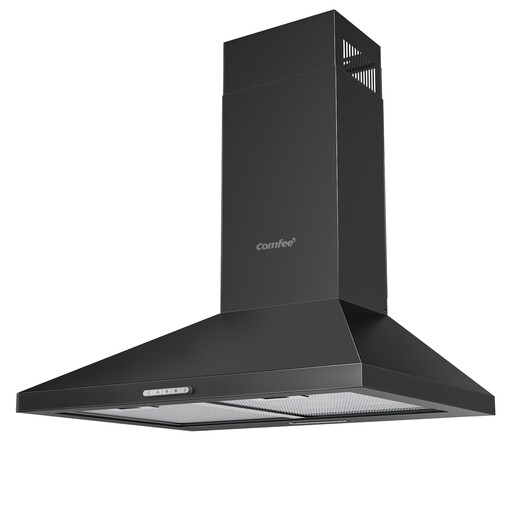
Why this product suits this profile: This wall-mounted hood offers 400 m³/h, three power settings, LED lighting and extraction and recirculation modes for different home environments.
The two operating modes mean you are not limited to an unsuitable hood if no extraction connection is available. The filters still need regular maintenance.
400 m³/h extraction rate, three settings, LED lighting and energy efficiency class B according to the product details.
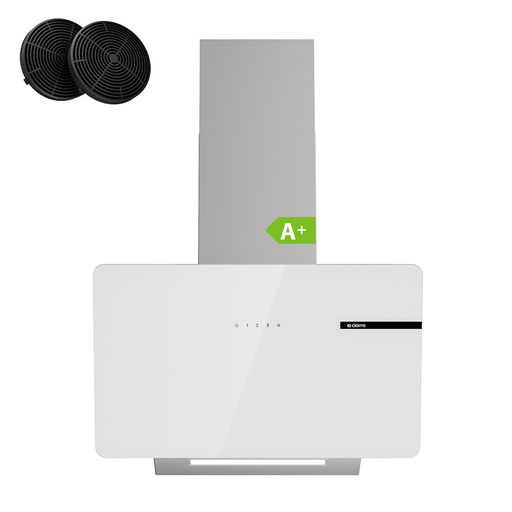
Why this product suits this profile: The angled glass and stainless steel design creates more room to move in front of the hob, while combining touch controls with three power settings.
The manufacturer's specifications state a sound level of around 64 to 65 dB, making it easier to assess against your home environment instead of simply advertising “quiet operation”.
Up to 580 m³/h, a five-layer washable aluminium filter, LED lighting and energy efficiency class A+ according to the product data.
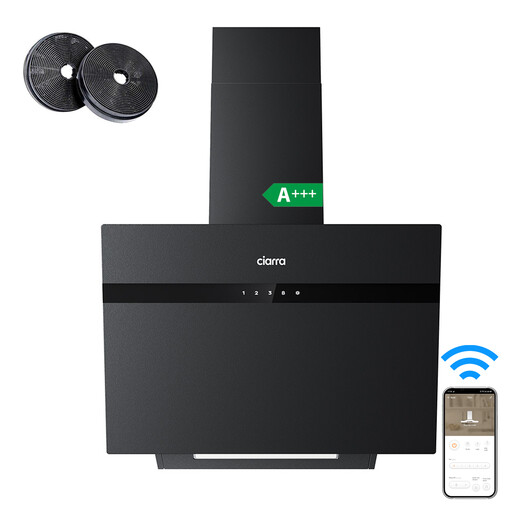
Why this product suits this profile: With up to 650 m³/h, a boost function, app and Wi-Fi control, plus two LED brightness levels, this model is designed for intensive and frequent use.
The stated maximum value is supported by specific settings: 650 m³/h at up to 58 dB according to the product data. This makes it easier to assess the performance for your kitchen.
A+++ and 10 kWh/a according to the manufacturer's specifications, touch controls with app and extraction or recirculation mode.
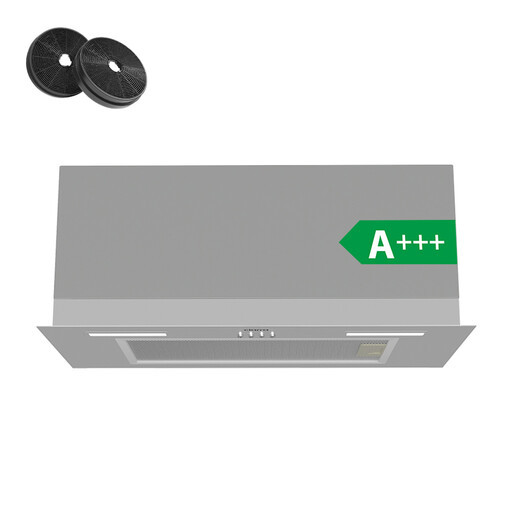
Why this product suits this profile: The fully integrated design is ideal for kitchens where the hood should be discreetly fitted inside the wall unit.
The stated dimensions of 599 × 309 × 263 mm should be checked against the existing cabinet before installation. This helps you avoid an unsuitable installation recess.
Up to 650 m³/h, washable aluminium filter, extraction and recirculation modes, plus A+++ according to the product details.
Before ordering, check the actual width of the hob, the depth of the wall unit and the available clearance. The installation height depends on the instructions for the particular model and the type of hob. One example model specifies 65 cm above an electric hob and 75 cm above a gas hob; the manufacturer's instructions and local installation requirements are binding.
For safe, long-lasting operation:
We have compiled a complete, regularly updated list of products that fully meet these strict selection criteria and the safety regulations applicable in the EU.
For light cooking, models offering around 200 to 400 m³/h may be sufficient. If you frequently fry food, have an open-plan kitchen or use the hood intensively, a model with 580 to 650 m³/h may be a sensible choice. Airflow, filter condition and installation remain important factors.
The distance depends on the hood model, hob type and manufacturer's specifications. Greater minimum clearances are often required for gas hobs. The installation manual and applicable safety requirements are decisive, rather than a standard distance given in a product description.
This depends on how often you cook and the type of filter. With regular use, replacement may be required after several months. Check the compatible filter code, the manufacturer's instructions and the condition of the filter. The washable grease filter must still be cleaned separately.