
Lieferung heute & morgen

Qualitätsgarantie

Willkommens-Angebote freischalten: KOSTENLOSE Lieferung | Bis zu 80 % RABATT | Kostenlose 30-Tage-JoyPlus-Testphase
App herunterladen
A 60 cm cooker hood fits many standard hobs and kitchen layouts. However, choosing one isn’t just about the width. Airflow performance, installation type, filters, noise levels and the existing ducting connection all determine whether a 60 cm extractor hood will work effectively in your daily cooking.
As a Joybuy Product Recommendation Officer, I’ve filtered the key details from the product data and organised them by typical usage scenarios. This way, you can avoid common buying mistakes.
A figure like 650 m³/h sounds impressive at first. However, this usually describes the maximum airflow on the highest setting. In everyday use, duct routing, duct diameter, bends and back pressure are what really matter. A long or poorly installed duct can significantly reduce actual performance.
In recirculation mode, the air isn’t vented outside. It passes through an additional charcoal filter, which needs regular replacement. The maximum airflow in extraction mode can’t be directly compared to the performance in recirculation mode.
Some models come with a grease filter, but the charcoal filter must be bought separately. This applies to the COMFEE’ SLIF17SS-60, for example: the product description states that an additional filter is needed for recirculation mode. So before you buy, check:
A 60 cm hood doesn’t just need to fit above your hob; it also has to be compatible with your existing wall cabinet, chimney or wall clearance. The COMFEE’ KWH-SLIF17B-60, for instance, specifies an installation height between 650 and 750 mm. Always follow the exact instructions in the user manual.
For gas or other heat-generating hobs, different safety clearances may apply. Installation should therefore be carried out according to the manufacturer’s instructions and, if necessary, by a qualified professional.
The right design depends on your kitchen layout:
The key is that the hood width matches your hob. A 60 cm cooker hood is a standard pairing with a hob of the same width. For wider hobs, you shouldn’t choose a smaller hood.
A cooker hood with both recirculation and extraction offers maximum flexibility. In extraction mode, odours, moisture and grease particles are vented outside through a duct. For this, you need a suitable wall or window connection.
In recirculation mode, the air stays in the room. The grease filter traps grease particles, while the charcoal filter absorbs odours. This mode is often easier for rented homes, but it does mean ongoing filter costs.
Don’t just compare the maximum airflow; also look at the available fan speeds and noise levels. Product data often lists values in dB. A lower number indicates a lower stated noise level under the relevant test conditions.
Energy efficiency class and annual consumption are also important. For example, selected models quote 9 to 11 kWh per year. Actual running costs depend on usage time, fan speed and your electricity tariff. An energy-efficient cooker hood isn’t automatically the most powerful choice – it should suit your cooking habits.
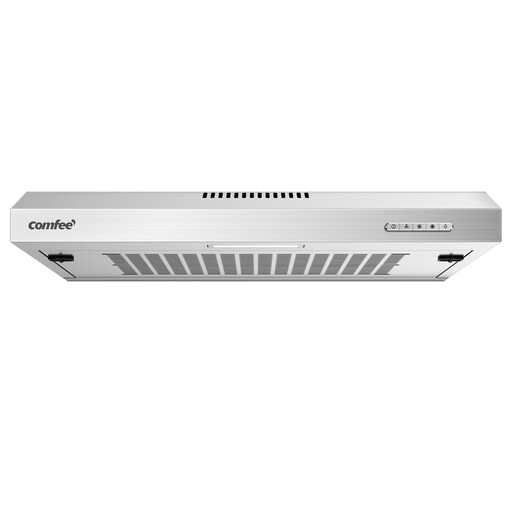
Why this product fits the profile: This compact 60 cm under-cabinet hood offers three fan speeds, two operating modes and integrated LED lighting for everyday cooking.
The product data clearly states that the cotton filter for recirculation is needed separately. This lets you budget for ongoing costs upfront.
200 m³/h airflow, 59.7 cm width, three speeds and a removable aluminium filter.
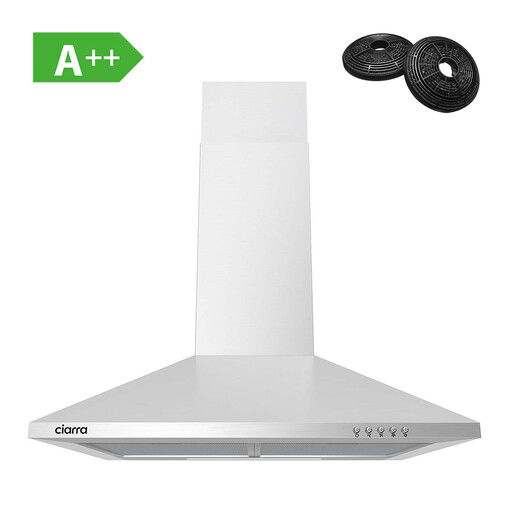
Why this product fits the profile: This stainless steel wall-mounted hood combines adjustable height with extraction and recirculation modes, suiting a variety of kitchen layouts.
The stated dimensions of 572 to 950 mm and the maximum noise level of 63 dB make it easier to check room height and noise requirements.
367 m³/h maximum airflow, washable aluminium filters and a stated annual consumption of 9 kWh.
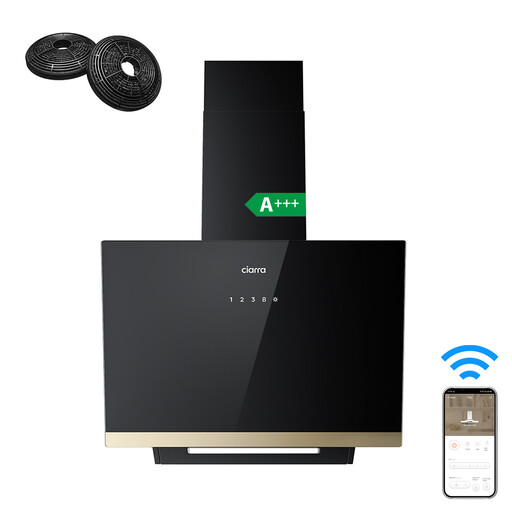
Why this product fits the profile: The angled glass front gives you more headroom. Four fan speeds, app control and dimmable LED lighting cater to heavy users.
Airflow, noise level and energy class are listed separately: 650 m³/h, maximum 58 dB and A+++ according to the product data.
Four speeds with boost function, Wi-Fi/app control, two LED brightness levels and a dishwasher-safe grease filter.
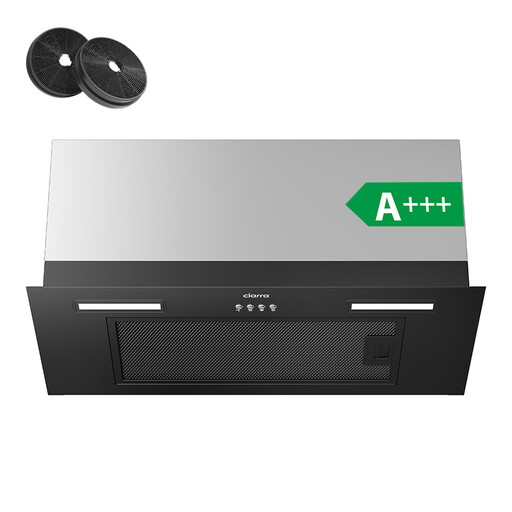
Why this product fits the profile: This integrated model is ideal for kitchens where you want the hood to sit discreetly inside an overhead cabinet.
The installation dimensions of 599 × 309 × 263 mm should be checked against your existing cabinet before ordering. The duct hose is reportedly not included.
Up to 640 m³/h, extraction and recirculation modes, two CBCF003 charcoal filters according to the product description and a stated consumption of 9 kWh per year.
We’ve put together a full, regularly updated list of products that meet these strict selection criteria and all applicable EU safety regulations.
The grease filter should be cleaned regularly, depending on how often you cook. With frequent use, cleaning every two to four weeks can be sensible, unless the user manual states otherwise. Always disconnect the appliance from the mains before maintenance.
In recirculation mode, the charcoal filter is a consumable item. A clogged filter can reduce airflow and odour absorption. Also, make sure the duct, back-draught flap and air outlet remain clear. Switch the hood on early while cooking and let it run for a short while after you’ve finished.
The width generally matches many standard hobs. However, you also need to check the installation height, appliance depth, wall clearance and the position of the duct connection. For a wider hob, a larger hood may be more appropriate.
Extraction vents moisture and odours outside, but requires a suitable connection. Recirculation is more flexible to install, but needs a compatible charcoal filter and regular replacements. For rented homes, recirculation is often easier to set up.
Noise levels are given in dB and should be considered for each fan speed. A model with a lower maximum value can be more pleasant in open-plan kitchens. The important thing is to compare figures under similar conditions, rather than just looking at the maximum airflow.