
Lieferung heute & morgen

Qualitätsgarantie

Willkommens-Angebote freischalten: KOSTENLOSE Lieferung | Bis zu 80 % RABATT | Kostenlose 30-Tage-JoyPlus-Testphase
App herunterladen
A 60 cm cooker hood fits many standard hobs, making it particularly popular for small kitchens, rented homes and flats. However, the width alone does not automatically guarantee the right model. The design, extraction method, filters, noise level and installation clearances all determine how practical the hood will be in everyday use.
Figures such as 580 or 650 m³/h generally refer to the maximum setting and are determined under specific testing conditions. In recirculation mode, filters, airflow and the condition of the activated carbon filter can affect the actual performance. When choosing a hood for everyday use, buyers should therefore also check the individual power settings and noise level.
A 60 cm cooker hood with extraction and recirculation offers greater installation flexibility. However, extraction mode requires a suitable wall vent, the correct ducting and properly routed airflow. In recirculation mode, air is passed through grease and activated carbon filters before being returned to the room. The activated carbon filter is a consumable component and must be checked or replaced regularly.
Glass fronts, touch controls and an angled hood design look modern, but depending on the surface, they can show fingerprints or grease marks. Removable, washable metal grease filters and easily accessible controls are therefore more important than appearance alone. For example, a five-layer aluminium filter is easier to maintain if the product information states that it is dishwasher-safe.
A 60 cm under-cabinet cooker hood is installed beneath a wall unit or directly on the wall. Telescopic models can be partially pushed in when not in use, making them suitable for limited spaces. A 60 cm built-in cooker hood, on the other hand, is largely concealed within the kitchen cabinet and suits a discreet kitchen design.
A 60 cm wall-mounted cooker hood requires sufficient unobstructed wall space. A 60 cm angled cooker hood slopes forwards and can provide more freedom of movement while cooking. Before buying, check the width, depth, chimney height and position of the extraction connection against your existing kitchen units.
Extraction rate is measured in m³/h. For occasional cooking in a small kitchen, a model offering around 200 to 400 m³/h may be sufficient. Frequent frying, an open-plan kitchen or a powerful hob may make higher figures more suitable. The size of the room, extraction route and cooking habits are more important here than a single maximum figure.
When choosing a quiet cooker hood, look at the stated sound pressure or sound power level in dB. Noise usually increases with the power setting. A rating of 59 dB at a high setting cannot therefore be directly compared with 59 dB during continuous operation at a low setting.
An energy-efficient cooker hood can be compared using its stated energy efficiency class and annual energy consumption. Consumption figures should be treated as manufacturer or product data and will depend on individual usage.
A cooker hood with LED lighting illuminates the hob while using comparatively little electricity. With a cooker hood with touch controls, the control panel is usually flush with the surface. This makes it easier to wipe clean, but it may respond less directly to wet or greasy fingers than push buttons. If you prefer clear tactile feedback, you can choose a model with push-button or rocker switches.
The metal grease filter should be cleaned regularly, approximately every two to four weeks with frequent use. In recirculation mode, many hoods also require an activated carbon filter. This cannot be used indefinitely, as its absorption capacity decreases over time.
The power supply must be disconnected before carrying out maintenance. Installation should be completed in accordance with the instructions. A qualified professional should be consulted for electrical connections and structural alterations. Always refer to the relevant instructions for the required clearance above the hob. The product information for individual models may, for example, specify 65 cm for electric hobs and 75 cm for gas hobs.
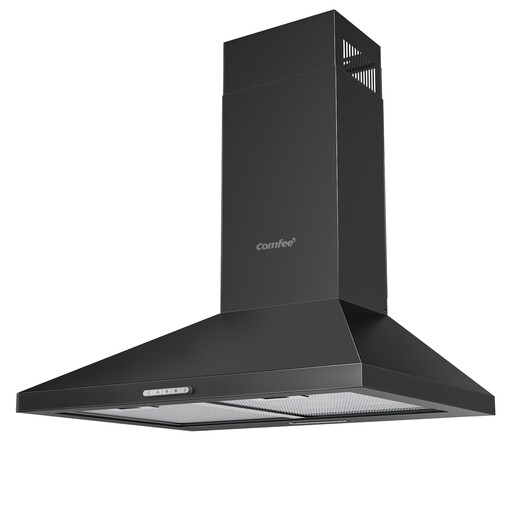
Why this product suits the profile: This 60 cm model offers 400 m³/h, three power settings, LED lighting, and extraction and recirculation modes. It is a good option for buyers looking for straightforward controls and flexible installation.
The two operating modes reduce the risk of choosing the wrong model because there is no extraction connection available. The product description also lists a filter included for recirculation mode.
400 m³/h extraction rate, three settings, LED lighting and push-button controls; energy efficiency class B according to the product data.
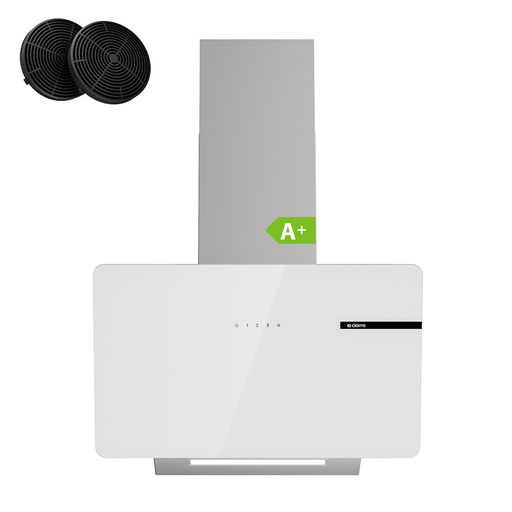
Why this product suits the profile: The angled glass and stainless steel construction is designed for modern, compact kitchens. Touch controls, three power settings and a stated extraction rate of 580 m³/h cover a range of cooking situations.
According to the product description, the washable five-layer aluminium grease filter is dishwasher-safe. This makes regular filter maintenance more predictable than with non-removable filter systems.
Maximum extraction rate of 580 m³/h, energy efficiency class A+, integrated LED lighting and approximately 64–65 dB at the highest setting according to the product data.
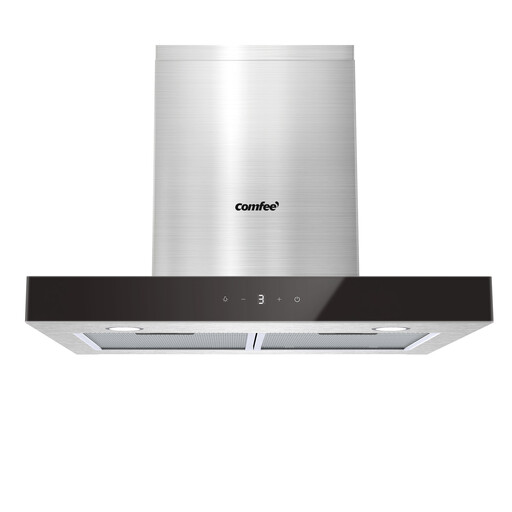
Why this product suits the profile: This hood is aimed at households that fry regularly or use their cooker hood intensively. It offers up to 650 m³/h, four power settings, LED lighting, and touch and gesture controls.
The four power settings allow finer adjustment than a simple two-setting model. However, check the installation information before buying, as the product data contains different installation descriptions.
Five-layer washable aluminium filter, A+++ according to the product data, up to 650 m³/h and stated noise levels of around 59–60 dB.
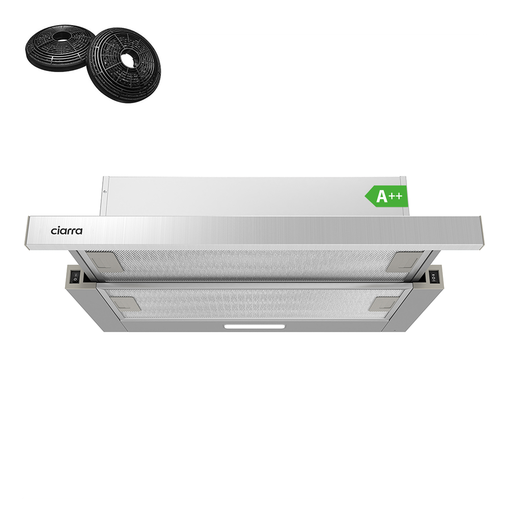
Why this product suits the profile: The pull-out design takes up little space and can be partially concealed inside a wall unit when not in use. This model supports extraction and recirculation modes.
The compact dimensions help prevent clashes with adjacent cabinets. Two washable aluminium filters and included activated carbon filters make it easier to plan for recirculation mode.
Up to 370 m³/h, energy efficiency class A++, maximum noise level of 61 dB according to the product data and integrated LED lighting.
We have put together a complete, regularly updated list of products that fully meet these strict selection criteria and the safety regulations applicable in the EU.
For rented homes, a model with recirculation mode is practical because no wall opening is required. A hood with an additional extraction option remains flexible if a suitable connection becomes available later. Before installation, take your landlord’s requirements, kitchen plans and the operating instructions into account.
This depends on how often you cook and on the type of filter. With regular use, replacement may be required after a few months. The manufacturer’s specific recommended interval is the key reference. Metal grease filters should still be cleaned regularly to prevent build-up and reduced airflow.
For a rough estimate, multiply the stated annual consumption in kWh by your electricity tariff. Actual consumption depends on operating time, the selected power setting and the lighting. In recirculation mode, you will also need to account for the cost of regularly replacing the activated carbon filters.