
Lieferung heute & morgen

Qualitätsgarantie

Willkommens-Angebote freischalten: KOSTENLOSE Lieferung | Bis zu 80 % RABATT | Kostenlose 30-Tage-JoyPlus-Testphase
App herunterladen
A 60 cm cooker hood fits many standard hobs, making it a popular choice for rental properties, small kitchens and open-plan living areas. However, the right model depends on more than just width. The ducting connection, extraction rate, noise level, filters and installation height all determine whether the hood will work well in everyday use.
Figures such as 650 m³/h usually refer to the highest setting or a boost function. In daily use, the ducting, bends, non-return valve and filters can all affect the actual airflow. So don't just compare the maximum figure – also consider:
A powerful cooker hood can be useful in an open-plan kitchen. For a small, enclosed kitchen, a lower extraction rate may be sufficient depending on your cooking habits.
A 60 cm cooker hood with extraction and recirculation offers flexibility, but the two modes work differently. In extraction mode, steam and odours are vented outside through a suitable duct. In recirculation mode, a grease filter traps grease particles; a charcoal filter reduces odours, but the moist air remains in the room.
Before buying, check whether charcoal filters are included or need to be purchased separately. In a rental property without a wall outlet, recirculation is often the more practical solution. If you have a properly usable extraction duct, extraction may be the better choice for many households.
A 60 cm wall-mounted hood needs a suitable free wall area and enough space for the chimney. A 60 cm under-cabinet cooker hood is fitted beneath a wall cabinet or directly to the wall. A 60 cm built-in cooker hood, on the other hand, must fit the dimensions of your kitchen cabinet.
Don't just look at the 600 mm width. The depth, height, chimney adjustment, connection position and distance to the hob must all match your installation situation.
For extraction, you need a suitable wall vent or roof vent and appropriate ducting. The installation effort is greater, especially in a rental property. Recirculation requires no wall opening, but the charcoal filter must be checked and replaced regularly according to the manufacturer's instructions.
Models with both options offer more flexibility. These include wall-mounted hoods, headless hoods and several integrated variants from the range.
The extraction rate is given in m³/h. A higher value can be useful if you fry frequently, have an open-plan kitchen or a large room. However, the noise level in dB(A) is also important for everyday usability. The product specifications should ideally indicate which power setting the value refers to.
Examples from the range:
These values are model specifications and are not directly comparable if measurement conditions or operating settings differ.
A washable aluminium grease filter reduces ongoing costs because it can be cleaned regularly. Some models have multi-layer filters or dishwasher-safe versions. For recirculation, a charcoal filter is also required. Before buying, check:
A cooker hood with LED lighting can illuminate the cooking area effectively. However, information on brightness, colour temperature or multiple brightness levels is not available for every model.
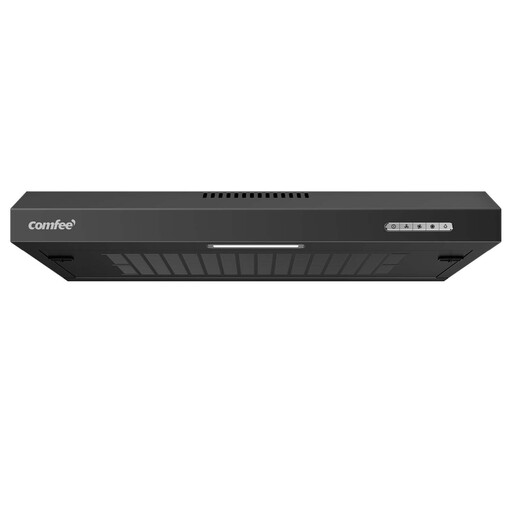
Why this product suits the profile: The compact 600 mm design is ideal for small kitchens and offers three power settings, LED lighting and both extraction and recirculation modes.
The two operating modes mean the hood does not depend on an existing extraction duct. The charcoal filter for recirculation is sold separately according to the product description.
200 m³/h extraction rate, three speeds, LED light and removable aluminium filter.
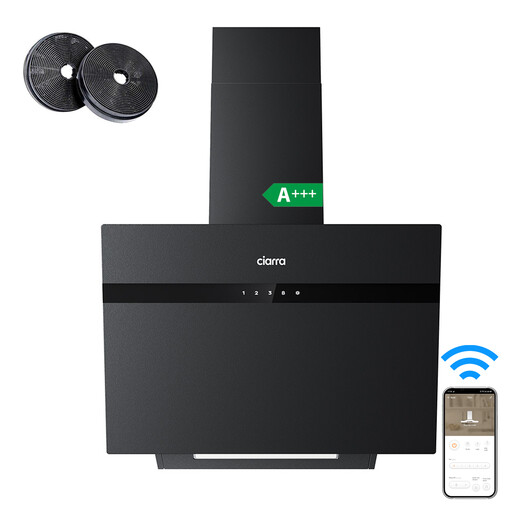
Why this product suits the profile: The angled glass front provides more headroom in front of the hob and combines touch controls with app and Wi-Fi operation.
The technical data mentions both extraction and recirculation, so the operating mode can be chosen to suit your kitchen. Filter maintenance is still required.
Up to 650 m³/h, 58 dB maximum noise level, two LED brightness levels and energy efficiency class A+++ according to the product data.
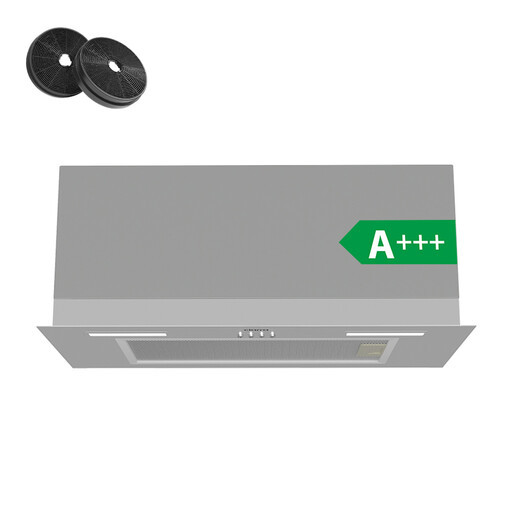
Why this product suits the profile: The fully integrated design is suitable for renovations and kitchen planning where the hood should sit as discreetly as possible inside the wall cabinet.
The dimensions of approximately 599 × 309 × 263 mm should be checked against your cabinet before installation. The washable aluminium filter is accessible, while two charcoal filters are intended for recirculation.
Up to 640 m³/h on the highest setting, three power levels, LED lighting and A+++ according to the product data.
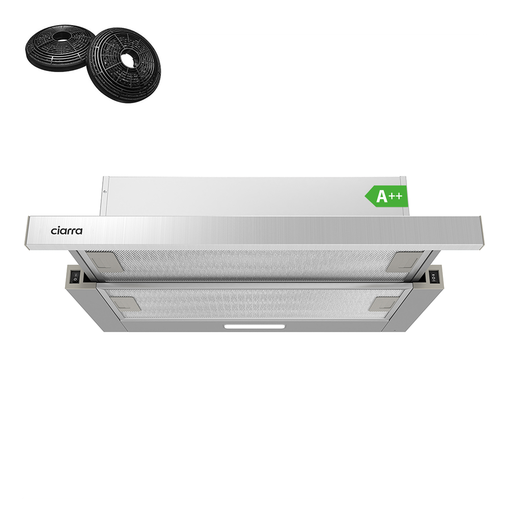
Why this product suits the profile: The telescopic design can be pushed back to save space when not in use and supports both extraction and recirculation modes.
The product description states that the extraction hose and CBCF002X2 charcoal filters are included in the delivery. Nevertheless, you should check the exact package contents before ordering.
Up to 370 m³/h, LED light, two power levels and energy efficiency class A++ according to the product data.
We have put together a complete, regularly updated list of products that fully meet these strict selection criteria and the safety regulations in force in the EU.
The minimum distance between the hob and the hood must comply with the relevant installation instructions. As a general guide, product documentation often specifies different distances for gas and electric hobs. The instructions for your specific model are always the definitive reference.
Before installation, you should also check:
Electrical connections and structural extraction solutions should be carried out by a qualified professional if necessary. Always disconnect the power supply before cleaning or maintenance.
A width of 60 cm is suitable for many standard hobs. If you do a lot of frying, have a wider hob or an open-plan kitchen, a larger capture area may be beneficial. The hob width, design and installation distance are all decisive factors.
This depends on how often you cook, the filter type and the manufacturer's instructions. With regular use in recirculation mode, the filter should be checked and replaced when odour absorption decreases. The washable grease filter must be cleaned regularly regardless.
The ongoing electricity costs depend on the power consumption, operating time and energy efficiency class. A model with low annual consumption can offer advantages if used frequently. You should also factor in the cost of charcoal filters and any replacement parts into your household budget.