
Lieferung heute & morgen

Qualitätsgarantie

Willkommens-Angebote freischalten: KOSTENLOSE Lieferung | Bis zu 80 % RABATT | Kostenlose 30-Tage-JoyPlus-Testphase
App herunterladen
A new cooker hood is a significant investment in your kitchen's functionality and aesthetic. The standard 60cm width offers a vast selection, but this also increases the risk of being misled by marketing promises. As a Joybuy Product Recommendation Officer, I'm here to filter fact from fiction, helping you make an informed decision. We'll highlight the most common pitfalls and the technical features that truly matter.
Many purchasing decisions are based on advertising claims that don't hold up in practice. Pay close attention to these three points to avoid disappointment and hidden costs.
To avoid these traps, you should base your decision on objective technical parameters. The following three aspects are essential when choosing a suitable 60cm cooker hood.
The choice of operating mode is the most fundamental decision and depends on the structural conditions of your kitchen.
The energy efficiency class indicates how economical a device is to run. A hood with an A+++ energy efficiency rating consumes significantly less electricity than a model in class A or B. Pay attention to the stated annual energy consumption (kWh/a). A low value not only protects the environment but also your wallet, especially with daily use. Modern motors and LED lighting are major contributors to high efficiency.
The design determines how the hood integrates into your kitchen and the ergonomics of your cooking space.
Based on these objective criteria, we have identified a few models that are particularly well-suited for specific needs and lifestyles.
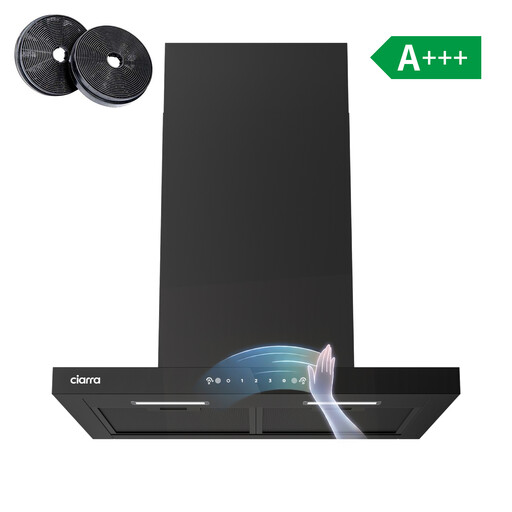
Why This Fits Their Persona: Ideal for users who want to combine a minimalist aesthetic with high functionality. The ultra-slim 40mm black glass panel and innovative gesture and touch controls (Wave & Touch Control) blend seamlessly into modern kitchen designs.
This model avoids the "loud" hood trap by combining a high airflow of 650 m?/h with a specified noise level of 59 dB. The A+++ energy efficiency ensures transparent and low running costs.
The combination of an extremely slim design, touchless gesture control for improved hygiene, and top-tier energy efficiency delivers a package that unites form and function.
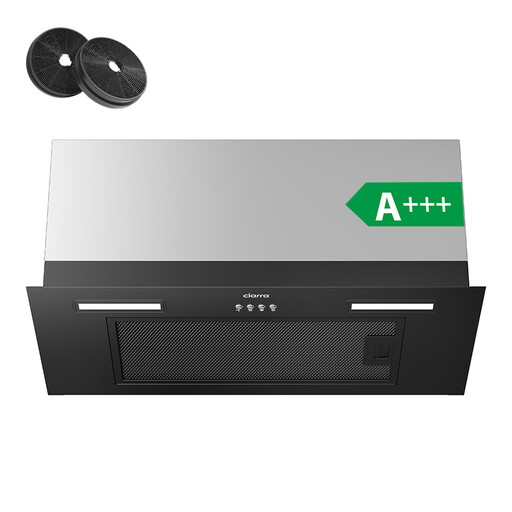
Why This Fits Their Persona: Perfect for renovators and DIY enthusiasts looking for a discreet yet powerful solution. As a built-in cooker hood, it disappears completely into the overhead cabinet, maintaining a clean kitchen aesthetic. The standard 60cm width simplifies planning and installation.
With an extremely low annual consumption of just 9 kWh (according to the manufacturer) and A+++ energy efficiency, this model counters the trap of hidden running costs. Furthermore, airflow and noise levels are specified for each setting, ensuring full transparency.
Offers an exceptionally high airflow of up to 640 m?/h for a built-in hood, combined with maximum energy efficiency. A powerful and invisible solution.

Why This Fits Their Persona: This model is aimed at users who value smart integration and convenient operation. Control via Wi-Fi and app allows you to operate it from your smartphone—including fan speeds, lighting, and timer functions.
The hood addresses the overstated airflow trap with a transparent booster function for maximum power when needed, supplemented by three clearly defined standard levels. The A+++ efficiency with a specified consumption of 12 kWh/a creates cost transparency.
Full remote control via the app offers a high degree of convenience. The ability to set a run-on timer ensures that residual vapours are cleared while you're already at the dinner table.
We have compiled a complete, up-to-date list of products that fully meet these strict selection criteria and German safety regulations.
1. How often do I need to change the charcoal filter in a recirculation hood? The replacement frequency depends heavily on your cooking intensity. As a general guideline, a change is recommended every 2 to 4 months. Some models offer washable filters, but most require a complete replacement. These recurring costs should be factored in when deciding on a recirculating hood.
2. What is an angled hood and what are its advantages? A 60cm angled hood has a slanted design, which creates significantly more headroom above the hob. This is a major ergonomic advantage, especially for taller people, as it minimises the risk of bumping your head. It also provides a better view of the rear cooking zones.
3. Is an extraction hood always louder than a recirculation hood? Not necessarily. The noise level depends on the quality of the motor, the fan design, and, for extraction hoods, the installation of the exhaust duct. A poorly laid pipe with many bends can increase air resistance and make the hood louder. Therefore, always compare the decibel ratings at a similar airflow capacity (m?/h) to get an objective assessment.