
Lieferung heute & morgen

Qualitätsgarantie

Willkommens-Angebote freischalten: KOSTENLOSE Lieferung | Bis zu 80 % RABATT | Kostenlose 30-Tage-JoyPlus-Testphase
App herunterladen
A 60 cm cooker hood is suitable for many standard hobs and kitchen units. However, width alone is not enough when choosing a model. The installation method, air extraction system, noise level, filter maintenance and the space actually available are all important factors.
As Joybuy Product Recommendation Officer, I filter product data according to practical criteria and match products to different usage scenarios. This helps you avoid common purchasing mistakes without relying solely on performance claims or design terminology.
A cooker hood with an air-flow rate of 650 m³/h may initially seem significantly more powerful than a model rated at 300 or 400 m³/h. However, this figure describes the maximum stated air flow under specific conditions. In practice, the extraction duct, duct length, bends, filter condition and installation height all affect actual performance.
With recirculation, the air is not vented outside. It also passes through a charcoal filter before returning to the room. This can make the air-flow system and maintenance different from those of an extraction model.
A cooker hood with recirculation and extraction offers flexibility. However, recirculation requires suitable charcoal filters. Depending on usage, these need to be replaced regularly. An aluminium grease filter, on the other hand, can be removed and cleaned on many models.
Before buying, check whether the charcoal filter is included, available separately or intended only as an optional accessory.
A wall-mounted hood requires clear wall space and a suitable chimney height. An under-cabinet or telescopic hood can be installed beneath a wall unit. A built-in cooker hood is largely concealed within the kitchen cabinet, but requires suitable installation dimensions.
A head-free cooker hood is not automatically suitable for every kitchen either: its height, depth and distance from the hob must be compatible with the existing wall and the installation instructions.
For a 60 cm cooker hood, the nominal width is usually around 59 to 60 cm. You should also check:
Installation must be carried out according to the relevant instructions. For example, one product specifies a clearance of 65 cm from an electric hob and 75 cm from a gas hob. The manufacturer’s specifications and local installation requirements always take precedence.
For small kitchens, 200 to 400 m³/h may be sufficient, depending on your cooking habits. If you often fry, grill or cook in an open-plan kitchen, you may prefer a more powerful cooker hood with a higher air-flow rate. Models with 650 m³/h cooker hood performance offer a higher maximum air flow on paper, but require suitable installation and regular filter maintenance.
In extraction mode, cooking vapours are directed outside through a duct. In recirculation mode, odours and moisture in the room depend more heavily on the filter and ventilation concept. In rented properties without permission or facilities for creating a wall opening, recirculation is often the more practical option.
Noise levels are measured in dB. A lower figure can be more comfortable in an open-plan kitchen, especially during longer cooking sessions. Where possible, compare figures at the same power setting.
An energy-efficient cooker hood can be assessed using factors including its energy efficiency class and annual energy consumption. According to the relevant product details, some models in this selection are listed as A++ or A+++ and have an annual consumption of 9 to 12 kWh. These figures refer to the product labelling and should not be interpreted as a guarantee of individual savings on electricity.
A cooker hood with LED lighting improves illumination over the hob. The position, power consumption and whether the light and fan can be operated independently are all important considerations.
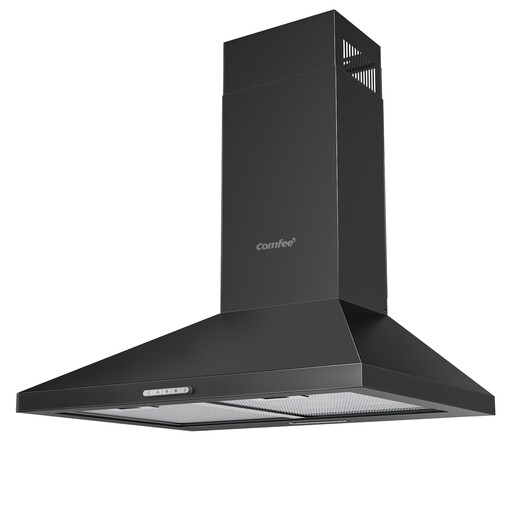
Why this product suits this profile: This model combines a 60 cm width with recirculation and extraction modes, three power levels and LED lighting. With a stated air-flow rate of 400 m³/h, it is suitable for everyday cooking in many standard kitchens.
The product description states that both operating modes are available, and charcoal filters are listed as included. In extraction mode, charcoal filters are not required.
60 cm width, three speeds, LED lighting and a stated energy efficiency class of B.
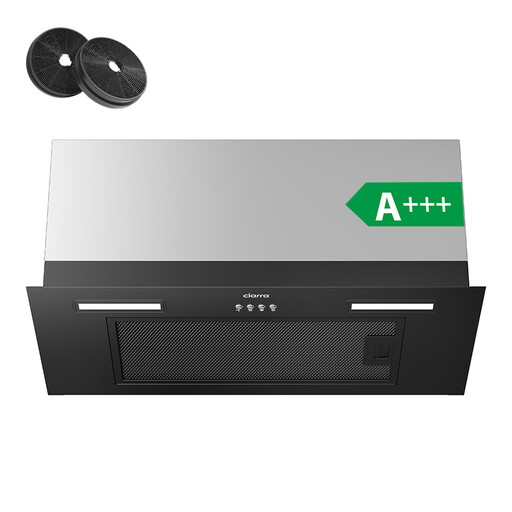
Why this product suits this profile: This built-in cooker hood is designed to blend discreetly into kitchen furniture. It is stated to offer up to 650 m³/h, an A+++ rating, three speeds and push-button controls.
The product details specify installation dimensions of 599 × 309 × 263 mm, as well as recirculation and extraction modes. This allows you to check cabinet compatibility in advance.
Stated air-flow rate of up to 650 m³/h, A+++ energy efficiency class and washable aluminium grease filter.

Why this product suits this profile: For frequent cooking and open-plan kitchens, this 60 cm wall-mounted model is stated to offer up to 650 m³/h, four speed settings with a booster and app control.
The description mentions both recirculation and extraction options. The supplied charcoal filters are intended for recirculation; filter maintenance is still required.
Stated A+++ energy efficiency class, maximum noise level of 59 dB and Wi-Fi control.
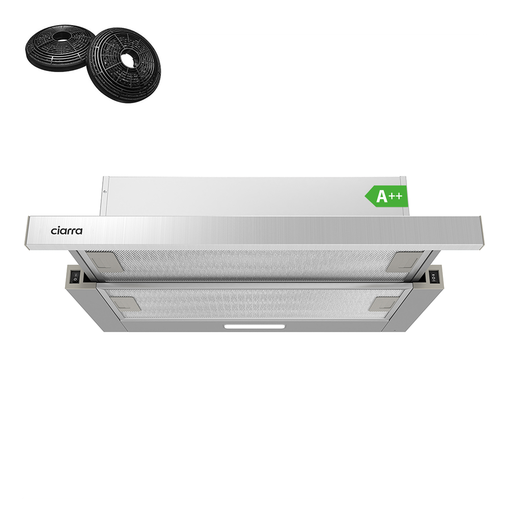
Why this product suits this profile: This extendable under-cabinet hood makes use of the available space beneath a wall unit and is stated to be suitable for recirculation and extraction. Its maximum air-flow rate is 370 m³/h.
The dimensions of approximately 599 mm in width and the extendable front make planning easier when space is limited. The charcoal filters for recirculation are stated to be included.
Telescopic design, LED lighting, washable aluminium grease filters and a stated A++ energy efficiency class.
We have compiled a complete, regularly updated list of products that fully meet these strict selection criteria and the safety regulations applicable in the EU.
Grease filters should be cleaned regularly, depending on how often you cook. Disconnect the power supply before cleaning, changing filters or carrying out maintenance. For gas appliances or other open-flued appliances that depend on the air in the room, you must also ensure adequate ventilation.
The required clearance depends on the design of the hood, the hob and the manufacturer’s specifications. A clearance of around 65 cm for electric hobs and 75 cm for gas hobs is often specified. The installation instructions for the specific model take precedence.
Extraction directs cooking vapours outside and requires a suitable connection. Recirculation does not require a wall opening, making it suitable for rented properties in many cases, but it does require regular charcoal filter replacement. A hood with both operating modes gives you more options if you remodel your kitchen later.
Running costs depend on energy consumption, usage time and the selected power setting. The energy efficiency class and stated annual consumption allow for a rough comparison between products. With recirculation, you also need to account for replacement filter costs; with extraction, the installation and operation of the extraction system may be relevant.