
Lieferung heute & morgen

Qualitätsgarantie

Willkommens-Angebote freischalten: KOSTENLOSE Lieferung | Bis zu 80 % RABATT | Kostenlose 30-Tage-JoyPlus-Testphase
App herunterladen
A 60 cm induction hob fits into many standard kitchens and, with two to four cooking zones, provides enough space for everyday cooking. However, choosing a hob does not automatically mean you have found the right appliance. Terms such as “Boost”, “Touch Control” or “energy-efficient” alone reveal little about whether the hob is suitable for your existing worktop, electrical installation and cooking habits.
As a Joybuy Product Recommendation Officer, I therefore filter the most important product data and common buying misconceptions. This makes it easier to compare a built-in induction hob objectively, without relying solely on marketing claims.
The external dimensions of many hobs are approximately 59.2 × 52.2 cm. However, the dimensions of the installation cut-out are what matter when fitting the hob into the worktop. A cut-out of around 56 × 49 cm is often required, while other models may require 56.5 × 49.5 cm, for example.
Before buying, you should therefore compare the following measurements:
An existing cut-out is not automatically compatible with every 60 cm model.
An induction hob with 6,000 to 7,400 W can supply several cooking zones. However, depending on the model, the available power is distributed through power management. If several zones are operated simultaneously at a high setting or with Boost, the power supplied to individual areas may be reduced.
If you often use several pots at once, you should therefore look beyond the wattage and also check:
A Boost function temporarily increases the power of a zone and can speed up heating. However, it does not replace using the right pan size, and it is not necessary for every cooking situation. A pan base that is too small will only make limited use of a large zone, while an oversized pan will not automatically heat evenly.
A magnet test on the base of the pan shows whether the cookware is fundamentally suitable for induction cooking. The pan base should also be as flat as possible and match the diameter of the cooking zone.
A 4-zone induction hob is suitable for households that regularly use several pots or pans at the same time. Two-zone models, on the other hand, may be sufficient for smaller kitchens, single-person households or as an additional cooking area.
A combinable zone, often referred to as FlexInduction or CombiZone, connects two adjacent areas. This allows elongated roasting dishes, griddle plates or larger oval pans to be positioned more flexibly. It is important to check whether the zone automatically detects the size of the cookware and which area is actually heated.
An induction hob with Touch Control requires a dry, clean control panel. Grease or spilled water can affect the sensor controls. Clearly visible power levels and separate displays for each zone are useful features.
An induction hob with a timer can switch off a zone automatically after the set time. Buyers should check whether the timer is available separately for each zone or functions only as a general countdown timer.
Relevant safety features include:
These functions reduce operating risks, but they do not replace supervision while cooking.
A standalone hob is operated independently of an oven. This offers flexibility when planning a modern kitchen, but requires a suitable electrical connection. Appliances rated at 6,000 W or more require professional installation, depending on the connection setup. The connection should be carried out by a qualified electrician in accordance with the manufacturer’s instructions.
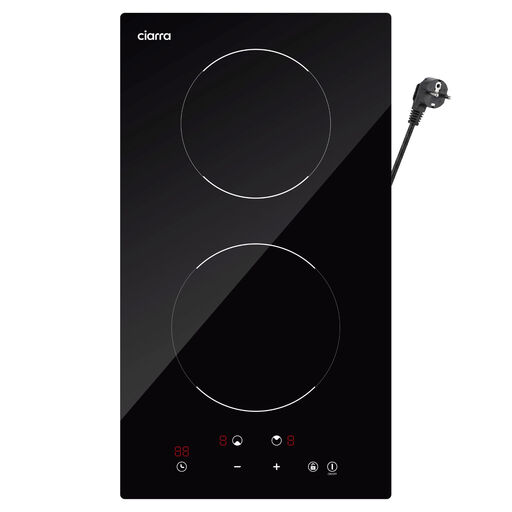
Why this product suits this profile: This 30 cm built-in appliance with two zones is ideal for smaller kitchens or households that rarely use more than two pots at the same time.
The stated dimensions of 290 × 520 × 62 mm and the 270 × 490 mm cut-out help avoid the common confusion between external and installation dimensions.
2 cooking zones, 9 power levels, 99-minute timer, child lock and pan detection.
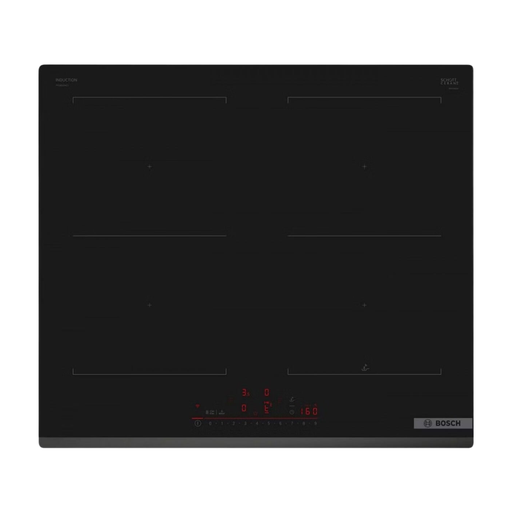
Why this product suits this profile: Ideal for a standard kitchen with four cooking zones and added flexibility for elongated cookware.
CombiZone and automatic pan detection address the limitations of fixed cooking zones when using large or elongated pans.
4 zones, 7,400 W total power, Boost for each zone, individual timers and a two-stage residual heat indicator.
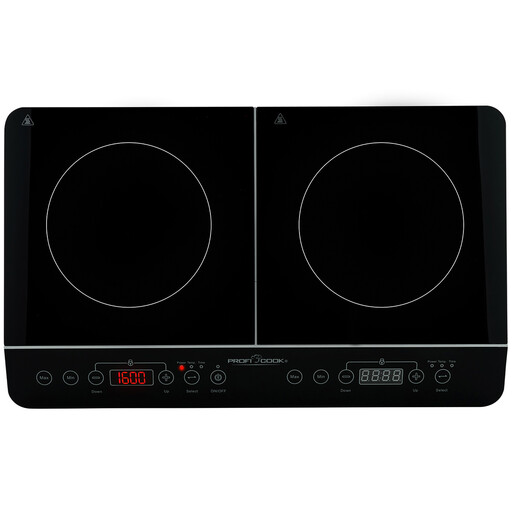
Why this product suits this profile: This portable double hot plate is designed for rented homes, temporary kitchens, camping areas with a suitable power connection or additional cooking capacity.
As a freestanding solution, there is no need to cut into a worktop. Automatic switch-off when a pan is removed and overheating protection provide additional peace of mind.
3,500 W maximum power, 16 function levels, temperature range of 60–240 °C and a 180-minute timer.
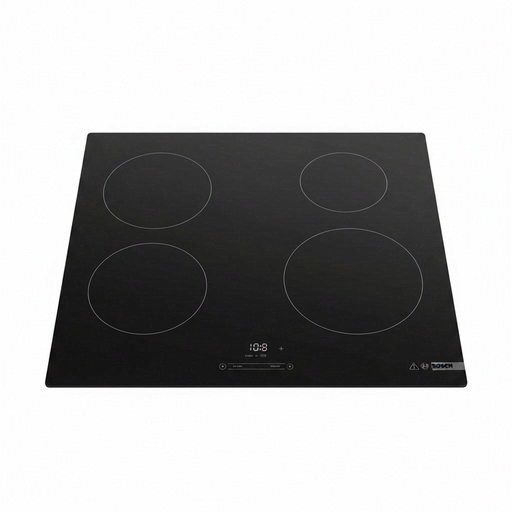
Why this product suits this profile: Four zones with different diameters provide the flexibility families need for small and larger pots.
The stated cut-out of 560 × 490 to 500 mm makes installation planning more reliable than relying solely on the 60 cm designation.
17 power levels, 4 Boost functions, Quick Start, Restart, timer and child lock.
We have put together a complete, regularly updated list of products that fully meet these strict selection criteria and the safety regulations applicable in the EU.
No. The external width may be similar, but the required cut-out dimensions can vary. Before installation, the width, depth, appliance thickness and ventilation clearances must be checked against the installation instructions.
Its service life depends, among other things, on how intensively it is used, installation, ventilation, care and the strain placed on the electronics. A blanket figure in years is therefore not reliable. An undamaged glass surface, dry controls and compliance with the installation instructions all help ensure proper operation.
Induction transfers heat directly to a suitable pan base via an electromagnetic field. Compared with methods that take longer to heat up, this results in less heat being lost to the surrounding area. However, actual electricity consumption depends on the power level, cooking time, pan size, whether lids are used and the electricity tariff in question. The key factor is therefore not just the maximum wattage, but how appropriately the hob is used in everyday cooking.